Arthur Hailey - Evening News
Здесь есть возможность читать онлайн «Arthur Hailey - Evening News» весь текст электронной книги совершенно бесплатно (целиком полную версию без сокращений). В некоторых случаях можно слушать аудио, скачать через торрент в формате fb2 и присутствует краткое содержание. Жанр: Современная проза, на английском языке. Описание произведения, (предисловие) а так же отзывы посетителей доступны на портале библиотеки ЛибКат.
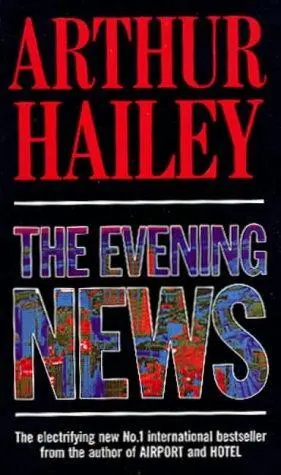
- Название:Evening News
- Автор:
- Жанр:
- Год:неизвестен
- ISBN:нет данных
- Рейтинг книги:3.5 / 5. Голосов: 2
-
Избранное:Добавить в избранное
- Отзывы:
-
Ваша оценка:
Evening News: краткое содержание, описание и аннотация
Предлагаем к чтению аннотацию, описание, краткое содержание или предисловие (зависит от того, что написал сам автор книги «Evening News»). Если вы не нашли необходимую информацию о книге — напишите в комментариях, мы постараемся отыскать её.
Evening News — читать онлайн бесплатно полную книгу (весь текст) целиком
Ниже представлен текст книги, разбитый по страницам. Система сохранения места последней прочитанной страницы, позволяет с удобством читать онлайн бесплатно книгу «Evening News», без необходимости каждый раз заново искать на чём Вы остановились. Поставьте закладку, и сможете в любой момент перейти на страницу, на которой закончили чтение.
Интервал:
Закладка:
"It'll sound like it's coming through a coffee grinder,” Kettering added.”Your own wife won't recognize it. Come on, Godoy, what have you got to lose? We've a cameraman sitting outside who's a real expert, and you'll be helping us get those kidnapped people back.”
"Well . . .” The undertaker hesitated.”Would you guys promise to keep it confidential, not to tell anybody else?”
"I promise that,” Partridge said.”Me too,” Kettering agreed. Mony added, "Count me in.”
Kettering and Partridge glanced at each other, aware that the promise they had made and would keep—the way honest journalists did, no matter what the consequences—could cause them problems later. The FBI and others might object to the secrecy, demanding to know who the silhouette subject was. Well, the network's lawyers would have to handle that; there had been brouhahas of the same kind before.
Partridge remembered when NBC in 1986 had secured a much-sought-after but controversial interview with the Palestinian terrorist Mohammed Abul Abbas. Afterward, a bevy of critics denounced NBC, not only for holding the interview but for a prior agreement—which the network honored—not to disclose its location. Even a few media people joined in, though clearly some professional jealousy was involved. While argument thrived, a U.S. State Department spokesman huffed and puffed and the Justice Department threatened subpoenas and interrogation of an on-the-scene TV crew, but eventually nothing happened. (The then Secretary of State, George Shultz, only said when questioned, "I believe in freedom of the press.” )
The fact was, and everyone knew it, broadcast networks were in many ways a law unto themselves. For one thing, few government departments or politicians wanted to tangle with them legally. Also, free-world journalism, on the whole, stood for disclosure, freedom and integrity. Sure, it wasn't totally that way; standards fell short more often than they should because journalism's practitioners were human too. But if you became an inexorable opponent of what journalism stood for, the chances were you belonged on the side of "dirty” instead of "clean.”
While Harry Partridge considered those fundamentals of his craft, Minh Van Canh was setting up for the videotape interview of Alberto Godoy which Don Kettering would conduct.
Partridge had suggested that Kettering do the interview, in part because the business correspondent clearly wanted to continue his involvement with the Sloane kidnapping—it was, after all, a subject close to the hearts and minds of the entire News Division. Also, there were other aspects of the subject that Partridge intended to handle himself.
He had already decided that he would leave for Bogota, Colombia, as soon as lie could get away. Despite sharing the opinion of his Colombian radio reporter friend that Ulises Rodriguez was not in that country, Partridge believed the time had come to begin his own search of Latin America, and Colombia was the obvious place to start.
Minh Van Canh announced he was ready to begin.
A few minutes earlier, on being called in from outside and looking around the funeral establishment, Minh had decided to set up the interview in the basement where caskets were exhibited. Because of the special backlighting, not much of the display room would be seen; only the wall behind where Godoy was seated was floodlit, with the interviewee in gloom. However, alongside the silhouette of Godoy was now another of a casket, an ingeniously macabre effect. The disguising of the undertaker's voice would be done later at CBA News headquarters.
Today there was no sound man present and Minh was using one-man equipment, a Betacam with half-inch tape incorporating picture and sound. He had also brought along a small viewing monitor and placed it so that Godoy, now seated, could observe exactly what the camera was seeing—a technique calculated to make the subject, in such special circumstances, more relaxed.
Godoy was not only relaxed, but amused.”Hey,” he told Kettering, seated nearby, off camera, "you cats are smart.”
Kettering, who had his own ideas about the way this interview should go, gave only a thin smile as he looked up from notes scribbled a few minutes earlier. At a nod from Minh, he began, having allowed for an introduction to be written later, which would precede the on-air showing.
”The first time you saw the man whom you now know to have been the terrorist Ulises Rodriguez, what was your impression?”
"Nothing special. Seemed ordinary to me.” Even under this concealment, Godoy decided, he wasn't going to admit being suspicious of Novack-alias-Rodriguez.
"So it didn't trouble you at all when you sold him two caskets initially, then one more later on?”
The silhouette shrugged.”Why should it? That's the business I'm in.”
“'Why should it? you say.”Repeating Godoy's words, Kettering managed to convey skepticism.”But isn't that kind of sale exceedingly unusual?”
“Maybe . . . sort of.”
"And as a funeral director, don't you normally arrange, or sell, what's called a package—a complete funeral?”
"Most of the time, sure.”
"In fact, isn't it true that before you made those two sales to the terrorist Rodriguez, you had never, ever, sold caskets in that way before?” Kettering was guessing, but reasoned Godoy wouldn't know he was, and in a recorded exchange would not lie.
“I guess so,” Godoy muttered. The interview was already not going the way he had expected. In the partial gloom he glared at Kettering, but the newsman persisted.
”In other words, the answer is no, you hadn't sold caskets that way before.”
The undertaker's voice rose.”I figured it was none of my business what he wanted them for.”
"Did you give any thought at all to communicating with authorities—the police, for example—and saying something like, 'Look, I've been asked to do something strange, something I've never been asked before, and I wonder if you'd like to check this person out.' Did you consider that?”
"No, I didn't. There was no reason to.”
"Because you weren't suspicious?”
"Right.”
Kettering bored in.”Then if you were not suspicious, why is it that on the second occasion Rodriguez visited you, you covertly wrote down the license number of the hearse he was using to take away the casket and kept that information hidden until today?”
Godoy roared angrily, "Now, look! Because I told you something confidential, it don't mean..."
“Correction, Mr. Funeral Director! You did not say anything about that being confidential.”
"Well, I meant to.”
"There's quite a difference. And incidentally, neither did you say it was confidential when you revealed before this interview that the price you charged for those three take—out caskets was almost ten thousand dollars. For the kind of caskets you described, wasn't that a high price?”
"The guy who bought them didn't complain. Why should you?”
"Perhaps he didn't complain for his own good reasons.” Kettering's voice became icy and accusatory.”Didn't you ask that excessively high price because you knew the man would pay it, knew all the time there was something suspicious, and you could take advantage of the situation, get yourself some extra money . . .”
"Hey, I don't have to sit here and take that garbage! Forget all this! I'm getting out,” Angrily, Godoy rose from his chair and walked away, the line from a microphone separating as he did. The route brought him closer to the Betacam, and Minh, swinging it as a reflex action, caught him full-face and in light so, in effect, Godoy violated his own confidentiality. There would be discussion later as to whether that closing sequence should be used or not.
”You bastard!” Godoy stormed at Kettering.
Читать дальшеИнтервал:
Закладка:
Похожие книги на «Evening News»
Представляем Вашему вниманию похожие книги на «Evening News» списком для выбора. Мы отобрали схожую по названию и смыслу литературу в надежде предоставить читателям больше вариантов отыскать новые, интересные, ещё непрочитанные произведения.


Обсуждение, отзывы о книге «Evening News» и просто собственные мнения читателей. Оставьте ваши комментарии, напишите, что Вы думаете о произведении, его смысле или главных героях. Укажите что конкретно понравилось, а что нет, и почему Вы так считаете.