Arthur Hailey - Evening News
Здесь есть возможность читать онлайн «Arthur Hailey - Evening News» весь текст электронной книги совершенно бесплатно (целиком полную версию без сокращений). В некоторых случаях можно слушать аудио, скачать через торрент в формате fb2 и присутствует краткое содержание. Жанр: Современная проза, на английском языке. Описание произведения, (предисловие) а так же отзывы посетителей доступны на портале библиотеки ЛибКат.
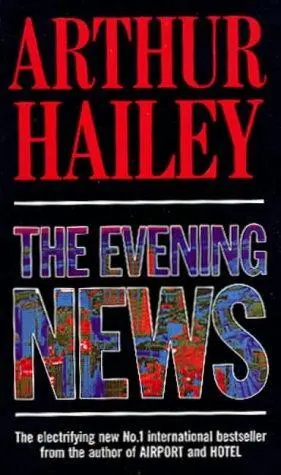
- Название:Evening News
- Автор:
- Жанр:
- Год:неизвестен
- ISBN:нет данных
- Рейтинг книги:3.5 / 5. Голосов: 2
-
Избранное:Добавить в избранное
- Отзывы:
-
Ваша оценка:
Evening News: краткое содержание, описание и аннотация
Предлагаем к чтению аннотацию, описание, краткое содержание или предисловие (зависит от того, что написал сам автор книги «Evening News»). Если вы не нашли необходимую информацию о книге — напишите в комментариях, мы постараемся отыскать её.
Evening News — читать онлайн бесплатно полную книгу (весь текст) целиком
Ниже представлен текст книги, разбитый по страницам. Система сохранения места последней прочитанной страницы, позволяет с удобством читать онлайн бесплатно книгу «Evening News», без необходимости каждый раз заново искать на чём Вы остановились. Поставьте закладку, и сможете в любой момент перейти на страницу, на которой закончили чтение.
Интервал:
Закладка:
"What was that?”
"How to make a friend.”
Kettering smiled. He had already decided that the Mortell woman sounded so charming, and with a hint of invitation in her voice, that instead of phoning he would drop in to see her. He made a note of the address; it was uptown, not far away. He might be disappointed, of course. Voices were deceptive and she could be older than she sounded and look like the back of a bus, though instinct told him otherwise. Something else Jonathan would undoubtedly learn in time was that a fringe benefit of being on television was frequent romantic opportunities, leading—if one were so inclined—to pleasant sexual dalliance.
He selected another hundred-dollar bill. ”Let's try this one,” he told Mony and motioned to the phone book.”The name is Nicolini Brothers.”
It turned out to be a bakery and pastry store on Third. A man who answered was suspicious at first and after a question or two seemed inclined to hang up. But Kettering, politely persistent, persuaded him otherwise. Eventually the name of a bank was obtained where receipts from the store—including large bills—were regularly paid in. It was the American-Amazonas Bank at Dag Hammarskjeld Plaza.
The names on the next two bills which Kettering chose did not appear in the Manhattan phone book.
The bill after that produced results in the way of a cooperative manager of a men's clothing store. The store, he disclosed, had an account at Bank Leumi, the branch at Third and Sixty-seventh.
Another name on a bill was untraceable. The next led to a distrustful and abusive woman with whom Kettering could make no headway and he gave up.
The fifth phone call resulted in communication with an eighty-six-year-old man. living in an East End Avenue apartment. He was too weak to speak on the phone and a nursing attendant did it for him, though clearly there was nothing wrong with tile old mail's mind. He could be heard whispering cheerfully that his son, who owned several night clubs, often dropped in and gave his father hundred-dollar bills, which were subsequently paid into a bank account that, the eighty-six-year old declared with a faint chuckle, he was setting aside for his old age. And, oh yes, the account was at American-Amazonas Bank, Dag Hammarskjeld Plaza.
The next call, to a seafood restaurant near Grand Central, resulted in Kettering speaking at length with several people, none of whom would take the responsibility of telling him anything important. Eventually the restaurant owner was located and said impatiently, "What the hell! Sure you can know the name of our bank; in return, I hope you'll give us a mention on the news. Anyway, the bank's on that damn square I never can spell—Dag Hammarskjeld—and is American-Amazonas,”
When he hung up, Kettering scooped up the hundred-dollar bills and told Mony, "We hit the jackpot. No more calls needed. We have the answer.”
In response to a questioning glance he added, "Look at it this way: Three out of five people naming the same bank is too much to be coincidence. So those other names, on the bills which went through Citibank and Leumi, had to have been put on earlier and the bills recirculated, probably through American-Amazonas too.
”So that's where the money came from which Novack-Rodriguez paid Godoy for the caskets.”
"Exactly!” Kettering's voice hardened.”I'll also wager that same bank is where those fucking kidnappers drew their cash and had—maybe still have—an account.”
Mony prompted, "So next step—Dag Hammarskjeld Plaza.”
Kettering pushed his chair back from the desk and rose.”Where the bell else? Let's go.”
10
Don Kettering was recognized immediately on entering the American-Amazonas Bank and had an instinct early on that his presence was not a total surprise.
When he asked to see the manager, a matronly secretary informed him, "He has someone with him now, Mr. Kettering, but I'll interrupt and tell him you're here.” She glanced at Jonathan Mody.”I'm sure he won't keep you gentlemen long.”
While waiting, Kettering surveyed the bank. It was located on the main floor of an elderly brick building near the Plaza's north extremity and, viewed from outside, the bank's slate gray entrance was unimposing. The interior, however, while small for a New York bank, was attractive and colorful. Instead of a conventional tiled floor, a patterned carpet in muted cherry, red and orange shades ran the entire length and width of the business area; a small, gold-lettered panel noted it was woven in Amazonas, Brazil.
While furnishings were conventional—a line of tellers' counters on one side, three officers' desks on the other—the woodwork everywhere was of highest quality. Occupying most of one wall, where customers would view it, was a striking mural—a revolutionary scene of panting horses with tousled manes carrying uniformed soldiers.
Kettering was studying the mural when the secretary advised, "Mr. Armando is free now. Will you come in, please.”
As they entered a partially glass-walled office which provided a view of the operations area outside, the manager came forward with his hand extended. A desk plaque identified him as Emiliano W. Armando, Jr.
”Mr. Kettering, a pleasure to meet you. I see you often and admire much of what you say. But I suppose you hear that all the time.”
"Even so, I still appreciate it.” The business correspondent introduced Mony. At a gesture from Armando, the three sat down, the visitors facing a hanging tapestry in bright blues and yellows which continued the bank's thematic decor.
Kettering watched the manager, a small figure with a wrinkled face showing signs of tiredness, thinning white hair and bushy eyebrows. Armando moved with a nervous quickness, his expression worried, the general effect reminding Kettering of an aging terrier, uneasy with the changing world around him. Instinctively, though, he found himself liking the man—in contrast to his recent encounter with Alberto Godoy.
Leaning back in a swivel chair, the banker sighed.”I rather guessed that you or someone like you would be around soon. It's been an unhappy, perplexing time for us here, as I'm sure you understand.”
Kettering leaned forward. The manager assumed he knew something that he didn't. He acknowledged cautiously, "Yes, that's all too often true.”
"As a matter of interest, how did you get to hear?”
The business correspondent resisted saying, "Hear what? ” and smiled.”In TV news we have sources of information, even though at times we can't reveal them.” He noticed Mony following the conversation with interest while keeping his face impassive. Well, that ambitious young man was getting a journalism lesson in spades today.
"I wondered if it was the Post report,” Armando said.”It left many unanswered questions.”
Kettering wrinkled his forehead.”I may have read that. Do you happen to have a copy?”
"Of course.” Armando opened a desk drawer and produced a news clipping encased in plastic. The heading read:
UN DIPLOMAT
SLAYS LOVER, AND SELF
IN JEALOUS RAGE
Kettering skimmed the report, noting it was from a ten-day old paper, dated the Sunday before last. As he observed references to the two who had died—Helga Efferen of American Amazonas Bank and Jose Antonio Salaverry, a member of the United Nations Peruvian delegation—the cause of the manager's distress became clear. What was not clear was whether or not the incident had any connection to the matter that had brought CBA News here.
Kettering passed the report to Mony and returned his attention to Armando, prompting, "Unanswered questions, I believe you said.”
The manager nodded.”What the newspaper described is how the police say it happened. Personally, I don't believe it.”
Читать дальшеИнтервал:
Закладка:
Похожие книги на «Evening News»
Представляем Вашему вниманию похожие книги на «Evening News» списком для выбора. Мы отобрали схожую по названию и смыслу литературу в надежде предоставить читателям больше вариантов отыскать новые, интересные, ещё непрочитанные произведения.


Обсуждение, отзывы о книге «Evening News» и просто собственные мнения читателей. Оставьте ваши комментарии, напишите, что Вы думаете о произведении, его смысле или главных героях. Укажите что конкретно понравилось, а что нет, и почему Вы так считаете.