Arthur Hailey - Evening News
Здесь есть возможность читать онлайн «Arthur Hailey - Evening News» весь текст электронной книги совершенно бесплатно (целиком полную версию без сокращений). В некоторых случаях можно слушать аудио, скачать через торрент в формате fb2 и присутствует краткое содержание. Жанр: Современная проза, на английском языке. Описание произведения, (предисловие) а так же отзывы посетителей доступны на портале библиотеки ЛибКат.
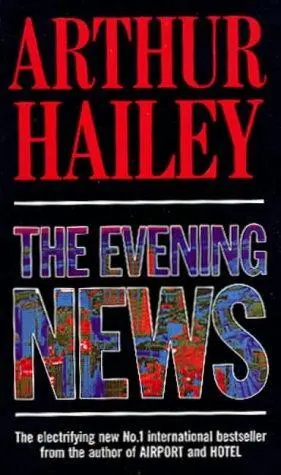
- Название:Evening News
- Автор:
- Жанр:
- Год:неизвестен
- ISBN:нет данных
- Рейтинг книги:3.5 / 5. Голосов: 2
-
Избранное:Добавить в избранное
- Отзывы:
-
Ваша оценка:
Evening News: краткое содержание, описание и аннотация
Предлагаем к чтению аннотацию, описание, краткое содержание или предисловие (зависит от того, что написал сам автор книги «Evening News»). Если вы не нашли необходимую информацию о книге — напишите в комментариях, мы постараемся отыскать её.
Evening News — читать онлайн бесплатно полную книгу (весь текст) целиком
Ниже представлен текст книги, разбитый по страницам. Система сохранения места последней прочитанной страницы, позволяет с удобством читать онлайн бесплатно книгу «Evening News», без необходимости каждый раз заново искать на чём Вы остановились. Поставьте закладку, и сможете в любой момент перейти на страницу, на которой закончили чтение.
Интервал:
Закладка:
Something else different today was having the positive Rodriguez lead, which translated into a double-barreled question: Do you know of a terrorist named Ulises Rodriguez,— if so, have you any idea where he is or what he's reputed to be doing?
Although Karl Owens had talked on Friday with Latin American contacts, as far as Partridge could tell there was no overlapping—a fact not surprising since producers as well as correspondents cultivated their own sources and, once they had them, kept them to themselves.
Today, responses to the first part of the question posed were almost entirely "yes” and to the second portion, "no.” Confirming Owens's earlier report, Rodriguez seemed to have disappeared from sight three months ago and had not been seen since. An interesting point, though, emerged from a conversation with a long time Colombian friend, a radio news reporter in Bogota.
”Wherever he is,” the broadcaster said, "I'd almost guarantee it isn't this country. He's a Colombian after all, and even though he stays out of reach of the law, he's too well known to be in his home territory for long without word getting around. So my bet is, he's somewhere else.” The conclusion made sense.
One country Partridge had suspicions about was Nicaragua, where the Sandinistas, despite an election defeat, were still a strong presence and continued their long antagonism to the United States. Could they be involved in some way with the kidnapping, hoping to gain from it an advantage yet to be disclosed? The question didn't make a lot of sense, but neither did much else. However, a half-dozen calls to the capital, Managua, produced a consensus that Ulises Rodriguez was not in Nicaragua, nor had he been there.
Then there was Peru. Partridge made several calls to that country and one conversation in particular left him wondering.
He had spoken with another old acquaintance, Manuel Leon Seminario, owner-editor of the weekly magazine Escena , published in Lima.
After Partridge announced his name, Serninario had come on the line at once. His greeting was in impeccable English and Partridge could picture him—slight and dapper, fashionably and fastidiously dressed.”Well, well, my dear Harry. How excellent to hear from you! And where are you? In Lima, I hope.”
When informed that the call was from New York, the owner-editor expressed disappointment.”For a moment I hoped we might have lunch tomorrow at La Pizzeria. The food, I assure you, is as good as ever. So why not hop on a plane and come?”
"I'd love to, Manuel. Unfortunately I'm up to my eyebrows in important work.” Partridge explained his role in the Sloane kidnap task force.
”My god! I should have realized you'd be involved. That's a terrible thing. We've followed the situation closely and we'll have a full-page piece in this week's issue. Is there anything new we should include?”
"There is something new,” Partridge said, "and it's the reason I'm calling. But for now we're keeping it under wraps, so I'd appreciate this talk being off the record.”
"Well . . .” The response was cautious.”As long as it's not information we possess already.”
"We can trust each other, Manuel. On the basis you just said—okay?”
"With that understanding, okay.”
"We have reason to believe that Ulises Rodriguez is involved.”
There was a silence before the magazine man said softly, "You are speaking of bad company, Harry. Around here that name is a nasty, feared word.”
"Why feared?”
"The man is suspected of masterminding kidnappings, skulking in and out of Peru from Colombia for employment by others here. It is a way our criminal—revolutionary elements work. As you know, in Peru nowadays kidnapping is almost a way of life. Well-to-do businessmen or their families are favorite targets. Many of us employ guards and drive protected cars, hoping to forestall it.”
"I did know that,” Partridge said.”But until this moment I'd forgotten.”
Seminario sighed audibly, "You are not alone, my friend. The Western press attention to Peru is spotty, to put it kindly. As to your TV news, we might as well not exist.”
Partridge knew the statement held some truth. He was never sure why, but Americans seldom took the same continuing interest in Peru that they did in other countries. Aloud he said, "Have you heard any talk of Rodriguez being in Peru, perhaps right now, or recently working for anyone there?”
"Well . . . no.”
“Did I sense some hesitation?”
"Not about Rodriguez. I have not heard anything, Harry. I would tell you if I had.”
"What then?”
"Everything here, on what I call the criminal-revolutionary front, has been strangely quiet for several weeks. Scarcely anything happening. Nothing of significance.”
"So?”
"I have seen the signs before and I believe they are unique to Peru. When things are quietest it often means something big is about to happen. Usually unpleasant and of a nature unexpected.”
Seminario's voice changed tempo, becoming businesslike.”My dear Harry, it has been a pleasure talking to you and I am glad you called. But Escena will not edit itself and I must go. Do come to see me soon in Lima, and remember: Lunch at La Pizzeria—a standing invitation.”
Through the remainder of the day the words kept coming back to Partridge: "When things are quietest it often means something big is about to happen.”
6
Coincidentally, on the same day Harry Partridge talked with the owner-editor of Escena, Peru was discussed at an ultra private, top-echelon meeting of CBA network's corporate owners, Globanic Industries Inc. The meeting was a twice yearly, three-day "policy workshop” chaired by the conglomerate's chairman and chief executive officer, Theodore Elliott. Attendance was confined to other CEO's—those of Globanic's nine subsidiaries, all major companies themselves, most with their own ancillaries.
At such meetings corporate confidences were exchanged and secret plans revealed, some capable of making or breaking competitors, investors and markets around the world. However, no written agenda or minutes of the biannual parleys ever existed. Security was strict and each day, before proceedings began, the meeting room was electronically swept for bugs.
Outside the meeting, but never in it, were support staffs of aides—a half dozen or so for each subsidiary company—poised to provide data or briefings that their various chiefs might need.
The locale of the meetings seldom varied. On this occasion, as on most others, it was at the Fordly Cay Club near Nassau in the Bahamas.
Fordly Cay, one of the world's most exclusive private clubs, with a resort facility including a yacht harbor, golf course, tennis courts and white-sand beaches, occasionally allowed special VIP groups the expensive use of its facilities. Larger conventions were verboten; sales meetings, as far as Fordly Cay was concerned, did not exist.
Ordinary membership in the club was hard to come by; a waiting list caused many aspirants to linger for long periods, some in vain. Theodore Elliott was a recent member, though approval of his application had taken two years.
The day before, when everyone arrived, Elliott had been proprietorial, especially welcoming Globanic spouses who would appear only at social, tennis, golfing and sailing breaks. Today the first morning meeting was in a small, comfortable library with deep rattan chairs upholstered in beige leather, and wall-to-wall patterned carpeting. Between book-lined walls, softly lit cases held silver sporting trophies. Above a fireplace— seldom used—a portrait of the club's founder beamed down on the select small group.
Elliott was appropriately dressed in white slacks and a light-blue polo shirt, the latter bearing the club crest—a quartered shield with palm tree rampant, engrailed crossed tennis racquets, golf clubs and a yacht, all on waves of the sea. With or without such accoutrements, Theo Elliott was classically handsome—tall, lean, broad shouldered, with a strong jaw and a full head of hair, now totally white. Ile hair was a reminder that in two years' time the chairman-in-chief would reach retirement age and be succeeded, almost certainly, by one of the others present.
Читать дальшеИнтервал:
Закладка:
Похожие книги на «Evening News»
Представляем Вашему вниманию похожие книги на «Evening News» списком для выбора. Мы отобрали схожую по названию и смыслу литературу в надежде предоставить читателям больше вариантов отыскать новые, интересные, ещё непрочитанные произведения.



Обсуждение, отзывы о книге «Evening News» и просто собственные мнения читателей. Оставьте ваши комментарии, напишите, что Вы думаете о произведении, его смысле или главных героях. Укажите что конкретно понравилось, а что нет, и почему Вы так считаете.