Arthur Hailey - Evening News
Здесь есть возможность читать онлайн «Arthur Hailey - Evening News» весь текст электронной книги совершенно бесплатно (целиком полную версию без сокращений). В некоторых случаях можно слушать аудио, скачать через торрент в формате fb2 и присутствует краткое содержание. Жанр: Современная проза, на английском языке. Описание произведения, (предисловие) а так же отзывы посетителей доступны на портале библиотеки ЛибКат.
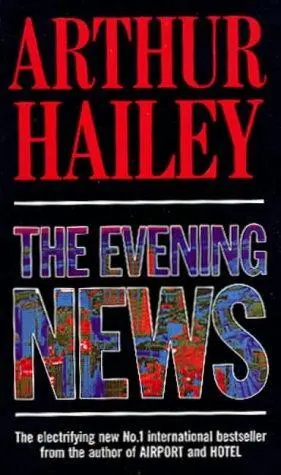
- Название:Evening News
- Автор:
- Жанр:
- Год:неизвестен
- ISBN:нет данных
- Рейтинг книги:3.5 / 5. Голосов: 2
-
Избранное:Добавить в избранное
- Отзывы:
-
Ваша оценка:
Evening News: краткое содержание, описание и аннотация
Предлагаем к чтению аннотацию, описание, краткое содержание или предисловие (зависит от того, что написал сам автор книги «Evening News»). Если вы не нашли необходимую информацию о книге — напишите в комментариях, мы постараемся отыскать её.
Evening News — читать онлайн бесплатно полную книгу (весь текст) целиком
Ниже представлен текст книги, разбитый по страницам. Система сохранения места последней прочитанной страницы, позволяет с удобством читать онлайн бесплатно книгу «Evening News», без необходимости каждый раз заново искать на чём Вы остановились. Поставьте закладку, и сможете в любой момент перейти на страницу, на которой закончили чтение.
Интервал:
Закладка:
Cooper, who liked Mony instantly, responded, "Sure,” and handed over the batch of forms which the network required all of today's newcomers to complete. Within minutes, Mony was showing fresh arrivals to seats and explaining the forms he had glanced over only moments before.
Soon after, Cooper asked Mony to make two phone calls and pass along messages. Without asking any questions, Mony simply nodded and disappeared. A few minutes later he was back, reporting, "Okay, Mr. Cooper. Both answers were yes.”
That was ten minutes ago. Now Teddy Cooper was continuing his introductory remarks, having paused for effect after telling his audience they would be "trusted with the truth.”
"So what this is really all about is the kidnapping—which of course you've heard of—of Mrs. Crawford Sloane, Master Nicholas Sloane and Mr. Angus Sloane. The work you'll be doing is aimed at helping those kidnap victims and is triple-X important. When you leave here you'll be detailed off to local newspaper offices and certain libraries where you will read every issue published over the past three months. Not just reading, though, but Sherlock Holmesing for clues on which I'll brief you, clues which could lead us to the body snatchers.”
Interest on the faces before him was now even greater than before, accompanied by a hum of conversation which quickly quieted as Cooper continued.”As soon as I'm through sounding off up here, you'll be divided into groups and given the gen about where to go and what to do. Some of the newspaper offices have already been phoned by us this morning; they're cooperative and expecting you. At others you'll have to introduce yourselves, saying you represent CBA. Before leaving here everyone gets a CBA identification card. Save it—a souvenir for your grandchildren.
”About transport, we have some motors waiting which will take several groups each day, dropping off one person at a time at their starting point. After that, you'll make your own way. You all have initiative; you'll get the chance to use it. Some of you will get where you're going by bus and train. Either way, travel expenses are on CBA.
”You needn't come back here at the end of each day, but you must report by telephone—we'll give you numbers—and also call immediately if you find anything important.”
The arrangements Teddy Cooper was describing had been worked on through Sunday and early this morning by himself, his two assistant researchers and a secretary borrowed from the news staff. Some backup work, including phoning local papers, was continuing.
”Now,” Cooper declared, "that was for starters. Next let's get to the big picture. Somewhere about now you should be getting several sheets of paper . . . Yes, here they are.”
The ebullient Jonathan Mony had been consulting with Cooper's assistants, busy at a desk across the room. Mony now returned, burdened by a pile of papers—copies of the task plan and guidelines developed yesterday by Cooper and printed overnight. Mony began handing copies to his fellow temporaries.
"When you get to those local newspaper offices,” Cooper said, "You'll ask first to see issues published three months back from last Thursday—that is, starting June 14. When you have them in front of you, go to classified ads for estate agents and look for any ad offering to rent a small factory, or a warehouse, or a large old house—but not just any old place like that . . .and to get specific, let's turn to page one of those notes you just received.”
As he explained his reasoning and planning, Teddy Cooper was relieved about his decision to disclose the truth. How much or how little he should tell these helpers had been left to his discretion, and now not using a bogus story made everything simpler. There were risks involved, of course. One was the chance that what CBA News was attempting would become known to a competitor, another network perhaps, who would either publicize the fact or run a parallel project of its own. Cooper intended to caution these young people not to reveal any details of CBA's behind-scenes purpose. He hoped his trust would be justified. Surveying his audience, still attentive and with a majority scribbling notes, he believed it would.
Cooper was also keeping his eye on an outer doorway. The phone calls he had asked Jonathan Mony to make were messages to Harry Partridge and Crawford Sloane requesting they make a brief appearance here. He had been pleased when the response from both was positive.
They arrived together. Cooper, in the midst of describing his imagined picture of the kidnappers' operating base, stopped and pointed to the door. All heads turned and despite the group's sophistication, there was an audible gasp as Sloane came forward, followed by Partridge.
With suitable deference, Cooper stepped down from the lectern. He would not presume to introduce the National Evening News anchorman, but simply made way.
”Hello, Teddy,” Sloane said.”What would you like me to do?”
"Mostly, sir, I think everyone would like to meet you.”
Sloane kept his voice low.”Tell me, how much have you let these people know?”
Partridge had joined them near the lectern and was listening.
"Pretty much the lot. I decided they'll be more keen that way and we should trust them.”
"I go along with that,” Partridge said.
Sloane nodded.”Okay by me.” He moved toward the rows of chairs, ignoring the lectern. His face was serious; no one would expect him to be smiling and happy today, and when he spoke his voice matched the sober mood.
”Ladies and gentlemen, it may be that in days to come, what anyone or some of you are about to do will contribute directly to the safe return of my wife, my son and my father. If by great good fortune that should happen, you may be sure I will seek you out to thank you personally. For the time being I would like to express my appreciation of your being here, and wish you well. Good luck to us all!”
Sloane remained in place as many of the young people rose to their feet and some came forward, reaching out to shake his hand and offer genuine good wishes; among them Teddy Cooper saw a few eyes glistening with tears. At the end, Sloane signaled goodbye and left as unobtrusively as he had come. Partridge, who also shook hands and spoke with some of the temporary workers, went with him.
Cooper continued his briefing, describing what these investigative neophytes should look for. When he invited questions several hands shot up.
A youth in an NYU sweat shirt was first.”Okay, so one of us has found an ad that fits the specs you've given, and it might be the place you're looking for. So we phone it in. What next?”
"For starters,” Cooper replied, "we find out who placed the ad. Usually a name will be there and you'll tell us. If there's no name, just a box number, try to get the info from the paper where you are, and if they're sticky about that, let us handle it.”
"And after that?”
"If we can, we'll contact the advertiser by phone and ask some questions. If we can't, we'll go to visit them. Then, if the lead still looks promising, we'll take a look—very cautiously — at the place that was advertised.”
"You've been saying 'we.” ' The new questioner was an attractive young woman in a fashionable beige suit.”Does that mean just you and other big shots, or will some of us here get to share the interesting part, where the action is?”
There were some cheers, and laughter in which Teddy Cooper joined.
”Let's get something straight,” he responded, "I'm a little shot, and be careful how you spell it.” (More laughter.) "But this I promise you: As far as we can, we'll bring you in on any developments, especially those you have a hand in launching. One reason is, we'll need you. We don't have many bodies for this job and if there's a target, chances are you'll be headed for it.”
Читать дальшеИнтервал:
Закладка:
Похожие книги на «Evening News»
Представляем Вашему вниманию похожие книги на «Evening News» списком для выбора. Мы отобрали схожую по названию и смыслу литературу в надежде предоставить читателям больше вариантов отыскать новые, интересные, ещё непрочитанные произведения.






Обсуждение, отзывы о книге «Evening News» и просто собственные мнения читателей. Оставьте ваши комментарии, напишите, что Вы думаете о произведении, его смысле или главных героях. Укажите что конкретно понравилось, а что нет, и почему Вы так считаете.