Arthur Hailey - Evening News
Здесь есть возможность читать онлайн «Arthur Hailey - Evening News» весь текст электронной книги совершенно бесплатно (целиком полную версию без сокращений). В некоторых случаях можно слушать аудио, скачать через торрент в формате fb2 и присутствует краткое содержание. Жанр: Современная проза, на английском языке. Описание произведения, (предисловие) а так же отзывы посетителей доступны на портале библиотеки ЛибКат.
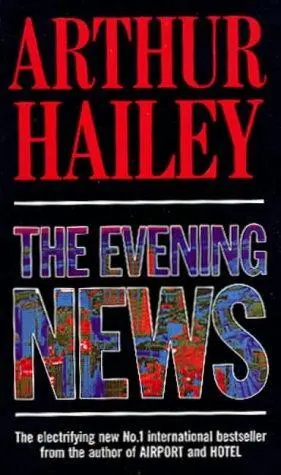
- Название:Evening News
- Автор:
- Жанр:
- Год:неизвестен
- ISBN:нет данных
- Рейтинг книги:3.5 / 5. Голосов: 2
-
Избранное:Добавить в избранное
- Отзывы:
-
Ваша оценка:
Evening News: краткое содержание, описание и аннотация
Предлагаем к чтению аннотацию, описание, краткое содержание или предисловие (зависит от того, что написал сам автор книги «Evening News»). Если вы не нашли необходимую информацию о книге — напишите в комментариях, мы постараемся отыскать её.
Evening News — читать онлайн бесплатно полную книгу (весь текст) целиком
Ниже представлен текст книги, разбитый по страницам. Система сохранения места последней прочитанной страницы, позволяет с удобством читать онлайн бесплатно книгу «Evening News», без необходимости каждый раз заново искать на чём Вы остановились. Поставьте закладку, и сможете в любой момент перейти на страницу, на которой закончили чтение.
Интервал:
Закладка:
Cooper shrugged.”Do I know the number of papers? No, not exactly, except it's a bleedin' lot. But what we'd do is hire people—bright young kids—to go around and look through them all. I'm told there's a book , . .” Cooper paused to check his notes.”Editor and Publisher International Year Book, which lists every paper, big and small. We'd start with that. From there we'd go to libraries which have files of newspapers, some on microfilm. For the others we'd go direct to the papers and ask to look through their back numbers. It'll take a lot of bodies, and it has to be done fast, before the trail gets cold.”
Partridge said, "And you figure three months of advertising would cover — . .”
"Look, we know these people were snooping on the Sloanes for about a month and, when it started, you can bet they had their pad set up. So three months is a sane spread.”
"What happens when we find some advertising that fits the kind of place we're searching for?”
"There should be a big number of 'possibles,' “Cooper said.
”We'd sort them into priorities, then have some of the same people we hired to check the newspapers do the follow-up too. First, by contacting the advertisers and asking the odd question. After that, according to the answers, we'd decide which places we should take a look at.” Cooper shrugged.”Most of the look—sees would be goose eggs, but some might not. I'd expect to do some of the follow-up myself.”
There was a silence as Partridge and Rita weighed what they had heard.
Partridge announced his judgment first.”I salute you for an original idea, Teddy, but you said it was a long shot and it sure as hell is. A long, long shot. Right at this moment, I just can't see it working.”
"Frankly,” Rita said, "I think what you'd be trying to do is impossible. First, because of the number of papers involved there's a multitude! Second, the amount of help you'd need would cost a fortune.”
"Wouldn't it be worth it,” Cooper asked her, "to get Mr. S's family back?”
"Of course it would. But what you're suggesting wouldn't get them back. At best it might produce some information and even that's unlikely.”
"Either way,” Partridge ruled, "we're not making a decision here. Because of the money, Les Chippingham will do that. When we meet with him later today, Teddy, you can spell out your idea again.”
* * *
The two-and-a-half-minute spot produced by Iris Everly for the Saturday National Evening News was dramatic, shocking and—as the jargon went—video-rich. At White Plains, Minh Van Canh had, as always, employed his camera creatively. Iris, back at CBA News headquarters and working again with the tape editor, Bob Watson, had fashioned a small masterpiece of news theater.
The process began with Iris and Partridge joining Watson in a tiny editing room—one of a half dozen side by side and in constant use as air time neared. There the three viewed all available videotapes while Iris made rough logs of the contents of each cassette. A late tape certain to be used showed the arrival of FBI agents at the White Plains explosion scene. Asked if there had been any communication from the kidnappers, the senior FBI man gestured around him and said, grimfaced, "Just this.”
Other tapes included scenes of devastation and Partridge's on-scene interviews.
When they had finished viewing, Iris said, "I think we should begin with that pile of burning cars, show where those floors of the building were torn apart, then cut to the dead and injured being carried out.” Partridge agreed and, with more discussion, they crafted a general plan.
Next, still in the editing booth, Partridge recorded an audio track, the correspondent's commentary over which pictures would be superimposed. Reading from a hastily typed script, he began, "Today, any remaining doubt that the kidnappers of the Crawford Sloane family are full-fledged terrorists was savagely dispelled . . . "
That evening, Partridge's participation in the broadcast would differ from the two preceding days when, on Thursday, he had anchored the news, then the following evening been coanchor with Crawford Sloane. Tonight he would be in his normal role as a correspondent, since CBA's Saturday news had its own regular anchor person, Teresa Toy, a charming and popular Chinese-American. Teresa had initially discussed with Partridge and Iris the general line their report would take. From then on, aware that she was dealing with two of the network's top professionals, she wisely left them alone.
When Partridge finished the audio track, he left to do other things. After that it took Iris and Watson another three hours to complete the painstaking editing process, a facet of TV news seldom understood by viewers who watched the polished end result.
Externally, Bob Watson seemed an unlikely candidate for the meticulous, patient work his editing job required. He was chunky and simian, with stubby fingers. Though he shaved each morning, by mid-afternoon he looked as if he had a three day growth of beard. And he chain-smoked fat, pungent cigars which those obliged to work with him in his tiny cubicle repeatedly complained about. However, he told them, "If I can't smoke, I don't think so good, then you get a piss-poor piece.” Producers like Iris Everly suffered the smoke because of Watson's skill.
The video and sound editing of TV news reports was done in network headquarters, distant bureaus around the world, or could even be on the spot near some breaking news scene. The news served up daily by the networks consisted of all three.
The standard tools of a TV editor, which Watson faced with the petite, strong-willed Iris seated beside him, were two machines, each an elaborate video recorder with precise controls and meters. Linked to the recorders and displayed above them was an array of TV monitors and speakers. Alongside and behind the editor, racks contained dozens of tape cassettes received from network cameramen, the network's tape library or affiliate stations.
The objective was to transfer to a master tape, inserted in the left recorder, snippets of scenes and sounds from a multitude of other tapes which were reviewed and rereviewed in the recorder on the right. Transferring a scene, seldom more than three seconds long, from a right-hand tape to the master required artistic and news judgment, infinite patience and a watchmaker's delicacy of touch. In the end, the contents of the master tape would be broadcast on air.
Watson began putting together the opening sequence already agreed on—the burning cars and shattered building. With the speed of a mail sorter, he plucked cassettes from racks, inserted one into the right-hand video machine and, using fast forward, found the required scene. Dissatisfied, he fiddled with rewind, went back and forth, stopped at another shot, returned to the first.”No,” he said, "somewhere there's a wide shot from the opposite angle that's better.” He switched cassettes, viewed and discarded a second, then chose a third and found what he sought.”We should start with this, then go to the first for a closeup.”
Iris agreed and Watson transferred images and sound to the master tape. Dissatisfied with his first and second tries, he wiped them out, then was happy with the third.
Sometime later, Iris said, "Let's see that stock shot of a Nissan.” They viewed it for a second time; it showed a new and spotless Nissan passenger van moving in sunshine down a leafy country lane.”Idyllic,” she commented.”What do you think of using it, then cutting to what's left of the kidnap van after the explosion?”
"It'll work.” After several experiments, Watson combined the two with maximum shock value.
”Beautiful!” Iris murmured.
”You ain't so dumb yourself, kid.” The tape editor picked up his cigar and emitted a cloud of smoke.
Читать дальшеИнтервал:
Закладка:
Похожие книги на «Evening News»
Представляем Вашему вниманию похожие книги на «Evening News» списком для выбора. Мы отобрали схожую по названию и смыслу литературу в надежде предоставить читателям больше вариантов отыскать новые, интересные, ещё непрочитанные произведения.





Обсуждение, отзывы о книге «Evening News» и просто собственные мнения читателей. Оставьте ваши комментарии, напишите, что Вы думаете о произведении, его смысле или главных героях. Укажите что конкретно понравилось, а что нет, и почему Вы так считаете.