Arthur Hailey - Evening News
Здесь есть возможность читать онлайн «Arthur Hailey - Evening News» весь текст электронной книги совершенно бесплатно (целиком полную версию без сокращений). В некоторых случаях можно слушать аудио, скачать через торрент в формате fb2 и присутствует краткое содержание. Жанр: Современная проза, на английском языке. Описание произведения, (предисловие) а так же отзывы посетителей доступны на портале библиотеки ЛибКат.
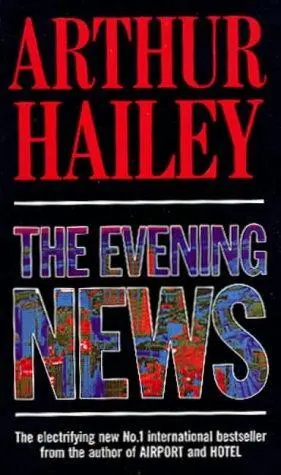
- Название:Evening News
- Автор:
- Жанр:
- Год:неизвестен
- ISBN:нет данных
- Рейтинг книги:3.5 / 5. Голосов: 2
-
Избранное:Добавить в избранное
- Отзывы:
-
Ваша оценка:
Evening News: краткое содержание, описание и аннотация
Предлагаем к чтению аннотацию, описание, краткое содержание или предисловие (зависит от того, что написал сам автор книги «Evening News»). Если вы не нашли необходимую информацию о книге — напишите в комментариях, мы постараемся отыскать её.
Evening News — читать онлайн бесплатно полную книгу (весь текст) целиком
Ниже представлен текст книги, разбитый по страницам. Система сохранения места последней прочитанной страницы, позволяет с удобством читать онлайн бесплатно книгу «Evening News», без необходимости каждый раз заново искать на чём Вы остановились. Поставьте закладку, и сможете в любой момент перейти на страницу, на которой закончили чтение.
Интервал:
Закладка:
Nor was the effect confined to the parking building. The Center City Mall itself sustained structural damage and, in the mall and beyond, windows and glass doors were shattered. Other debris, initially blown upward, descended on adjoining streets, traffic and people.
The shock effect was total. When the initial roar subsided, apart from the quieter sound of fires and falling objects, there was a measurable silence. Then the screams began, followed by incoherent shouts and curses, hysterical pleas for help, unintelligible orders and, soon after, sirens approaching from all directions.
In the end it seemed extraordinary that the human toll, when added up, was no greater than it was. In addition to the maintenance supervisor's instant death, two others died soon after from their injuries and four more victims were critically hurt and hovering between life and death. Twenty-two more, including a half-dozen children, were injured and hospitalized.
Overall, the reference to Beirut in the UPI bulletin did not seem inappropriate.
Afterward there would be debate, focusing on the question: Would the explosion have happened if the maintenance supervisor had awaited the arrival of police? The police said no, claiming they would have called the FBI whose forensic experts would have examined the van, discovered the explosive material, and then disarmed it. But others were skeptical, believing the police would have opened the van anyway, either themselves or using the maintenance man's keys. Eventually, though, the discussion was seen as pointless and petered out.
One thing became self-evident. The destroyed Nissan van had indeed been used by the kidnappers of the Sloane family members two days earlier. The proximity to Larchmont, the van's recorded appearance in the Center City parking building Thursday and the fact that it was booby-trapped all pointed to that conclusion. So did the license number which, when checked against motor vehicle records, was shown as belonging to a 1983 Oldsmobile sedan. However, the owner name, address and insurance data in official files were quickly discovered to be phony; also the registration and insurance fees had been paid in cash, the payer leaving no true identity behind.
What it all meant was that the Oldsmobile had disappeared, probably junked, but its registration was kept alive for illicit use. Thus the license plates on the Nissan were illegal, though not on any police "hot list.”
A question was raised because a witness at Larchmont had described the Nissan van as having New Jersey plates, whereas those seen in the White Plains parking building were New York's. But, as investigators later pointed out, it was normal for criminals to switch license plates immediately after a crime was committed.
One other conclusion was expressed by the White Plains police chief at the explosion scene. He told reporters grimly, "This was clearly the work of hardened terrorists.”
When asked if, extending that reasoning, it was foreign terrorists who had abducted the Sloane family trio, the chief answered, "That didn't happen on my turf, but I would think so.”
* * *
"Let's make that foreign terrorist theory our main focus for this evening's news,” Harry Partridge told Rita and Iris Everly when he heard about the police chief's comment.
The CBA contingent had arrived a few minutes ago in two vehicles—the camera crew aboard a Jeep Wagoneer, Partridge, Rita, Iris and Teddy Cooper in a Chevrolet sedan driven by a network courier—both having covered the twenty-five miles from mid-Manhattan in a sizzling thirty minutes. As well as an assemblage of news people at the scene, a growing crowd of spectators was being herded behind police barriers. Minh Van Canh and the sound man, Ken O'Hara, were already getting videotape and natural sound of the wrecked building, the injured who continued to be removed, and of piles of twisted, tortured vehicles, some still burning. They had also joined an impromptu press conference in time to tape the police chief's statement.
After making a general assessment of the situation, Partridge summoned Minh and O'Hara and began conducting on camera interviews with some of those involved in rescue efforts as well as several spectators who had witnessed the explosion. It was work that could have been performed by the camera crew alone or with a producer. But it gave Partridge a sense of involvement, being in action, of touching the story directly for the first time.
Touching an ongoing news story was psychologically essential to a correspondent, no matter how well informed he or she might be about that story's background. Partridge had been working on the Sloane family kidnap for some forty-two hours, but until now without direct contact with any of its elements. At moments he had felt caged, with only a desk, a telephone and a computer monitor connecting him with the reality outside. Going to White Plains, tragic as the circumstances were, fulfilled a need. He knew the same applied to Rita.
The thought of her caused him to seek Rita out and ask, "Has anyone talked with Crawf?”
"I just phoned him at home,” she said.”He was about to come here, but I pleaded with him not to. For one thing, he'd be mobbed. For another, seeing what those bastards are capable of would upset him terribly.”
"Still, he'll see the pictures.”
"He wants to. He'll meet us at the network, so will Les, and I have what's been shot already.” Rita was holding several tape cassettes. She added, "I think you and I should go. Iris and Minh can stay a while longer.”
Partridge nodded.”Okay, but give me a minute.”
They were on the third floor of the parking garage. Leaving Rita, he walked to an unoccupied, undamaged comer. It provided a view of White Plains and the city going about its regular business. In the distance was the highway to New England and, beyond, the green hills of Westchester—all scenes of normalcy in contrast to the devastation close at hand.
He had walked away from that chaos, wanting a quiet moment to think, to ask and answer a tormenting question: Having accepted a commitment to somehow find and perhaps free Jessica, her son and Crawford's father, was there any hope . . . the slightest hope . . . of his succeeding? At this moment Partridge feared the answer would be no.
What had happened here today, observing what his adversaries were capable of, had been a chastening encounter. It raised still more questions: Could such merciless savagery be matched? Now that a terrorist connection was virtually confirmed, were any civilized resources capable of tracking and outwitting so evil an enemy? And even if the answer happened to be yes, and despite initial optimism at CBA News headquarters, wasn't it an empty conceit to believe that an unarmed news reporting cadre could succeed where police, governments, intelligence and military so often failed?
As to himself, Partridge thought, this was no open battle, the kind of warfare which, perversely or not, excited him and set his juices flowing. This was furtive and filthy, the enemy unknown, the victims innocent, the contest sickening . . .
But personal feelings aside, should he advise for pragmatic reasons the abandonment of active engagement by CBA, advocate their return to a standard role of news observing or, failing that, at least pass on responsibility to someone else? He was conscious of movement behind him. Turning, he saw that it was Rita. She asked, "Can I help?”
He told her, "We've never had one quite like this before, with so much depending not just on what we report, but what we do.”
"I know,” she said.”Were you thinking of turning it in, handing the burden back?”
Rita had surprised him before with her perceptiveness. He nodded.”Yes, I was.”
"Don't do it, Harry,” she urged.”Don't give up! Because if you do, there isn't anyone else that's half as good as you.”
Читать дальшеИнтервал:
Закладка:
Похожие книги на «Evening News»
Представляем Вашему вниманию похожие книги на «Evening News» списком для выбора. Мы отобрали схожую по названию и смыслу литературу в надежде предоставить читателям больше вариантов отыскать новые, интересные, ещё непрочитанные произведения.





Обсуждение, отзывы о книге «Evening News» и просто собственные мнения читателей. Оставьте ваши комментарии, напишите, что Вы думаете о произведении, его смысле или главных героях. Укажите что конкретно понравилось, а что нет, и почему Вы так считаете.