Arthur Hailey - Evening News
Здесь есть возможность читать онлайн «Arthur Hailey - Evening News» весь текст электронной книги совершенно бесплатно (целиком полную версию без сокращений). В некоторых случаях можно слушать аудио, скачать через торрент в формате fb2 и присутствует краткое содержание. Жанр: Современная проза, на английском языке. Описание произведения, (предисловие) а так же отзывы посетителей доступны на портале библиотеки ЛибКат.
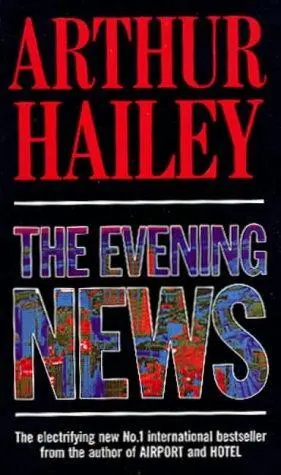
- Название:Evening News
- Автор:
- Жанр:
- Год:неизвестен
- ISBN:нет данных
- Рейтинг книги:3.5 / 5. Голосов: 2
-
Избранное:Добавить в избранное
- Отзывы:
-
Ваша оценка:
Evening News: краткое содержание, описание и аннотация
Предлагаем к чтению аннотацию, описание, краткое содержание или предисловие (зависит от того, что написал сам автор книги «Evening News»). Если вы не нашли необходимую информацию о книге — напишите в комментариях, мы постараемся отыскать её.
Evening News — читать онлайн бесплатно полную книгу (весь текст) целиком
Ниже представлен текст книги, разбитый по страницам. Система сохранения места последней прочитанной страницы, позволяет с удобством читать онлайн бесплатно книгу «Evening News», без необходимости каждый раз заново искать на чём Вы остановились. Поставьте закладку, и сможете в любой момент перейти на страницу, на которой закончили чтение.
Интервал:
Закладка:
Carlos in the Plymouth would be farther back, though it was impossible to see him.
Now they could see that the traffic ahead was being funneled into two right-hand lanes by several state troopers. Between the lanes was some kind of portable structure like a tollbooth and additional troopers appeared to be speaking with drivers as they stopped. Off to the right were more state police vehicles and flashing lights.
Miguel told the other two, "Stay cool. Leave any talking to me.,,
They inched forward for another ten minutes before gaining a better view of the head of the line. Even then it was not clear exactly what was happening; by now it was dark, the many lights confusing. It appeared, though, that after exchanges between the police and each vehicle's occupants, some cars and trucks were being directed to the side for closer examination, others waved on.
Miguel checked his watch. Almost 8 P.m. There was no way they could make the Learjet rendezvous on time.
Despite warning the others to stay cool, Miguel's own tension was mounting. After their remarkable success so far, was this to be the end of the line, resulting in capture or death in a shoot-out with police? Of the two, Miguel knew he would prefer death. The chances of bluffing their way out of this present jeopardy seemed slight. He wondered: Was it best to make a run for it now, at least put up a fight, or should they continue sitting here, letting the minutes tick away, with their only hope the unlikely gamble of getting through?
Luis muttered, "The fuckers are looking for us!” Reaching under his coat, he produced a Walther P38 pistol and laid it on the seat beside him.
Miguel snarled, "Keep that out of sight!”
Luis covered the gun with a newspaper.
Beside him, Miguel felt Socorro tremble. He put a hand on her arm and the movement stopped. He saw her looking steadily ahead, her eyes on an approaching state trooper.
The uniformed figure appeared to be alone, unattached to the group at the head of the line. He was glancing into stopped cars as he passed, pausing occasionally, apparently responding to questions. When the officer was a few yards away Miguel decided to take the initiative. He depressed the switch which lowered the electric window beside him.
”Officer,” Miguel called out, "can you please tell me what this is about?”
The state trooper, who seemed little more than a youth, came closer. A name tag identified him as "Quiles.”
"It's just a driver sobriety check, sir, in the interest of public safety,” he said with a smile that seemed forced.
Miguel didn't believe him.
Then, as the trooper took in the hearse and its contents, he added, "I hope you haven't all come from a wake where there was a big booze-up.”
It was a feeble lunge at humor which came out clumsily, but Miguel saw his chance and grabbed it. Riveting Trooper Quiles with a glare, he said sternly, "If that was meant as a joke, officer, it was in extremely poor taste.”
The young trooper's expression changed instantly. He said, chagrined, "I'm sorry . . .”
As if he hadn't heard, Miguel pressed on, "The lady beside me has been visiting this country with her sister. That is her beloved sister in the casket behind us—tragically killed in a traffic accident, along with two others in the funeral van behind. Their bodies are being flown from here to be buried in their own land. We have an airplane waiting at Teterboro and we appreciate neither your humor nor the delay.”
Taking her cue, Socorro turned her head so the trooper could see tears streaming down her face.
Quiles said penitently, "I said I was sorry, sir and madam. It just slipped out. I do apologize.”
"We accept your apology, officer,” Miguel said with dignity.”Now, I wonder if you could help us proceed on our way.”
"Hold on, please.” The trooper walked quickly forward to the head of the line where he consulted a sergeant. The sergeant listened, looked their way, then nodded. The young officer returned.
He told Miguel, "I'm afraid we're all a bit on edge, sir.” Then lowering his voice in confidence, "The truth is, what's happening here is a cover and we're really looking for those kidnappers. Did you hear what they did in White Plains today?”
"Yes, I did,” Miguel answered gravely.”It was terrible.”
The car immediately ahead had moved forward, leaving a gap.
”Both of your drivers can pass around to the left, sir. Just follow me to the barrier, then join the onward traffic. Again, I'm sorry for what I said.”
The trooper motioned the hearse and GMC truck out of line, at the same time signaling a car behind to continue forward. Glancing back, Miguel could still see no sign of the Plymouth Reliant. Well, he reasoned, Carlos would have to take care of himself. The trooper preceded them on foot until they were level with the portable booth they had seen from a distance, then waved them by. The road ahead was clear.
As the hearse passed him, Trooper Quiles snapped a smart salute, holding it until both vehicles were gone.
Put to its first test, Miguel thought, their cover story had worked. With the challenge of Teterboro still to come, he wondered: Would it work again?
* * *
During the weeks they had been at Hackensack, Miguel had visited Teterboro Airport twice to study the layout.
It was a busy airport used exclusively by private planes. During an average twenty-four hours some four hundred flights might land and take off, many of them at night. About a hundred aircraft made Teterboro their base and were parked along the northeast perimeter. Along the northwest perimeter were the headquarters buildings of six companies which provided operating services for visiting and resident aircraft. Each company had a private entrance to the airport and handled its own security.
Of Teterboro's six service companies, the largest was Brunswick Aviation, the one which, at Miguel's suggestion, the incoming Leatjet 55LR from Colombia would use.
During one of his visits Miguel masqueraded as the owner of a private plane and met with Brunswick's general manager as well as the managers of two other companies. From those meetings it became evident that, for the purpose of loading an aircraft, certain areas of the airport were more secluded and private than others. The least private and most popular arrival and parking area was known as the Table, centrally located near the operators' buildings.
The least-used parking area, regarded as inconvenient, was at the south end. Requests for space there were granted gladly since it relieved pressure at the Table. Also nearby was a locked gate, opened on request by any of the Teterboro operating companies.
Armed with this knowledge, Miguel had sent a message to Bogoti through his contact at New York's Colombian consulate, advising that the incoming Leaijet should request space at the south end near the gate. Then today, making one final use of a cellular phone, he had called Brunswick Aviation requesting that the south gate be opened from 7:45 to 8:15 P.m.
Miguel knew from his earlier conversations at Teterboro that such a request was not unusual. Owners of private aircraft often had business they preferred others not to know about and the airport's operators had a reputation for discretion. One of the airport managers had even described to Miguel an incident concerning an incoming load of marijuana.
After observing suspicious-looking bales being moved from an airplane to a truck, the manager had telephoned police, prompting the drug traffickers' arrest. But afterward the aircraft owner, a regular Teterboro user, complained bitterly about invasion of his privacy when, as he put it, "This is supposed to be a discreet, dependable airport.”
Now, as the hearse and truck neared Teterboro, Miguel directed Luis toward the south gate. Though he did not expect to avoid security attention entirely, he was gambling on its being more informal there than at a main entrance.
Читать дальшеИнтервал:
Закладка:
Похожие книги на «Evening News»
Представляем Вашему вниманию похожие книги на «Evening News» списком для выбора. Мы отобрали схожую по названию и смыслу литературу в надежде предоставить читателям больше вариантов отыскать новые, интересные, ещё непрочитанные произведения.






Обсуждение, отзывы о книге «Evening News» и просто собственные мнения читателей. Оставьте ваши комментарии, напишите, что Вы думаете о произведении, его смысле или главных героях. Укажите что конкретно понравилось, а что нет, и почему Вы так считаете.