Arthur Hailey - Evening News
Здесь есть возможность читать онлайн «Arthur Hailey - Evening News» весь текст электронной книги совершенно бесплатно (целиком полную версию без сокращений). В некоторых случаях можно слушать аудио, скачать через торрент в формате fb2 и присутствует краткое содержание. Жанр: Современная проза, на английском языке. Описание произведения, (предисловие) а так же отзывы посетителей доступны на портале библиотеки ЛибКат.
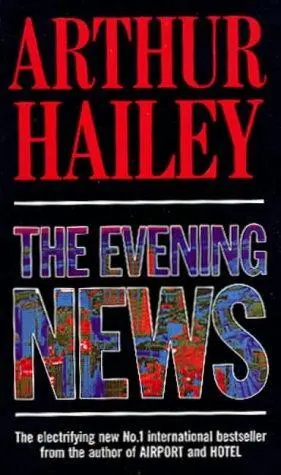
- Название:Evening News
- Автор:
- Жанр:
- Год:неизвестен
- ISBN:нет данных
- Рейтинг книги:3.5 / 5. Голосов: 2
-
Избранное:Добавить в избранное
- Отзывы:
-
Ваша оценка:
Evening News: краткое содержание, описание и аннотация
Предлагаем к чтению аннотацию, описание, краткое содержание или предисловие (зависит от того, что написал сам автор книги «Evening News»). Если вы не нашли необходимую информацию о книге — напишите в комментариях, мы постараемся отыскать её.
Evening News — читать онлайн бесплатно полную книгу (весь текст) целиком
Ниже представлен текст книги, разбитый по страницам. Система сохранения места последней прочитанной страницы, позволяет с удобством читать онлайн бесплатно книгу «Evening News», без необходимости каждый раз заново искать на чём Вы остановились. Поставьте закладку, и сможете в любой момент перейти на страницу, на которой закончили чтение.
Интервал:
Закладка:
There was an approving murmur around the table.”Nice staff work,” Chippingham said.”Thank Fiona for me.”
"We should keep a sense of proportion, though,” Owens pointed out.”At the moment we've nothing more than coincidence and it's only a guess that Rodriguez might be involved with our kidnap. Also, that charcoal drawing is twenty years old.”
"People don't change all that much, even in twenty years,” Partridge said.”What we can do is show the picture around Larchmont and ask if anyone remembers seeing him. Anything else?”
"Washington bureau checked in,” Rita said.”They say the FBI has nothing new. Their forensic people are working on what was left of the Nissan van at White Plains, but they're not hopeful. Just as Salerno said on Friday's broadcast, the FBI in kidnap cases depend on the kidnappers making contact.”
Partridge looked down the table toward Sloane.”I'm sorry, Crawf, but that seems to be all we have.”
Rita reminded him, "Except for Teddy's idea.”
Sloane said sharply, "What idea? I haven't heard it.”
"Best let Teddy explain,” Partridge said. He nodded to the young Englishman, also seated at the table, and Cooper brightened as attention focused on him.
”It's a possible way to find out where the snatchers had their hideout, Mr. S. Even though by now I'm sure they've scarpered.”
Chippingham asked, "If they've gone, what good would that do us?”
Sloane gestured impatiently.”Never mind that. I want to hear the idea.”
Despite the intervention, Cooper answered Chippingham first.”Traces, Mr. C. There's always a chance people leave traces, showing who they are, where they came from, maybe even where they've gone.”
Including the others in his remarks, Cooper repeated the proposal made to Partridge and Rita earlier that day . . . described the kind of property and location he visualized as the kidnappers' headquarters . . . his belief the kidnappers could have obtained their base by responding to newspaper advertising . . . the plan to examine classified ads appearing over the past three months in newspapers within twenty-five miles of Larchmont . . . Objective of the search: to match the theoretical HQ description . . . The detail work, in libraries and newspaper offices, to be done by bright young people hired especially . . . Later, the same group, under supervision, would investigate possible locations the search produced . . .
Cooper ended, "It's a long shot, I admit.”
"I wouldn't even put it that high,” Chippingham said. He had been frowning during the recital, his frown deepening as the hiring suggestion emerged.”How many people are we talking?”
Rita said, "I've done some checking. In the area we're speaking of, there are approximately a hundred and sixty newspapers, including dailies and weeklies. Libraries don't carry back numbers of more than a few of those, so mostly it would mean going to publication offices and searching through files. Doing that, reading back through three months of ads and making notes, would be a monumental job. But if it's to be of value, it will need to be done fast . . .”
Chippingham cut in.”Will someone please answer my question. How many people?”
"I estimate sixty,” Rita told him.”On top of that, some supervision.”
Chippingham turned to Partridge.”Harry, are you seriously recommending this?” His tone conveyed, You couldn't be that crazy!
Partridge hesitated. He shared Chippingham's doubts. This morning, during the drive back from White Plains, he had mentally labeled Teddy's notion a harebrained scheme; nothing since then had changed his mind. Then he reasoned: Sometimes taking a stand was a good idea, even with a long shot.
”Yes, Les,” he said, "I'm recommending it. It's my opinion that we ought to try everything. Right now, we aren't overburdened with leads or fresh ideas.”
Chippingham was unhappy with the answer. He felt apprehensive at the thought of employing sixty extra people, plus their travel and other expenses, for what could turn out to be several weeks—to say nothing of the supervisory help Rita had mentioned. That kind of hiring always added up to horrendous sums. Of course, in the old free-spending days of TV news he wouldn't have thought twice about it. No one did. But now, Margot Lloyd-Mason's edict about the kidnap task force echoed in his mind: "I don't want anyone . . . going wild about spending money . , . No activity exceeding budget is to be embarked on without my advance approval.
”Well, Chippingham thought, as much as anyone else he wanted to find out where Jessica, the Sloane kid and the old man had been taken and, if he had to, he'd go to bat with Margot on the money crunch. But it would have to be on behalf of something he believed in and not this piece of idiot shit from the arrogant Limey.
”Harry, I'm going to veto that one, at least for the time being,” Chippingham said.”I simply don't think it has enough possibility to justify the effort.” Even now, he supposed, if the others knew the part of his thinking that included Margot, they would call him craven. Well, never mind, he had problems including hanging on to his own job—they didn't know about.
Jaeger began, "I would have thought, Les . . .”
Before he could finish, Crawford Sloane said, "Norm, let me.” As Jaeger subsided, the anchorman's voice sharpened.”When you talk about not justifying the effort, Les, aren't you really saying you won't spend the money?”
"That's a factor; you know it always is. But mostly it's a judgment call. What's been suggested isn't a good idea.”
"Perhaps you have a better one,”
“Not at this moment.”
Sloane said icily, "Then I have a question and I'd like an honest answer. Has Margot Lloyd-Mason put a spending freeze on?”
Chippingham said uneasily, "We've discussed budget, that's all.” He added, "Can you and I talk privately?”
"No!” Sloane roared, jumping to his feet, glaring at Chippingham.”No goddamn privacy for that cold-hearted bitch! You answered my question. There is a money freeze.”
"It's not significant. For anything worthwhile, I'll simply call Stonehenge . . .”
Sloane stormed, "And what I'll call is a press conference right here, tonight! To tell the world that while my family is suffering in some hellhole, god knows where, this wealthy network is huddling with accountants, reviewing budgets, haggling over pennies . . .”
Chippingham protested, "No one's haggling! Crawf, this isn't necessary. I'm sorry.”
"And what the hell good does that do?”
The others around the table could scarcely believe what they were hearing: In the first place, that a spending freeze had been applied secretly to their own project, and second, in the present desperate situation, not to try all possibilities was inconceivable.
Something else was equally incredible: That CBA should so offend its most illustrious citizen, the senior anchorman. Margot Lloyd-Mason had been mentioned; therefore it could only be concluded she represented the ax-wielding hand of Globanic Industries.
Norman Jaeger stood up too, the simplest form of protest. He said quietly, "Harry thinks we should give Teddy's idea a chance. So do I”
Karl Owens joined him.”Me too.”
"Add me to the list.” Iris Everly.
Rita, a touch reluctantly, caring about Chippingham, said, "I guess you'd better count me in.”
"Okay, okay, let's cut the histrionics,” Chippingham said. He realized he had been guilty of misjudgement, knew that either way he was the loser, and silently cursed Margot.”I reverse myself. Maybe I was wrong. Crawf, we'll go ahead.”
But he wouldn't, Chippingham, decided, go to Margot and ask for approval; he knew too well, had known from the beginning, what her response would be. He would authorize the expense and take his chances.
Читать дальшеИнтервал:
Закладка:
Похожие книги на «Evening News»
Представляем Вашему вниманию похожие книги на «Evening News» списком для выбора. Мы отобрали схожую по названию и смыслу литературу в надежде предоставить читателям больше вариантов отыскать новые, интересные, ещё непрочитанные произведения.




Обсуждение, отзывы о книге «Evening News» и просто собственные мнения читателей. Оставьте ваши комментарии, напишите, что Вы думаете о произведении, его смысле или главных героях. Укажите что конкретно понравилось, а что нет, и почему Вы так считаете.