Gerald Murnane - Barley Patch
Здесь есть возможность читать онлайн «Gerald Murnane - Barley Patch» весь текст электронной книги совершенно бесплатно (целиком полную версию без сокращений). В некоторых случаях можно слушать аудио, скачать через торрент в формате fb2 и присутствует краткое содержание. Год выпуска: 2011, Издательство: Dalkey Archive Press, Жанр: Современная проза, на английском языке. Описание произведения, (предисловие) а так же отзывы посетителей доступны на портале библиотеки ЛибКат.
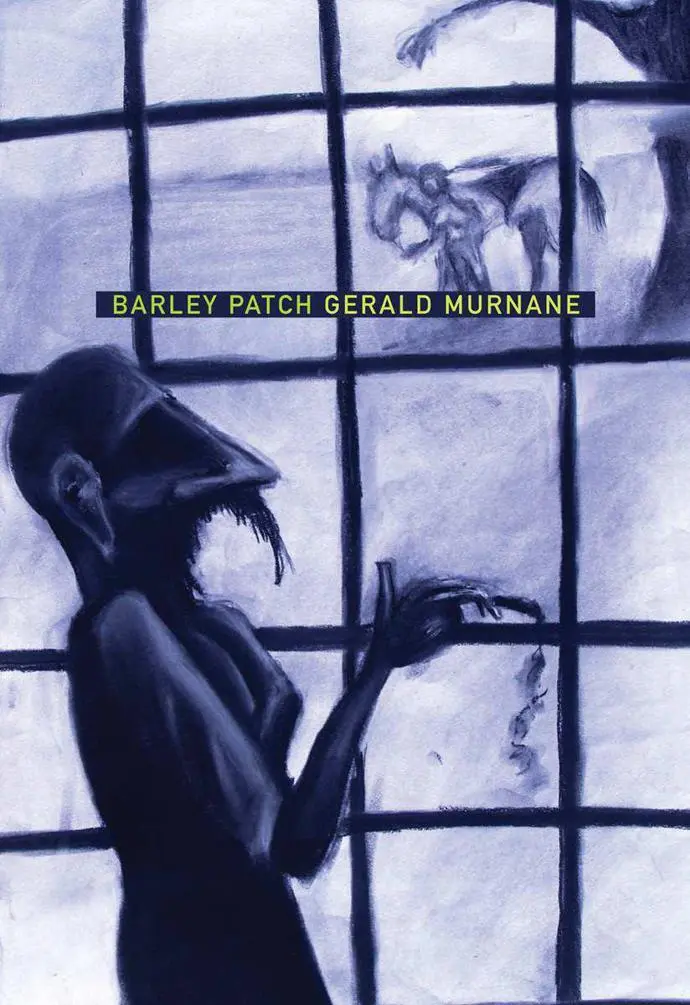
- Название:Barley Patch
- Автор:
- Издательство:Dalkey Archive Press
- Жанр:
- Год:2011
- ISBN:нет данных
- Рейтинг книги:5 / 5. Голосов: 1
-
Избранное:Добавить в избранное
- Отзывы:
-
Ваша оценка:
Barley Patch: краткое содержание, описание и аннотация
Предлагаем к чтению аннотацию, описание, краткое содержание или предисловие (зависит от того, что написал сам автор книги «Barley Patch»). Если вы не нашли необходимую информацию о книге — напишите в комментариях, мы постараемся отыскать её.
Barley Patch — читать онлайн бесплатно полную книгу (весь текст) целиком
Ниже представлен текст книги, разбитый по страницам. Система сохранения места последней прочитанной страницы, позволяет с удобством читать онлайн бесплатно книгу «Barley Patch», без необходимости каждый раз заново искать на чём Вы остановились. Поставьте закладку, и сможете в любой момент перейти на страницу, на которой закончили чтение.
Интервал:
Закладка:
The chief character had moved out of his parents’ house during his twenty-first year. He took with him two cardboard grocery cartons full of books, several manila folders of drafts of poems waiting to be revised, his binoculars, and his clothes. During the four years between his moving out and his arrival with his binoculars at the upstairs flat, the chief character had lived in six different rented rooms in various suburbs of Melbourne but had kept safe his cartons of books and his folders of poems and his binoculars, which were still in their original case of imitation leather. In the case also was a parcel of white cloth, about half the size of the chief character’s thumb. The parcel was stuffed with some or another sort of crystal or granule, the purpose of which, so the chief character had heard from someone, was to draw off the moisture in the air inside the case of imitation leather.
Whenever he opened the case in order to take out the binoculars or to put them away, the chief character would touch the parcel several times with a fingertip. Afterwards, he would roll the parcel between several fingertips, pressing and squeezing the cloth until he could feel some of the many crystals that were packed into the parcel. Whenever he merely touched the parcel, he seemed to be plumping a pillow that belonged on a bed in a bedroom on the upper storey of a doll’s house. After he had plumped the pillow, it would have been ready for placing on the single bed in the upper room in his mind so that the young female personage whose room it was could have lain to rest in the bed whenever it had pleased her to leave off looking out from her upper-storey window and to step across the room to her bed. If it had occurred to him that the usual occupants of a doll’s house were lifeless figurines, then he would have seen the female personage in his mind either as a character in a comic-strip in his mind or as the handiwork of a craftsman of genius who had equipped the personage and, perhaps, each of the other personages in the same house, with tiny clockwork or electric motors that enabled the personages to walk and to perform certain rudimentary movements. Whenever he fingered the granules inside the parcel, he seemed to be fingering beads of a substance that he knew as Irish horn.
Like many another earnest Catholic schoolboy during the 1940s, the chief character had carried in his pocket a set of rosary beads. Sometimes he passed the beads between his fingers while he murmured the collection of prayers known as the rosary. He understood that the beads themselves were no more than counters or markers and had no intrinsic spiritual value. However, he had once received as a present from his father’s youngest sister a set of beads somewhat different from any that he had previously owned or seen. A small cloth label attached to the beads stated that they were made from genuine Irish horn. The chief character did not know at the time, and never afterwards learned, what were the origins of Irish horn, whether genuine or imitation. But his not knowing as a boy what the beads were made from only added to their value in his estimation. He would have prized them for their appearance alone. Every bead differed, however slightly, from the next, if not in shape then in colour. If a bead was not distinguished by some bulge or concavity, then it was more richly tinted or less so than its neighbours. The fifty and more beads, when viewed from a distance, seemed predominantly blue-green, but hardly any bead, when he looked closely at it, could have been called either blue or green. In many a bead was a tint that he could not name, but this only pleased him the more. He would sometimes hold bead after bead between an eye and the light, hoping to see what he saw whenever he peered into certain of his glass marbles or into certain panels of coloured glass in the front doors of houses: a luminous other-world waiting to be populated by personages of his own devising; or, perhaps, a limpid medium, much less dangerous than water, through which he might have found his way towards places beneath rivers and lakes where characters from comic-strips or from poems watched over their female captives who might have been, after all, not dead but merely fast asleep.
The chief character took his binoculars to the upstairs flat on a few Friday evenings and Saturday evenings but got no benefit from them. He and his companions soon tired of keeping watch in the dark bathroom until the light might have been turned on in the young woman’s bedroom. Sometimes, when one or another young man had seemed to stay overlong in the bathroom, the others would suspect him of having sighted the young woman and kept her for himself alone, as it were. Once, when the chief character had stepped into the bathroom in order to urinate, the light had just then appeared in the young woman’s room. The chief character had picked up the binoculars from where they lay in readiness on the bathroom floor, but before he had brought them into focus the light had been turned off again.
On a certain Friday or Saturday evening, the chief character’s binoculars were lying in readiness on the floor of the bathroom of the upstairs flat but all of the young men gathered in the flat were drinking beer in the lounge-room and watching some or another television program. At a certain point in the evening, according to the narrator of the abandoned work of fiction, the young men found themselves watching images of bishops or cardinals or high-ranking personages of the Catholic Church while some or another religious ceremony was taking place. Several times, while the young men watched, the image of one or another personage was seen to close its eyes and to bow its head for a few moments. After the second or third occasion when an image had appeared thus, the young man who lived in the upstairs flat began to jeer at the images of the personages.
The young man who jeered was one of two persons in the room who had attended a Catholic secondary school but had later ceased to call themselves Catholics. The other such person was the chief character. The young man who jeered looked while he jeered in the direction of the chief character. The young man then left off jeering and asked a question of the chief character as though he might have been the only person in the room who could answer the question. The young man asked what it was that Catholic bishops and priests and members of religious orders saw or affected to see whenever they closed their eyes during religious ceremonies.
The chief character of the work of fiction that would never be completed gave some or another flippant answer to the young man who had jeered at the images, but he, the chief character, was not comfortable. This was not because he was in any way sympathetic to the personages whose images had appeared just then on the television screen but because he himself, a few years before, had often closed his eyes and bowed his head during religious ceremonies. The chief character and the young man who jeered had sat in the same classroom during their final year of secondary education. The jeerer had failed his matriculation examination and had then gone to work in an office in a building of many storeys where he had spent much of his time planning to find a young woman who would live with him without first having married him. The chief character had passed his matriculation examination and had then gone to live in a building of two storeys among mostly grassy countryside, which building was the novitiate of a religious order of priests. The chief character had lived for only twelve weeks in the building of two storeys and had then returned to his parents’ home in a suburb of Melbourne. Soon afterwards, he had gone to work in an office in a building of many storeys where he had spent much of his time planning to write poetry or prose fiction. On the evening when his former classmate had jeered at the images on the television screen, the chief character had suspected that his former classmate was jeering at him — not as though the chief character still prayed or still attended religious ceremonies but as though his staying alone in his room during most evenings and his trying to write poetry or prose fiction was his way of closing his eyes against the real world for the sake of something illusory. The chief character could not have defended himself if he had been thus jeered at. Moreover, he suspected already that he was far from being the sort of writer who could include, years later, in one of his works a scene, so to call it, in which a fictional writer avenged himself against a fictional jeerer.
Читать дальшеИнтервал:
Закладка:
Похожие книги на «Barley Patch»
Представляем Вашему вниманию похожие книги на «Barley Patch» списком для выбора. Мы отобрали схожую по названию и смыслу литературу в надежде предоставить читателям больше вариантов отыскать новые, интересные, ещё непрочитанные произведения.











Обсуждение, отзывы о книге «Barley Patch» и просто собственные мнения читателей. Оставьте ваши комментарии, напишите, что Вы думаете о произведении, его смысле или главных героях. Укажите что конкретно понравилось, а что нет, и почему Вы так считаете.