Gerald Murnane - Barley Patch
Здесь есть возможность читать онлайн «Gerald Murnane - Barley Patch» весь текст электронной книги совершенно бесплатно (целиком полную версию без сокращений). В некоторых случаях можно слушать аудио, скачать через торрент в формате fb2 и присутствует краткое содержание. Год выпуска: 2011, Издательство: Dalkey Archive Press, Жанр: Современная проза, на английском языке. Описание произведения, (предисловие) а так же отзывы посетителей доступны на портале библиотеки ЛибКат.
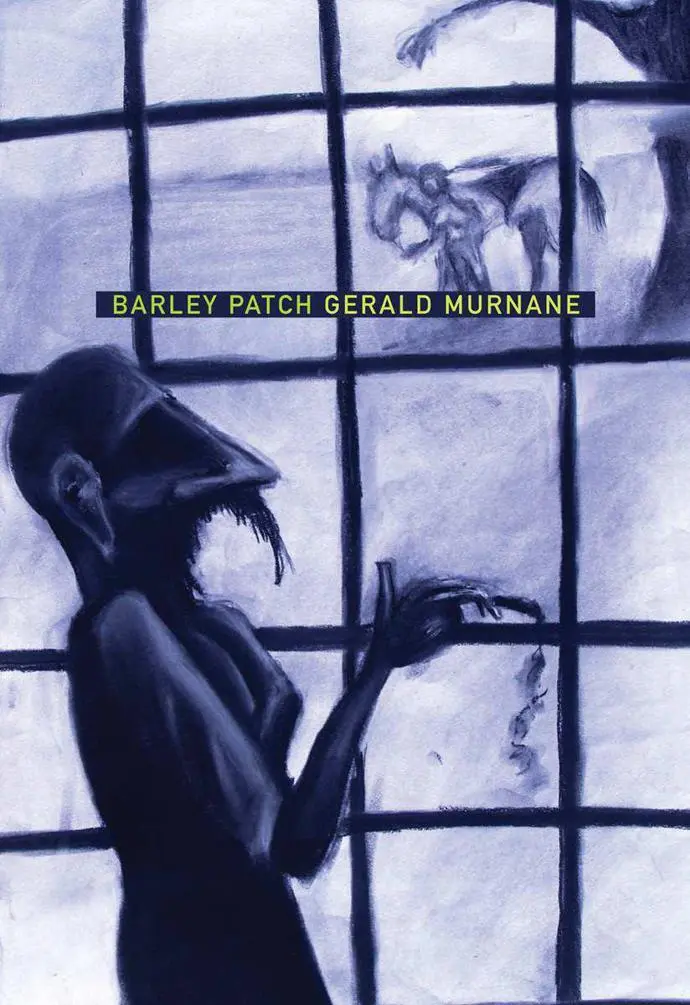
- Название:Barley Patch
- Автор:
- Издательство:Dalkey Archive Press
- Жанр:
- Год:2011
- ISBN:нет данных
- Рейтинг книги:5 / 5. Голосов: 1
-
Избранное:Добавить в избранное
- Отзывы:
-
Ваша оценка:
Barley Patch: краткое содержание, описание и аннотация
Предлагаем к чтению аннотацию, описание, краткое содержание или предисловие (зависит от того, что написал сам автор книги «Barley Patch»). Если вы не нашли необходимую информацию о книге — напишите в комментариях, мы постараемся отыскать её.
Barley Patch — читать онлайн бесплатно полную книгу (весь текст) целиком
Ниже представлен текст книги, разбитый по страницам. Система сохранения места последней прочитанной страницы, позволяет с удобством читать онлайн бесплатно книгу «Barley Patch», без необходимости каждый раз заново искать на чём Вы остановились. Поставьте закладку, и сможете в любой момент перейти на страницу, на которой закончили чтение.
Интервал:
Закладка:
I drove my motor-car from Melbourne to the coastal city that has been mentioned several times already in these pages. The time of year was late winter, and I remembered that the time of year had been late winter also when I had travelled by railway-train to visit my uncle fourteen years before and had talked with him about plovers and other matters. The hospital where I met with him was on the northern side of the coastal city, far from any view of the Southern Ocean; the view from his room was of mostly level grassy paddocks with lines of trees in the distance.
I spoke with my youngest uncle for nearly an hour. He was weak and haggard, and his skin was yellow, but he seemed no less cheerful than of old. We spoke about his father’s farm, of the tall cliffs visible from every paddock of the farm, and of the sounds of the ocean that were heard from every paddock except on the few days of the year when the north wind blew from the plains inland. We spoke about the birds that he and I had observed, and I reminded him about the white-fronted chat, the bird that lived the life of a species from the inland plains even though gales from the Southern Ocean would sometimes bend sideways the clumps of rushes where its nest was hung. We spoke mostly, however, about horse-racing: about successful or unlucky bets we had made; about champion horses we had seen; about racing colours we had admired or about racehorse-names we had thought witty or inspired. As I prepared to leave him, I suggested to my youngest uncle that he should not have been surprised if my interests, in later years, had been different from his own, given that Boy Charlton had had a brother who wouldn’t wash himself. In all the time while we were together, that was the nearest we came to referring to my books of fiction.
We were still outwardly cheerful as I prepared to leave, although we both surely knew that we would never meet again in the place that is sometimes called this world , as though to suggest that at least one other world may exist. When we came to shake hands, my youngest uncle thanked me for what he called my wonderful companionship during our earlier years together. I was so surprised that I was able to grasp his hand and to look him in the eye and then to stride to the door of his room and for some little distance along the corridor of the hospital before I began to weep.
While I drove back to Melbourne, I came to understand that the hour while my uncle and I had talked together in the hospital might have been the first time for as long as I could remember when I had kept out of my mind all thoughts of books of fiction that I had written or of books of fiction that I hoped to write in future and perhaps, too, of books of fiction that other persons had written and that I had read. While I had talked with my uncle, he and I had behaved as though I had never written any book of fiction and as though I had no intention of writing any book of fiction in the future. We had restricted ourselves to talking about views of ocean and of mostly level grassy countryside, about birds, and about horse-racing, as though none of those topics had ever found its way into a book of fiction. I might have said afterwards that I had survived for an hour without fiction or that I had experienced for a little the life I would have led if I had never had recourse to fiction. I might have said that that life would not have been impossible to lead if only I could have accepted its chief hardship: if only I could have accepted that I would never be able to suggest to another person what I truly felt towards him or her.
I have reported in the previous seventy-eight paragraphs numerous events, few of them seeming to be connected with my conception. Admittedly, my father and my mother have been referred to, but surely I could conjecture, postulate, speculate more boldly as to how those two came together?
No, I could not. Whatever I might have hoped to achieve when I began this piece of fiction, I am not going to be able to explain how I came to be conceived.
During my lifetime, I have seen many writers of fiction praised for something called psychological insight. This faculty is said to enable the writers to explain why their characters behave as they are reported to behave in the writers’ works of fiction. I would be surprised if any reader or critic claimed to have found anywhere in my fiction an entity deserving to be called a character . And even supposing that some far-seeing reader or critic has glimpsed, among the mazes of my sentences, some shape or phantom of a man or a woman, I would defy such a reader or critic to endow such an illusion with anything that might be called a trait of anything that might be called a character. Any personage referred to in my fiction has its existence only in my mind and finds its way into my fiction only so that I might learn why it occupies in my mind the position that it occupies there.
Yes, I have referred to the man who released the pheasants as my father. Likewise, I have referred to a girl seen from a distance on a certain afternoon as my mother, but I am unable to compose sentences that might even begin to explain how the breeder of pheasants and the wearer of the pale-coloured frock even came to meet, let alone to be drawn to one another and finally to copulate.
If I have not stated it previously, then I state it here. This work of fiction is a report of scenes and events occurring in my mind. While writing this work of fiction, I have observed no other rules or conventions than those that seem to operate in that part of my mind wherein I seem to witness scenes and events demanding to be reported in a work of fiction.
In the impossible circumstance that I possessed an imagination, I might, perhaps, be able to bring the breeder of pheasants and the pale-clad girl in the distance, his step-cousin, into the one bed, but I prefer to report a series of unlikely events that composed itself I know not when in some or another far paddock of my mind. The events comprise no more than an exchange of several letters between two persons who had never met and were never to meet, along with the speculations and, perhaps, the imaginings of each of the two persons. One of the persons was a young unmarried man living in a district of mostly level grassy countryside with a line of cliffs and an ocean in one direction and in the other direction the beginnings of a district of plains. The other person was a young unmarried woman living in a building of more than one storey. I cannot explain how the exchange of letters began, unless to suggest that the two young persons may have been distant relatives. Early letters would have included reports of books that each of the writers had read or hoped soon to read. Later letters would have reported details from the childhood of each writer. Such a sympathy and such an understanding would have developed between the writers — and readers, as they ought also to be called — that each might sometimes have speculated as to how differently the two might have lived if they had learned from one another early in life what they had later learned from their letters. And if even one of the two had been able to do so, then he or she would have called into being an imagined courtship and marriage and even an imaginary child of the marriage.
Much of what has been written in the preceding few pages might be said to have been misleading. The true account of my conception is simply told. Being no more than the conjectured author of this work of fiction, I can have come into existence only at the moment when a certain female personage who was reading these pages formed in her mind an image of the male personage who had written the pages with her in mind.
Some or another conception has been reported at last. This text is surely at an end.
A personage, or even a person, who reports the events preceding his or her conception should surely not end the report at the moment of conception. Although the existence of the personage or person might be said to have begun at conception, his or her lasting awareness of things was then far from having begun.
Читать дальшеИнтервал:
Закладка:
Похожие книги на «Barley Patch»
Представляем Вашему вниманию похожие книги на «Barley Patch» списком для выбора. Мы отобрали схожую по названию и смыслу литературу в надежде предоставить читателям больше вариантов отыскать новые, интересные, ещё непрочитанные произведения.


Обсуждение, отзывы о книге «Barley Patch» и просто собственные мнения читателей. Оставьте ваши комментарии, напишите, что Вы думаете о произведении, его смысле или главных героях. Укажите что конкретно понравилось, а что нет, и почему Вы так считаете.