Gerald Murnane - Barley Patch
Здесь есть возможность читать онлайн «Gerald Murnane - Barley Patch» весь текст электронной книги совершенно бесплатно (целиком полную версию без сокращений). В некоторых случаях можно слушать аудио, скачать через торрент в формате fb2 и присутствует краткое содержание. Год выпуска: 2011, Издательство: Dalkey Archive Press, Жанр: Современная проза, на английском языке. Описание произведения, (предисловие) а так же отзывы посетителей доступны на портале библиотеки ЛибКат.
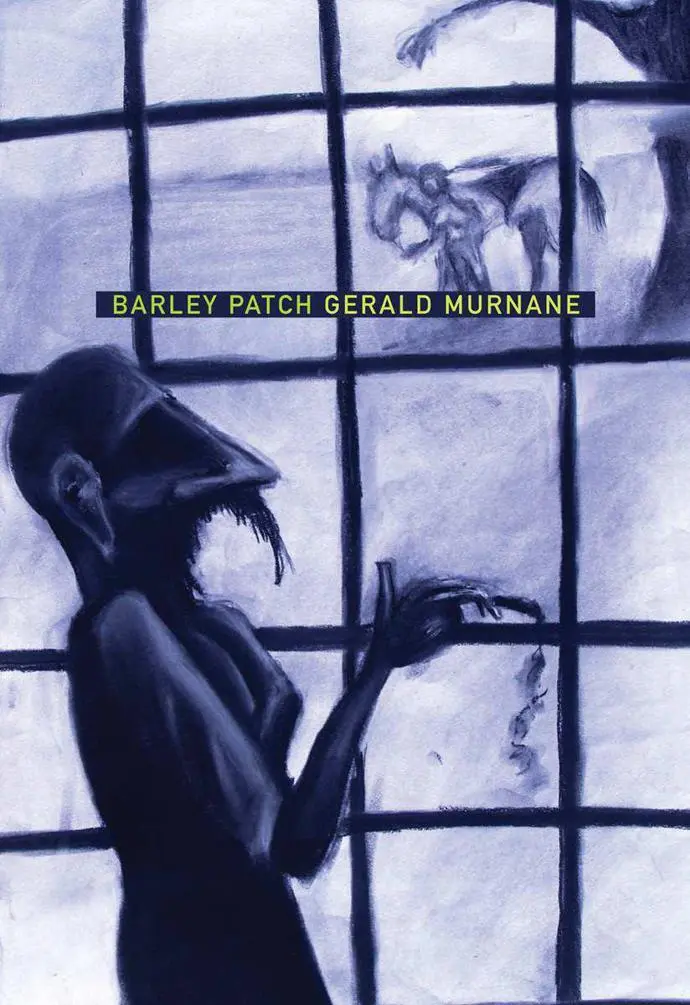
- Название:Barley Patch
- Автор:
- Издательство:Dalkey Archive Press
- Жанр:
- Год:2011
- ISBN:нет данных
- Рейтинг книги:5 / 5. Голосов: 1
-
Избранное:Добавить в избранное
- Отзывы:
-
Ваша оценка:
Barley Patch: краткое содержание, описание и аннотация
Предлагаем к чтению аннотацию, описание, краткое содержание или предисловие (зависит от того, что написал сам автор книги «Barley Patch»). Если вы не нашли необходимую информацию о книге — напишите в комментариях, мы постараемся отыскать её.
Barley Patch — читать онлайн бесплатно полную книгу (весь текст) целиком
Ниже представлен текст книги, разбитый по страницам. Система сохранения места последней прочитанной страницы, позволяет с удобством читать онлайн бесплатно книгу «Barley Patch», без необходимости каждый раз заново искать на чём Вы остановились. Поставьте закладку, и сможете в любой момент перейти на страницу, на которой закончили чтение.
Интервал:
Закладка:
My own report should end with the following account of a few moments during the summer when I became two years of age. The sunlight is strangely bright, as though the previous two years of my life have been lived in darkness. My father has taken me into a strange house. As for the whereabouts of the house, I will seem to recall long afterwards that my father and I arrived at the house after we had travelled for some distance along the road that led towards a place called Kinglake from our own house in the mostly level grassy countryside of Bundoora, north of Melbourne.
While my father talks with the man of the house, a woman picks me up and carries me towards a doorway within the house. The smooth skin of the woman and her pleasant voice appeal to me. Beyond the doorway is darkness. The woman steps through the doorway, still carrying me in her arms. From somewhere in the darkness, the woman takes up a small object and then puts it into my hands. Outside again, in the bright sunlight, I see that the object is some sort of home-cooked biscuit or cake. The woman urges me to eat the object, but I want only to admire the colour of the object, which is a golden yellow. As soon as the woman has set me down, I take the object back through the doorway. I am eager to watch again while the eloquent yellow stands out from the blackness.
PART 2
Seemingly, this text is still far from the end. What remains to be reported about my having decided to write no more fiction?
A hasty reader of the previous pages may still be waiting to learn why I gave up writing fiction more than fifteen years ago. A more careful reader may already be on the way to learning why I gave up. The hasty reader and the careful reader alike are perhaps curious to know what I happened to be writing on the bustling afternoon when I stopped writing fiction without even having questioned myself as the poet Rilke had recommended. Each sort of reader is welcome to the information that I was writing, on the bustling afternoon, the latest of the hundreds of pages that I had written during the previous four years in an effort to put together a longer and more dense piece of fiction than I had previously put together. The title of the abandoned piece of fiction had occurred to me at some time before I had written the first words of the piece, just as every other title of every other work of fiction of mine had occurred to me. The title in question was O, Dem Golden Slippers .
The hundreds of pages mentioned in the previous paragraph have lain for more than fifteen years in one of the filing cabinets that stand against the walls of the room where I sit writing these words. In the same filing cabinet are scores of other pages comprising notes and early drafts that I wrote before I began to write the first of the hundreds of pages. All of the pages mentioned are in hanging files each of which is accurately labelled, but I prefer not to look into those files today. I prefer to report the few details that have stayed in my mind for more than fifteen years rather than to look again at the pages that I struggled to write for four years until I suddenly gave up the struggle on the bustling afternoon mentioned earlier.
The first section of my abandoned work of fiction was a report of something that I had heard from a mature-age student of my fiction-writing course some years before I began to write the work. I reported that a certain young man who had spent all his life in a small town in north-eastern Tasmania daydreamed often of going to live in Hobart, which he saw in his mind as a city of many-storeyed office-buildings surrounded by suburbs where not a few of the houses were of two storeys. On a certain day during his last year of secondary school, the young man saw in a newspaper a portion of the text of an advertisement directed to young persons about to leave school. The young man learned from the portion of text that board and lodging would be found in Hobart for successful applicants. The young man had then begun to draft an application in his mind even before he had learned what sort of training course or occupation was being advertised. I reported finally that the young man had escaped from his small town to Hobart and thence to Melbourne whereas the chief character of the work of fiction of which my report was the beginning — that character had escaped in a different direction. He had spent most of his early life in one or another suburb of Melbourne. During his last year of secondary school he saw, in a booklet published by a religious order of priests, a black and white reproduction of a photograph of a large building of two storeys overlooking a view of mostly level grassy countryside in the Riverina district of New South Wales. He had decided to apply to join the order of priests even before he had learned what his life’s work would be if his application was successful.
An early section of the unfinished work of fiction was set, as it were, in what used to be called a flat on the second storey of a block of flats in an inner suburb of Melbourne. Some of the windows of the flat overlooked a park where open grassy expanses were crossed by lines of trees. The tenants of the flat were a young man and a young woman who lived together although they had not yet been married. The time when the fictional passage was set in the flat was the early 1960s.
During the many years since the 1960s, many persons have written inaccurate accounts of that decade. Many of those persons have written, for example, that the decade was a period of liberation or of sexual freedom. I was a young man in my twenties during the 1960s. I was well aware of a mood of expectation among younger persons. We sensed that things would change for the better in the near future. In the meanwhile, however, no great changes seemed to have taken place. In the late 1960s, for example, one of my girl-cousins, a daughter of one of my father’s younger brothers, travelled in secret from Melbourne to Sydney and there gave birth to a so-called illegitimate child. The child was taken at once to a so-called babies’ home, there to await adoption. In the late 1960s, for example, a young woman of my acquaintance who spent the 1970s and every decade thereafter as a follower of the latest trends and fashions — that young woman lived for a week of her annual holidays with her boyfriend in a holiday-flat on the Mornington Peninsula but posed throughout the week as his wife and wore a mock wedding-ring and a mock engagement-ring.
On Friday evenings and on Saturday evenings, several young men would visit the flat that was the fictional setting mentioned earlier, there to drink beer and to talk and to watch television and, perhaps, to try to learn by some or another means how each of them might one day persuade some or another young woman to live with him in a flat although the two had not yet married.
According to my unfinished work of fiction, one or another young man, on one or another Friday or Saturday evening, had looked through the partly opened window of the bathroom of the second-storey flat while he was urinating without having turned on the light in the bathroom. The young man had then hurried back to the lounge-room of the flat and had told the persons gathered there that a young woman was undressing in a bedroom of an upstairs flat in the neighbouring block of flats. All of the young men in the lounge-room hurried into the bathroom and took turns to look out through the partly opened window. One of the young men was intended to be the chief character of the whole work of fiction. He will be called from here onwards the chief character.
The chief character had not previously seen a naked adult female person, although the young woman in the neighbouring flat had been too far away for him to appreciate the details of her nakedness. On the next evening when he visited the second-storey flat, he took with him the pair of binoculars that he had bought during the late 1950s, when he had been working as a junior clerk in a building of many storeys near the centre of Melbourne in the first year after he had finished his secondary education. Only a few months after he had begun to work as a junior clerk, the first consignment of Japanese binoculars arrived in Australia. The advertised price of a pair of these binoculars was three times his weekly wage, but he bought a pair without hesitation. Until then, the only binoculars available in Australia had been German binoculars costing at least twenty times the weekly wage of a junior clerk. His father had owned a pair of German binoculars for several years during the mid-1930s. He had bought the binoculars from the proceeds of winning bets on racehorses but had later pawned them and had never afterwards redeemed them. The chief character had for long supposed that his father had had to pawn the binoculars so that he could afford to buy an engagement ring and later to be married.
Читать дальшеИнтервал:
Закладка:
Похожие книги на «Barley Patch»
Представляем Вашему вниманию похожие книги на «Barley Patch» списком для выбора. Мы отобрали схожую по названию и смыслу литературу в надежде предоставить читателям больше вариантов отыскать новые, интересные, ещё непрочитанные произведения.




Обсуждение, отзывы о книге «Barley Patch» и просто собственные мнения читателей. Оставьте ваши комментарии, напишите, что Вы думаете о произведении, его смысле или главных героях. Укажите что конкретно понравилось, а что нет, и почему Вы так считаете.