Gerald Murnane - Barley Patch
Здесь есть возможность читать онлайн «Gerald Murnane - Barley Patch» весь текст электронной книги совершенно бесплатно (целиком полную версию без сокращений). В некоторых случаях можно слушать аудио, скачать через торрент в формате fb2 и присутствует краткое содержание. Год выпуска: 2011, Издательство: Dalkey Archive Press, Жанр: Современная проза, на английском языке. Описание произведения, (предисловие) а так же отзывы посетителей доступны на портале библиотеки ЛибКат.
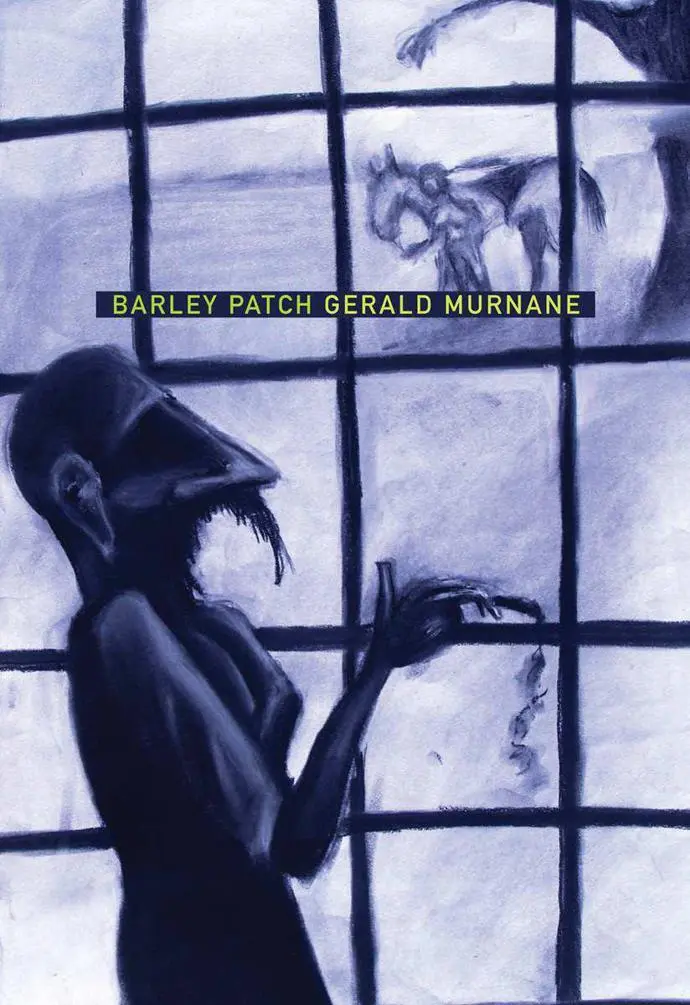
- Название:Barley Patch
- Автор:
- Издательство:Dalkey Archive Press
- Жанр:
- Год:2011
- ISBN:нет данных
- Рейтинг книги:5 / 5. Голосов: 1
-
Избранное:Добавить в избранное
- Отзывы:
-
Ваша оценка:
Barley Patch: краткое содержание, описание и аннотация
Предлагаем к чтению аннотацию, описание, краткое содержание или предисловие (зависит от того, что написал сам автор книги «Barley Patch»). Если вы не нашли необходимую информацию о книге — напишите в комментариях, мы постараемся отыскать её.
Barley Patch — читать онлайн бесплатно полную книгу (весь текст) целиком
Ниже представлен текст книги, разбитый по страницам. Система сохранения места последней прочитанной страницы, позволяет с удобством читать онлайн бесплатно книгу «Barley Patch», без необходимости каждый раз заново искать на чём Вы остановились. Поставьте закладку, и сможете в любой момент перейти на страницу, на которой закончили чтение.
Интервал:
Закладка:
Twenty and more years after the young men had gathered of a Friday or a Saturday evening as reported above, the chief character began to notice in newspapers one after another report of one or another person’s having been paid a sum of money by one or another diocese or religious order of the Catholic Church for the reason that the person had been sexually assaulted by some or another Catholic pastor or teacher. On one or another of the evenings mentioned above, the young man who was reported above as having jeered at images of Catholic clergymen announced to the other persons gathered in the young man’s upstairs flat that he intended to take legal action against the Catholic Archdiocese of Melbourne and against the orders of religious brothers and nuns that had taught him. The grounds for his legal action were going to be that his various parish priests and teachers had set back his intellectual development by ten years and more; they had filled his mind with legends and superstitions instead of useful knowledge. (Even if the persons in the upstairs flat had not been drinking beer for several hours, none of them would have supposed the young man to be talking seriously. Any sort of legal action against the Catholic Church would have seemed preposterous folly in the early 1960s, even though certain priests and religious teachers were perpetrating during those years some of the sexual assaults that gave rise to criminal charges and out-of-court settlements in later years.)
The sum of money that the young man was going to demand from the Catholic Church was the equivalent in today’s currency of about twenty million dollars. When his listeners asked how he would spend such a sum, the young man answered them in detail.
Twenty and more years after the young men had gathered of a Friday or a Saturday evening as reported above, the chief character began to notice in newspapers one after another advertisement offering for sale one or another building of two or even three storeys that had formerly been a convent for an order of nuns or a monastery for an order of Catholic priests in some or another town in the countryside of Victoria. At the time when the young man in the upstairs flat began to explain how he would spend the equivalent of twenty million dollars, it would have seemed preposterous to suppose that any convent or monastery in any town in the countryside of Victoria would ever be offered for sale, and yet the young man predicted that the Catholic Church, which was then a flourishing organisation, would soon begin to be less than flourishing and that convents and monasteries would soon be offered for sale. The young man explained to the other persons in the upstairs flat that he would use part of the proceeds of his legal action as the purchase-price of a building of two or even three storeys in the countryside of Victoria, which building had been formerly a monastery or a convent.
When the young man who lived in the upstairs flat first mentioned a monastery or a convent, and whenever he afterwards talked about such a building, the chief character saw in his mind one or another detail of an image of a two-storey building of bluestone that he had seen twice only, on a certain Saturday when he had attended a race-meeting for the first time. The chief character had been taken to and from the race-meeting by a paternal uncle who lived in a coastal city in the south-west of Victoria. The race-meeting had been held some twenty miles inland from the coastal city, at a racecourse that was surrounded by mostly level grassy countryside with trees in the distance. Between some of the trees were the roofs of buildings in a small town. The tallest of these buildings was a convent belonging to an order of teaching nuns. The chief character had only twice glimpsed the convent through the windows of his uncle’s motor-car but he, the chief character, had noted several dormer windows above the level of the upper-storey windows. He had asked his uncle whether the windows were mere ornaments or whether each window had behind it a cell-like room where one or another nun read or prayed or slept of an evening. The uncle first told the chief character that any male person who went beyond the hallway and the front parlour of the convent earned the penalty of immediate excommunication. The uncle then said that the nuns in the convent in the small town took in as boarders a few older girls from districts further inland. Perhaps each of these older girls, so the uncle said, was allotted a comfortable attic room with a window overlooking grassy countryside and part of a distant racecourse.
One of the conditions of his buying the convent or monastery, so the young man told his listeners in the upstairs flat, was that all the furnishings and fittings should be sold to him. He would be especially concerned to have the chapel handed over to him with its altar and tabernacle intact and the sacristy with its cupboards full of vestments and so-called sacred vessels. If possible, he would buy also the robes or the habits worn by the priests or the nuns who had formerly lived in the building. After having acquired the building, he would arrange for part of the first floor to be turned into a luxuriously appointed apartment for himself and the woman who lived with him. The rest of the first floor would be turned into many smaller apartments, each of which would be occupied, so the young man said, by a high-class call-girl. The upper floors would be converted into spacious apartments to be occupied permanently, or at weekends, by each of the young men who had visited him on the many Friday and Saturday evenings when he had been no more than a clerk who worked in a building of many storeys and who lived in an upstairs flat. One of these young men, of course, would have been the chief character.
When the young man had fitted out to his satisfaction the former convent or former monastery, so he told his visitors not only on the evening when he first talked of taking legal action against the Catholic Church but on many an evening afterwards, and when each of the smaller apartments on the first floor had been occupied by a high-class call-girl, then would begin the series of events for the sake of which the building had been bought and fitted out. On every Friday and every Saturday evening, the owner of the building of several storeys would arrange for the celebration in the chapel of the building of a Black Mass, that is to say, an obscene travesty of the Catholic Mass. Whenever he discussed this matter, the young man who lived in the upstairs flat would state that the chief character was the best qualified of all the young men in the flat to be the celebrant of the Black Mass. As the celebrant, he would wear only a chasuble of the style known as Roman, which would scarcely hide his nakedness. The young man from the upstairs flat would be the altar-server or acolyte and would wear only a lace-edged surplice reaching to his waist. The congregation would consist of all the other residents of the building of several storeys, each of them naked beneath the habit of a nun or of a priest. At a certain point during the Black Mass, the celebrant would reach into the tabernacle and would take out a croissant and a bottle of expensive wine. The so-called priest’s communion would consist of the celebrant’s buttering and eating the croissant and swigging often from the bottle. Soon afterwards, the congregation would be invited into the sanctuary not to receive communion but to take part in a banquet. (Food and drink would have been waiting on tables near by.) Towards the end of the banquet, a plentiful supply of comfortable cushions would be spread around the sanctuary, on the steps of the altar, and on the altar itself, in front of the tabernacle. Then would follow what the young man from the upstairs flat called a sex-orgy.
After the young man of the upstairs flat had first disclosed his plans for the Black Mass in the building of several storeys, it became the custom on every Friday and Saturday evening for all of the young persons gathered in the upstairs flat, including the young woman who lived there, to spend some or another part of each evening in discussing how they might spend one or another Friday or Saturday evening in the building of several storeys after the young man of the upstairs flat had bought the building and had fitted it out to his liking. The discussions at first were simple. The young man of the upstairs flat owned a copy each of several issues of the American magazine Playboy , which had recently been allowed into Australia after having been previously a prohibited import. All of the persons gathered in the upstairs flat would look at one after another illustration of a bare-breasted young woman from the magazines and would cast votes in order to decide whether or not the young woman should spend some time as a guest in the building of several storeys. The young woman of the upstairs flat was interested in dance and music and would describe some of the items that she would later choreograph, as she put it, for performance by herself and other naked young women during banquets. The chief character tried to amuse the others by reading to them parodies he had composed of prayers from the Mass. In each parody words such as God, angels , and sacrifice were replaced by words such as Lucifer, devils , and farce . However, few of the persons in the flat knew anything about Catholic doctrine and liturgy, and the parodies aroused little interest. The only means that the chief character found for amusing the others in the upstairs flat was his performing a brief mime in which he took the role of a priest first turning from the altar towards his congregation with his head bowed and his eyes closed, then seeming to notice that something was amiss, and finally looking aghast. (The chief character never held back from discussing with the other persons in the upstairs flat the details of the banquets and the orgies in the building of several storeys, but he was never able to imagine himself as taking part in an orgy. Whenever the chapel of the building of several storeys appeared as an image in his mind, it was always fitted with a so-called side-chapel, a sort of alcove with a few pews to one side of the altar. If an orgy seemed about to begin, he would slip unnoticed into the front pew of the side-chapel and would there masturbate quietly while he watched the goings-on in the sanctuary.)
Читать дальшеИнтервал:
Закладка:
Похожие книги на «Barley Patch»
Представляем Вашему вниманию похожие книги на «Barley Patch» списком для выбора. Мы отобрали схожую по названию и смыслу литературу в надежде предоставить читателям больше вариантов отыскать новые, интересные, ещё непрочитанные произведения.











Обсуждение, отзывы о книге «Barley Patch» и просто собственные мнения читателей. Оставьте ваши комментарии, напишите, что Вы думаете о произведении, его смысле или главных героях. Укажите что конкретно понравилось, а что нет, и почему Вы так считаете.