Gerald Murnane - Barley Patch
Здесь есть возможность читать онлайн «Gerald Murnane - Barley Patch» весь текст электронной книги совершенно бесплатно (целиком полную версию без сокращений). В некоторых случаях можно слушать аудио, скачать через торрент в формате fb2 и присутствует краткое содержание. Год выпуска: 2011, Издательство: Dalkey Archive Press, Жанр: Современная проза, на английском языке. Описание произведения, (предисловие) а так же отзывы посетителей доступны на портале библиотеки ЛибКат.
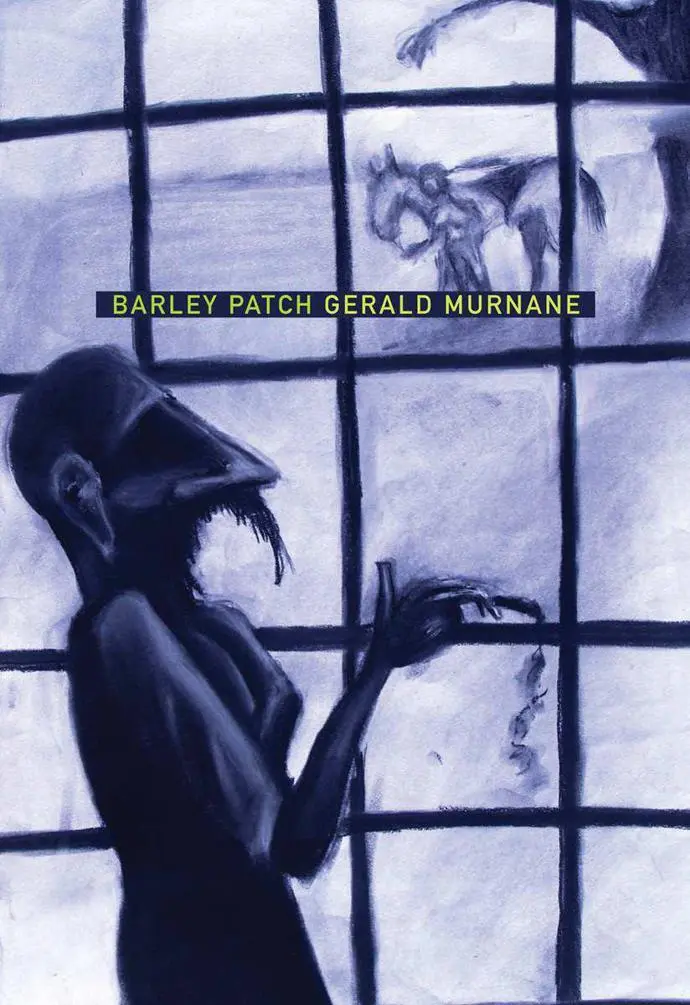
- Название:Barley Patch
- Автор:
- Издательство:Dalkey Archive Press
- Жанр:
- Год:2011
- ISBN:нет данных
- Рейтинг книги:5 / 5. Голосов: 1
-
Избранное:Добавить в избранное
- Отзывы:
-
Ваша оценка:
Barley Patch: краткое содержание, описание и аннотация
Предлагаем к чтению аннотацию, описание, краткое содержание или предисловие (зависит от того, что написал сам автор книги «Barley Patch»). Если вы не нашли необходимую информацию о книге — напишите в комментариях, мы постараемся отыскать её.
Barley Patch — читать онлайн бесплатно полную книгу (весь текст) целиком
Ниже представлен текст книги, разбитый по страницам. Система сохранения места последней прочитанной страницы, позволяет с удобством читать онлайн бесплатно книгу «Barley Patch», без необходимости каждый раз заново искать на чём Вы остановились. Поставьте закладку, и сможете в любой момент перейти на страницу, на которой закончили чтение.
Интервал:
Закладка:
In time, discussions about the building of several storeys became more detailed. Someone proposed that banquets and orgies should be filmed. This proposal led to plans for a library of films to be set up in the building together with a cinema where the residents could gather on quiet evenings to watch memorable scenes from past orgies. Someone then suggested the setting up of a film-unit which would not only record notable events in the building of several storeys but would produce short feature-films with contents grossly obscene: what would be called, twenty and more years later, porn movies. Mention of a library led also to discussion of books — obscene books, of course — and a plan for sending one of the residents of the building of several storeys by ship to Europe for the purpose of buying and smuggling back into Australia some of the most outrageous of the books reputed to be available in France or Sweden. Failing that, the chief character could be allotted a quiet suite in a remote part of an upper storey, could be provided with a baize-topped desk, a shaded lamp, and the latest electric typewriter, and could be urged to write short stories or novels with contents so foul that the works could never be published but would be circulated as bound typescripts among the persons who lived in or visited the house of several storeys.
After a few weeks of the sort of discussion mentioned in the previous paragraph, the persons in the upstairs flat began to talk less about sexual gratification and more about the indulgence of some of their less urgent passions. Perhaps they had begun to ask themselves how they might spend the uneventful mornings and afternoons between the riotous evenings in the chapel. Perhaps the young men, knowing that they would never again want for sexual relief, were pleased to discover in themselves yearnings for more subtle and lasting pleasures. For whatever reason, the young men in the upstairs flat came around to discussing such projects as the setting up of a large room given over to the display of football memorabilia. After the young man of the upstairs flat had reassured the other young men that money would be no object in the fitting-out of the building of several storeys, he who cherished old football-cards and autographed pictures of premiership teams had taken to setting out in an imagined upstairs hall row after row of glass display-cases, each containing part of a valuable collection inherited from his grandfather. One young man loved to play poker. He was to be provided with a luxuriously appointed gaming room where he could spend whole days with like-minded persons, betting on the fall of costly, hand-painted cards. It was expected that many of the high-class call-girls would find their way to the gaming-room and that their presence, fashionably dressed, would give a stimulating piquancy to the atmosphere among the card-tables. A young man with simpler interests wanted to be provided with numerous large glass tanks, properly heated and aerated, so that he could stock them with rare tropical fish. This man assured the others in the upstairs flat that nothing would be more likely to rest them and restore them after a strenuous night of banqueting and sensuality than to wander through an indoor aquarium, admiring the changeable colours of gliding or darting fish or the swaying of green water-plants in limpid water behind sturdy glass.
Of the various young men in the upstairs flat, the chief character was the last to report to the others how he hoped to amuse himself on uneventful mornings and afternoons in the building of several storeys. He supposed that the other young men were expecting to hear that he would furnish an upper-storey room with bookshelves and a writing-desk, that he would fill the shelves with classic works of literature, and that he would spend most of each day in his room, reading in a comfortable armchair or writing prose fiction or poetry at his desk, and when he was finally asked about his plans he tried to fulfil these supposed expectations. He would keep mostly to his room, he said, and the walls of the room would be covered with books and the desk in the room with pages of typing and handwriting. He knew from experience that the others would not be curious about the subject-matter of the pages on the table. However, for the sake of the few young men who seemed to be occasional readers of books he offered the information that his library would be missing many of the so-called classics of literature, given that he often struggled to read more than a few pages of one or another so-called classic. His library, he said, would contain many of the sort of book called by literary historians or critics a minor classic or a neglected masterpiece or a work that defied classification.
The chief character hoped that his brief account of his way of life in his upstairs quarters would dissuade the other young men from seeking him out if ever they became bored with the goings-on in the more frequented parts of the building of several storeys. Perhaps after he and the other young men had been together in the building for a year and more, so the chief character supposed, and after they had been present together at many a Black Mass and after he had watched them taking part in many a sex-orgy and after they had looked up many a time from their cushions in the sanctuary and had seen him masturbating quietly in the side-chapel — perhaps then he would be more comfortable with them and would not object to their opening the doors of the further rooms of his remote upstairs suite and learning how he spent most of the time while he was assumed to be reading or writing. Perhaps then also, so the chief character supposed, he would not shrink from having one or another of the more friendly high-class call-girls look into his further rooms. During his first months in the building, however, the chief character would prefer to be taken for a reclusive reader of books and a writer of poetry and prose fiction.
During those first months, the chief character would hope that the craftsmen climbing the stairs each day towards his suite would be supposed by the other residents to be building bookshelves and that the boxes delivered to his suite would be supposed to contain books. The craftsmen, however, would be skilled model-makers, and the boxes would contain the many thousands of components of the models to be installed in one or more of the chief character’s rooms in the building of several storeys.
Once having got from the owner of the building a sum of money equal to the cost of several thousand books, including many rare first editions, the chief character would have employed a team of highly skilled model-makers to work under his direction in an upper room with a dormer window. The team would have begun by covering most of the floor with a taut, green-coloured fabric. The team would then have driven through this fabric and into the floor hundreds, if not thousands, of tiny white pegs. These pegs would then have served as supports for hundreds, if not thousands, of tiny white railings. The whole structure would have formed the inside running-rail, so called, of a miniature racecourse with long straights and gradual turnings. Beside the racecourse would have been numerous miniature buildings and car-parks set among miniature trees and flower-beds. In the area enclosed by the course proper, so called, would have been at least one miniature lake.
Sometimes, when the chief character had got thus far in his plans and when he had foreseen himself lying for the first time on the floor beside the newly completed racecourse and looking along an expanse of green fabric bordered with tiny white pegs, he would be tempted to abandon his project. At such times, he would seem to have made only a toy-landscape, a place more suitable for recalling certain days in his childhood than for enabling him to see further across his mind than he had yet seen. But then he would foresee himself fitting a brownish Holland blind to the dormer window and then drawing the blind against the sunlight and then, perhaps, stepping back into a corner of the room and looking at the lines of pegs through half-closed eyes and even through a pair of binoculars held back-to-front to his eyes; and then some or another glimpse in his mind of something not previously seen in his mind would persuade him to go on.
Читать дальшеИнтервал:
Закладка:
Похожие книги на «Barley Patch»
Представляем Вашему вниманию похожие книги на «Barley Patch» списком для выбора. Мы отобрали схожую по названию и смыслу литературу в надежде предоставить читателям больше вариантов отыскать новые, интересные, ещё непрочитанные произведения.











Обсуждение, отзывы о книге «Barley Patch» и просто собственные мнения читателей. Оставьте ваши комментарии, напишите, что Вы думаете о произведении, его смысле или главных героях. Укажите что конкретно понравилось, а что нет, и почему Вы так считаете.