Gerald Murnane - Barley Patch
Здесь есть возможность читать онлайн «Gerald Murnane - Barley Patch» весь текст электронной книги совершенно бесплатно (целиком полную версию без сокращений). В некоторых случаях можно слушать аудио, скачать через торрент в формате fb2 и присутствует краткое содержание. Год выпуска: 2011, Издательство: Dalkey Archive Press, Жанр: Современная проза, на английском языке. Описание произведения, (предисловие) а так же отзывы посетителей доступны на портале библиотеки ЛибКат.
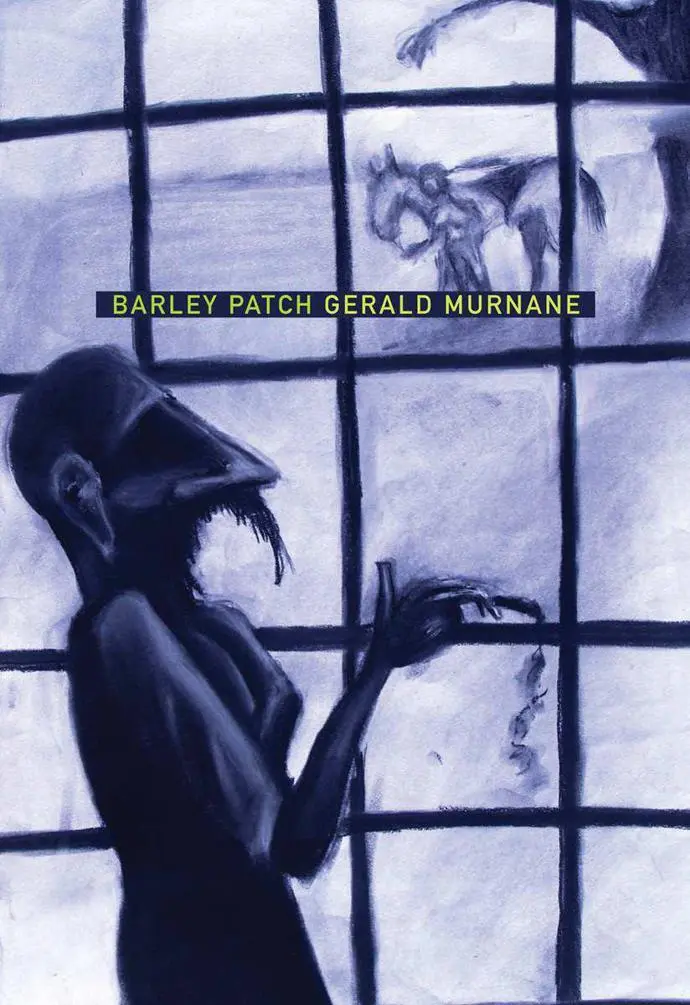
- Название:Barley Patch
- Автор:
- Издательство:Dalkey Archive Press
- Жанр:
- Год:2011
- ISBN:нет данных
- Рейтинг книги:5 / 5. Голосов: 1
-
Избранное:Добавить в избранное
- Отзывы:
-
Ваша оценка:
Barley Patch: краткое содержание, описание и аннотация
Предлагаем к чтению аннотацию, описание, краткое содержание или предисловие (зависит от того, что написал сам автор книги «Barley Patch»). Если вы не нашли необходимую информацию о книге — напишите в комментариях, мы постараемся отыскать её.
Barley Patch — читать онлайн бесплатно полную книгу (весь текст) целиком
Ниже представлен текст книги, разбитый по страницам. Система сохранения места последней прочитанной страницы, позволяет с удобством читать онлайн бесплатно книгу «Barley Patch», без необходимости каждый раз заново искать на чём Вы остановились. Поставьте закладку, и сможете в любой момент перейти на страницу, на которой закончили чтение.
Интервал:
Закладка:
When he had bought his binoculars, the chief character had had no reason to save money for the future. He supposed he would remain unmarried for many years and even throughout his life and would devote his free time to writing poetry and prose fiction or to going to race-meetings and devising methods of betting profitably on racehorses. From time to time, he felt himself attracted to some or another young woman who worked in the building of many storeys. Sometimes he would even try to devise a strategy for approaching the young woman and beginning a conversation with her. But even at such times, he did not feel obliged to save any of his meagre weekly wage for the purpose of buying in the future a block of land in an outer suburb of Melbourne where he and his wife-of-the-future would later live in a weatherboard house with three bedrooms. He did not feel thus obliged because he had learned that the Education Department of Victoria had such a need for teachers that a person aged at least twenty-one years could acquire a trained primary teacher’s certificate after only one year of study in a teachers’ college. The chief character supposed that if he lapsed in future from his bachelor-vocation, he would undertake a year of training and would become a primary teacher. As a married man, he would then be eligible for appointment to one or another small school in the countryside of Victoria where a so-called official residence stood beside the schoolyard. He and his wife could live in the residence, paying only a nominal rental, for as long as he chose to remain at that school.
The chief character had seen a number of school residences in the countryside of Victoria. Each was a weatherboard cottage painted cream with dark-green trimmings. Sometimes, at his desk by day in the building of many storeys, or in his rented room of an evening, he would feel the desire to live in the future in a school residence even though he had at that time no interest in any young woman. At such times, he foresaw himself and his wife of the future inside their cream and green cottage on a certain Saturday afternoon in the future. His wife of the future may have been sometimes only a faint image, but other details of the scene were clear and memorable. The season would have been summer, and the view from every window of the cottage would have been of mostly level grassy countryside with a line of trees in the distance, except that all the window-blinds would have been drawn against the heat and the glare. The young husband and wife who lived in the cottage would have been preparing to rest for an hour in their bedroom after having unpacked their weekly shopping and eaten lunch. The faint sounds of the broadcast of a horse-race would have come from a radio in the kitchen.
The chief character always tried to prolong a certain moment during this sequence of images: a moment when his image-self and his image-wife had lain on their image-bed to rest and when his image-self had closed his image-eyes. When he observed other sequences of images in which his image-self took part, he seemed never more than an observer and his image-self an entity to be observed. Only when his image-self seemed to rest in the dim image-room in the image-cottage surrounded by images of mostly level grassy countryside and lines of image-trees — only then did he seem likely, for however short a time, to be no longer an observer of images of himself but instead himself living an image-life. He tried to prolong the moment by staring, as it were, at the images in his mind of the few items of furniture in the room or of one or another window-blind with a crack in its fabric that let through a sliver of the dazzling light from outside, but what followed was as though his future self had fallen briefly asleep in the bedroom of the cottage and had dreamed one of the vivid and disturbing dreams that occurred to the chief character himself whenever he fell asleep in daylight. The cottage would seem a mere cabin with a single bed and a chair and a cupboard and with a window facing the sunlight of early afternoon. The cabin was one of a row of such cabins. The men who occupied the cabins were employed as grooms and track-riders on a large property where the mostly level grassy countryside was partitioned by white-railed fences as well as by lines of trees. The man who awoke in his cabin in the early afternoon may have begun work on that morning several hours before daylight. If he had raised the blind and had looked out through the window of his cabin, the man might have seen, beyond several lines of trees, the upper windows and the roof of a house of two storeys. The man understood this in the way that the narrator of his experiences seemed to understand certain matters in dreams. The man understood further that he had no wife or girlfriend and that he was far from being a young man, but that he might admire from a distance a certain young woman who came out each morning from the house of two storeys and who supervised the training of a stable of racehorses in a mostly level grassy place among stands of trees. Or, he would seem to be looking at the cottage from the outside, with the difference that the window-frames and other trimmings were painted orange-gold, and with the further differences that the cottage stood among a row of cottages in a street with gravel footpaths in a city in northern Victoria and that he was a child of four or five years standing on the footpath in front of the cottage and in the company of his mother and another woman. The women seemed to have stopped for no other reason than to speak derisively about the young married woman who lived in the cottage. The two women spoke as though the young woman was at that moment inside the cottage and was reading magazines or books when she might have been doing housework. The child understood further that the surname of the young woman had as its first syllable the word Bells . He learned some years later that the surname was of Italian origin and began with the letters B-a-l-s-…, but for as long as he seemed to be standing in front of the cottage he supposed that the surname of the young woman behind the drawn blinds was one of the superior sort of surname that denoted things seen or heard readily in the mind. He supposed that the colour of the window-frames and of other trimmings was the rich metallic colour of the bells denoted by the surname of the young woman or of the bells mentioned in a certain book that the young woman remembered having read behind her drawn blinds or of the bells depicted in one or another picture in one or another of her dim rooms.
When the chief character had first bought his binoculars, he had supposed that he would use them mostly for looking at fields of racehorses on the far sides of racecourses and occasionally for looking at birds in grassy countryside, but he had not hesitated to take his binoculars to the upstairs flat. During the year in the early 1960s when he was a regular visitor to the upstairs flat, the chief character was no longer a clerk in a building of many storeys but a teacher in a primary school in an outer suburb of Melbourne. He had earlier undergone a year-long course of teacher-training but not in order to live with a young wife in a cottage painted cream with dark-green trimmings; he had become a teacher so that he could apply to be transferred to a school far from Melbourne if ever he felt drawn in future to live among mostly grassy countryside. During the years while he had owned the binoculars, he had gone out on one occasion only with each of two young women, but he mostly saw himself as a bachelor who admired girls or women from a distance. He arrived with his binoculars at the upstairs flat hopeful that some or another magnified image from the opposite building might embolden him in his future dealings with young women but more inclined to suppose that whatever he might see through the binoculars would only show him more clearly what he was deprived of as a bachelor.
Читать дальшеИнтервал:
Закладка:
Похожие книги на «Barley Patch»
Представляем Вашему вниманию похожие книги на «Barley Patch» списком для выбора. Мы отобрали схожую по названию и смыслу литературу в надежде предоставить читателям больше вариантов отыскать новые, интересные, ещё непрочитанные произведения.







Обсуждение, отзывы о книге «Barley Patch» и просто собственные мнения читателей. Оставьте ваши комментарии, напишите, что Вы думаете о произведении, его смысле или главных героях. Укажите что конкретно понравилось, а что нет, и почему Вы так считаете.