Gerald Murnane - Barley Patch
Здесь есть возможность читать онлайн «Gerald Murnane - Barley Patch» весь текст электронной книги совершенно бесплатно (целиком полную версию без сокращений). В некоторых случаях можно слушать аудио, скачать через торрент в формате fb2 и присутствует краткое содержание. Год выпуска: 2011, Издательство: Dalkey Archive Press, Жанр: Современная проза, на английском языке. Описание произведения, (предисловие) а так же отзывы посетителей доступны на портале библиотеки ЛибКат.
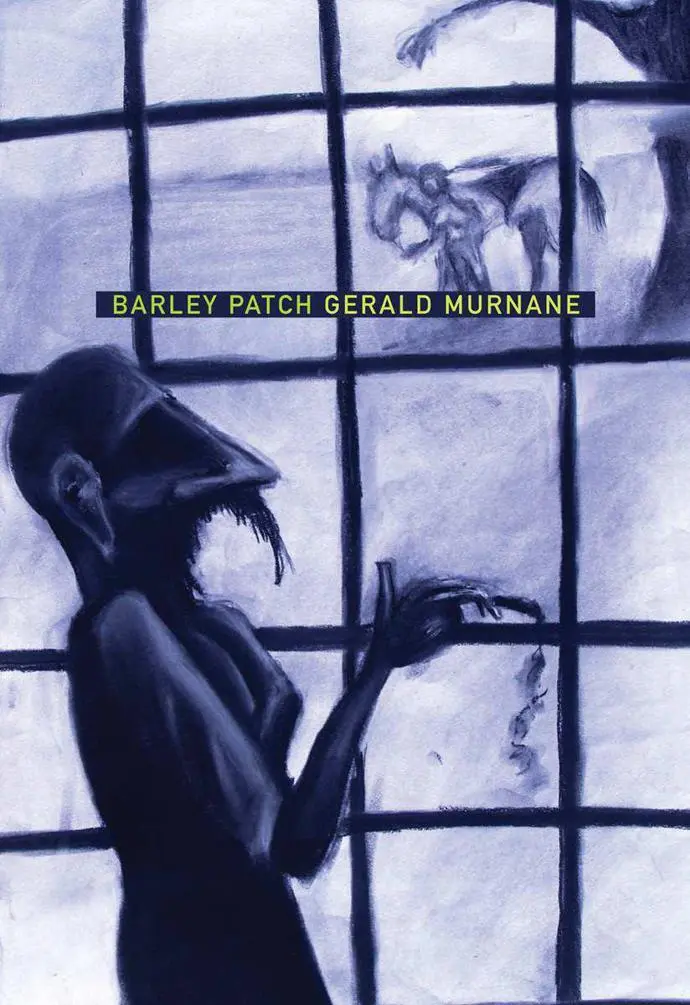
- Название:Barley Patch
- Автор:
- Издательство:Dalkey Archive Press
- Жанр:
- Год:2011
- ISBN:нет данных
- Рейтинг книги:5 / 5. Голосов: 1
-
Избранное:Добавить в избранное
- Отзывы:
-
Ваша оценка:
Barley Patch: краткое содержание, описание и аннотация
Предлагаем к чтению аннотацию, описание, краткое содержание или предисловие (зависит от того, что написал сам автор книги «Barley Patch»). Если вы не нашли необходимую информацию о книге — напишите в комментариях, мы постараемся отыскать её.
Barley Patch — читать онлайн бесплатно полную книгу (весь текст) целиком
Ниже представлен текст книги, разбитый по страницам. Система сохранения места последней прочитанной страницы, позволяет с удобством читать онлайн бесплатно книгу «Barley Patch», без необходимости каждый раз заново искать на чём Вы остановились. Поставьте закладку, и сможете в любой момент перейти на страницу, на которой закончили чтение.
Интервал:
Закладка:
I could never even have hinted to my uncle that I had also what I might have called my dream of last resort, although the men from the group that I had lately joined might have considered my dream little more than a masturbation fantasy. When none of my other dreams seemed of any worth, I sometimes saw in my mind one or another image of one or another of my female cousins as though she was of a mood to relent towards me and as though the image of her mother was far elsewhere in my mind.
When the sun was setting below the cliffs in the distance, my uncle had still not told me anything in return for my confidences. Then a plover flew past, crying its mournful-sounding cry. My uncle told me that none of his farmer-neighbours seemed to know that two distinct species of plover inhabited the coastal district. I myself had not known this, even though plovers were among the birds that especially interested me because they laid and hatched their eggs in mere hollows scratched from the soil. I told my uncle that he was fortunate to be a bachelor who could study his bird books of an evening while his neighbours were dealing with their wives and children. My uncle then told me that he had for long feared he had been made sexually impotent by a kick that he had taken as a schoolboy. When he was ten years of age, so my uncle told me, he had been kicked viciously in the stones by a boy named Stanley Chambers.
Surely some readers of these pages are able to think of the writer of the pages as being no more than the narrator of a work of fiction: a personage supposed by those readers to exist on the far side of their own minds for as long as they go on reading these pages. For the sake of those readers, whose prowess as readers of fiction I admire unreservedly, I report the following.
I travelled back to Melbourne on the day after my youngest uncle and I had talked about plovers and other matters, but I never afterwards attended any Sunday morning group. I was no longer willing to listen to the opinions of the would-be psychiatrist and his ignorant patients. I was no longer willing to hear them talk as though a scribbling theorist in some or another gloomy city in central Europe had long before explained away the existence of a far-reaching network of images of swamps below tall cliffs and of racecourses among level grassy landscapes and of paddocks where quails and plovers lay low and of female personages seen from a distance, which far-reaching network was, in fact, no more than an image in my own mind. In short, I behaved as a fictional personage is obliged to behave; I remained true to my belief that no so-called real world could exist among the scene after fictional scene where I was believed to live and to write.
Other readers of these pages may well think of the writer of the pages not as a conjectured personage but as a mere human person hardly different from themselves. For the sake of those readers, whose prowess as readers of fiction I could never admire, I report the following.
I travelled back to Melbourne on the day after my youngest uncle and I had talked about plovers and other matters. Before a week had passed, I reported to the Sunday morning group what my uncle had told me about his having been kicked as a boy. I did not expect that the doctor and the members of the group would then advise me as to how my uncle, a man approaching middle-age, might overcome his fear, but I hoped that the doctor and the members of the group might repay my trust in them by suggesting how I might overcome some of my own fears. I listened while they talked at length. Afterwards, I went away disappointed and never returned. At the time, I could not have expressed the matter coherently, but I understood later that the speculations of the group were a sort of inferior fiction. I might even have said that each member of the group exercised a sort of rudimentary imagination. He struggled to explain his imagined world to me, who would later go home to my bachelor’s flat, there to struggle to write my own sort of fiction without even imagination to help me.
Eleven years after my youngest uncle and I had last talked seriously together, my first book of fiction was published. During those eleven years, I had become a husband and later a father while he had remained a bachelor. During those years, I had met with him only occasionally. Soon after I had become a husband, I had taken my wife to meet him. Later, I had paraded my children in front of him. He and I had had little to say to one another during those eleven years. I had expected that my first book might disappoint my uncle, but I could not have predicted that he would react towards it as he did. He sent no message of any sort to me but he wrote to my brother that he, my youngest uncle, had disowned me for ever.
While I was writing my second book of fiction, I thought hardly at all about my uncle who had disowned me. While I was writing that book, my uncle’s mother and two of his sisters died. When the book was published, only a few survived of my father’s eight siblings. Two of these were my bachelor-uncle and his youngest sister, my unmarried aunt: she who might have looked out from a second- or third-storey window in a north-eastern suburb of Melbourne on many a day during the year when I was born. Again, my uncle sent no message of any sort to me, but again he wrote to my brother. My uncle wrote that he had been far more disgusted by my second book than by my first. But his own disgust, so my uncle wrote, was a small matter by comparison with his most urgent concern. His youngest sister, the only one still alive of my four unmarried aunts, she who often referred to me as her first and favourite nephew, was eager to read my second book. He had persuaded her with some trouble that my first book could not possibly be of interest to her, and she had still not read it. Now, however, she could hardly be put off; she was pressing him to allow her to read my second book of fiction, which he considered not so much a book of fiction as an accumulation of filth. I have never heard from my brother what he wrote in reply to these complaints from my uncle.
I know, even today, no more about the ailments liable to affect the human body than I knew, more than forty years ago, when I ceased to attend the Sunday morning group, about the ailments affecting the mind. What little time I have had for learning during my adult life has been given to the study of what I call for convenience patterns of images in a place that I call for convenience my mind, wherever it may lie or whatever else it may be a part of. Even so, I read or hear sometimes about theories that I myself would never have had the wit to devise. One such theory, which I heard for the first time a few years after the early death of my youngest uncle, asserts that a person subjected to prolonged emotional stress, so to call it, is more likely than the average person to be afflicted by the disease of cancer.
Seven months after the publication of my second book of fiction, I heard that my youngest uncle had been found to have cancer of the liver. He was aged fifty-five and had been in good health throughout his life. He had never smoked and had never drunk alcohol. According to his older brothers, no member of their parents’ families had been known to have any sort of cancer. (When I mentioned these matters to my mother at the time, she told me without smiling that my uncle’s cancer would have been caused by his sister’s cooking. This was the sister who had lived for a time in the convent of three storeys and who kept house for my uncle for some years before his illness became known. According to my mother, my youngest aunt had learned in the convent to be mean with food: to reheat leftovers and to bake cheap, doughy puddings.)
My uncle had been told that he would live for no more than six months. During the first four of those months, I told myself that my uncle was obliged to make the first move towards reconciliation, given that I had not written my books of fiction with the intention of offending him. At some time during the fifth of those months, when I had still received no message from my uncle, I telephoned him and asked if he would care to have me visit him. He told me that he would be pleased to see me.
Читать дальшеИнтервал:
Закладка:
Похожие книги на «Barley Patch»
Представляем Вашему вниманию похожие книги на «Barley Patch» списком для выбора. Мы отобрали схожую по названию и смыслу литературу в надежде предоставить читателям больше вариантов отыскать новые, интересные, ещё непрочитанные произведения.



Обсуждение, отзывы о книге «Barley Patch» и просто собственные мнения читателей. Оставьте ваши комментарии, напишите, что Вы думаете о произведении, его смысле или главных героях. Укажите что конкретно понравилось, а что нет, и почему Вы так считаете.