Gerald Murnane - Barley Patch
Здесь есть возможность читать онлайн «Gerald Murnane - Barley Patch» весь текст электронной книги совершенно бесплатно (целиком полную версию без сокращений). В некоторых случаях можно слушать аудио, скачать через торрент в формате fb2 и присутствует краткое содержание. Год выпуска: 2011, Издательство: Dalkey Archive Press, Жанр: Современная проза, на английском языке. Описание произведения, (предисловие) а так же отзывы посетителей доступны на портале библиотеки ЛибКат.
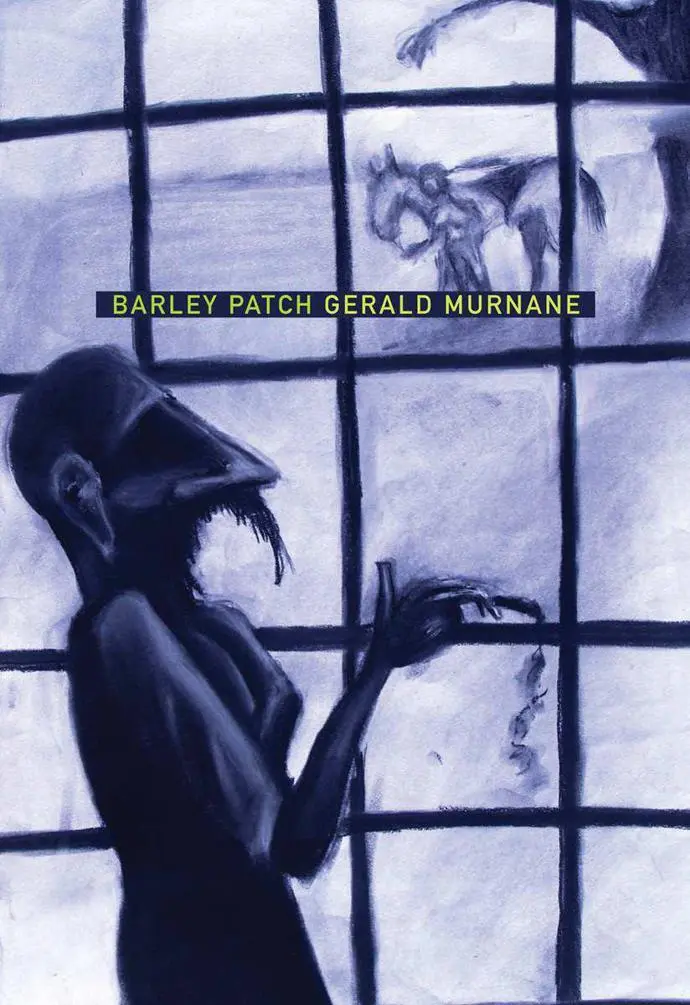
- Название:Barley Patch
- Автор:
- Издательство:Dalkey Archive Press
- Жанр:
- Год:2011
- ISBN:нет данных
- Рейтинг книги:5 / 5. Голосов: 1
-
Избранное:Добавить в избранное
- Отзывы:
-
Ваша оценка:
Barley Patch: краткое содержание, описание и аннотация
Предлагаем к чтению аннотацию, описание, краткое содержание или предисловие (зависит от того, что написал сам автор книги «Barley Patch»). Если вы не нашли необходимую информацию о книге — напишите в комментариях, мы постараемся отыскать её.
Barley Patch — читать онлайн бесплатно полную книгу (весь текст) целиком
Ниже представлен текст книги, разбитый по страницам. Система сохранения места последней прочитанной страницы, позволяет с удобством читать онлайн бесплатно книгу «Barley Patch», без необходимости каждый раз заново искать на чём Вы остановились. Поставьте закладку, и сможете в любой момент перейти на страницу, на которой закончили чтение.
Интервал:
Закладка:
Six months before my hurried visit to my uncle, I had begun to spend Friday and Saturday evenings with a young man and a young woman in their rented flat on the first floor of a building of four storeys within walking distance of the central business district of Melbourne. On other nights of each week, I went on trying to write poetry or prose fiction in my rented bungalow in the backyard of a house at a distance of several suburbs from the building of four storeys, but I no longer had the strength to go on trying to write on every evening of the week. On most Friday and Saturday evenings, several other young men visited the first-storey flat. Sometimes, one or another young man would have a young woman with him, but most of the young men came alone, bringing several bottles of beer. The young men stayed in the flat until about midnight, talking together with the two persons who lived in the flat or, sometimes, watching television. On some evenings, all the persons in the flat would set out just before midnight to walk across the park at the rear of the building of four storeys to a cinema that was one of the first cinemas in Melbourne to show a so-called midnight movie. I went with the other young persons to the cinema, even though I would always fall asleep soon after the program had begun.
The young man and the young woman who lived in the first-floor flat were not married. Neither I nor any of the young men who visited the flat knew of any other young persons who lived together without having married. Even the young persons who lived in the flat knew of no other young unmarried persons who lived together. (The reader has been told already that these fictional events are reported as having taken place in the early 1960s.) The young men who visited the flat envied the young man who lived there, but the young man himself often seemed discontented. Several months before I had begun to visit the flat, the young woman who lived there had left the flat and had lived elsewhere. She had left the flat after the young man who lived there had punched and beaten her. One of the conditions of her returning to the flat had been that the young man who lived there must consult a psychiatrist for the time being.
Often, while I was visiting the flat, the young man talked to me and the other visitors about his group, as he called it. This was a group of five or six men of various ages who met on alternate Sunday mornings in the home of a general practitioner who was studying psychiatry. The young man talked as though each of us listening ought to join his group or a similar group in order to deal with his many problems.
At some time during the fourth month after I had begun to visit the first-storey flat, I consulted the general practitioner mentioned in the previous paragraph. I told him that I visited the first-storey flat on Friday evenings and Saturday evenings but that I spent every other evening alone, trying to write poetry and prose fiction. I told him further that I had seemed lately to be losing the strength that I needed for trying to write poetry and prose fiction; that I had nowadays to drink several bottles of beer before I could begin to feel the strength that I need for trying to write. The doctor, so to call him, prescribed certain tablets that he said would be more helpful to me than beer. The tablets caused me to sleep during the hours when I would otherwise have been drinking beer and trying to write poetry and prose fiction, but I went on taking the tablets and consulting the doctor, so to call him. During the third consultation, he told me I was ready to join his Sunday-morning group.
Most of the young men in the group seemed to be reformed alcoholics, but the young man who lived in the flat told me privately that several of them had what he called serious sexual problems. I had expected that the members of the group would be continually questioning and challenging one another, but for much of their time together they did little more than gossip. The doctor, so to call him, sat with the group but seemed to follow a policy of keeping silent unless asked a direct question. Only one man in the group used technical terms, so to call them. This man claimed to have read many books by the author that he referred to familiarly as Freud.
I was asked few questions during my first session with the group, but early in my second session the man who used technical terms asked me whether or not I had a girlfriend. Having learned that I had no girlfriend, he asked me what efforts I was presently making to acquire a girlfriend. I answered that I was making no such efforts at present; that I spent all my free time at present trying to write poetry and prose fiction; that the few young women I met up with were none of them interested in poetry or prose fiction; that my leading a solitary life might better help me as a writer than if I were to acquire a girlfriend or a wife. The man then used many technical terms. I understood him to be telling me that my trying to write poetry and prose fiction was no more than my trying to find an imaginary girlfriend or wife. I understood from the demeanour of the other men in the group that they agreed with the man who used technical terms, even though most of them were unskilled in the use of such terms.
I did not try to defend myself against the man who used technical terms, but when I left the group that morning I had already decided that I would attend only one more session. At that session, I would refute the claims of the man who used technical terms, so I had decided. I would defend solitary males and bachelors against the wordy arguments of European theorists. In the meanwhile, I would make a hurried trip to the coastal city where my uncle lived. I would walk with my uncle across mostly level grassy countryside and would draw strength from the company of a man who had kept up no fewer than three long-lasting courtships with good-looking young women but was still a bachelor.
I had expected to feel much more comfortable walking with my uncle across his bleak paddocks than I had felt with the group of men in the doctor’s meeting-room, but I could not readily explain the reason for my visit. I had never told him that I no longer believed in the teachings of the Catholic Church, although he probably suspected as much. I could not even tell my uncle that I had joined a group of men who were patients of a doctor with an interest in psychiatry. I told him that I had been for a long time without a girlfriend but that I was amply consoled by the various dreams that I had of my future. One of those dreams, so I told my uncle, was my dream of owning racehorses in the future, which dream my uncle readily understood. Another of my dreams, so I told my uncle, was my dream of being published as a poet or as a writer of prose-fiction. This dream he claimed also to understand, although the only twentieth-century Australian authors that he seemed to have read were A. B. Paterson, Henry Lawson, and Ion L. Idriess.
I told my uncle the merest summary of what I called my beer-drinking dream, and not only because he was not a drinker. After drinking large amounts of beer, I would usually feel reconciled to my present solitariness and to a life of bachelorhood. I would even count myself lucky not to have to endure the nervous strain and the financial costs of courtship and marriage. Some or another comfortable saloon bar would become for me in later life what his lounge-room was for the average married man, or so I often supposed while I was drinking. But sometimes when I was awake in the early hours and feeling gloomy after an evening of beer-drinking, then what I called my hangover-dream would appear to me. The dream began at some vague time in my future as a beer-drinking bachelor. One or another of my drinking-companions would decide that my bachelor’s way of life was only a posturing: a means of advertising my need for a girlfriend or a wife. This drinking-companion would be a married man with what is called nowadays a large extended family. A certain member of that family would be a young female person of presentable appearance or better who had led a sheltered life and had had few suitors. (I would always spare myself the task of trying to imagine the details of the history of the young female person.) My drinking-companion would have spoken favourably about me to the presentable young person for some time before he had even told me of her existence. Then he would tell me during a few drinking-sessions more about the young person than I might have learned if she and I had gone together for six months. I would then express my admiration for the young person, knowing that she would learn of it through our intermediary. Hints, intimations, even guarded messages would be relayed in each direction. I would be spared many of the anxieties of a conventional courtship. The day when the young female person and I would finally meet would be some sort of family celebration at the home of our go-between. The tub in the bathroom would be three quarters full of bottles and cans of beer and packs of crushed ice. No more would be required of me than to say something witty from time to time to the young person and not to fall over or to be caught urinating or vomiting in the backyard before I went home.
Читать дальшеИнтервал:
Закладка:
Похожие книги на «Barley Patch»
Представляем Вашему вниманию похожие книги на «Barley Patch» списком для выбора. Мы отобрали схожую по названию и смыслу литературу в надежде предоставить читателям больше вариантов отыскать новые, интересные, ещё непрочитанные произведения.











Обсуждение, отзывы о книге «Barley Patch» и просто собственные мнения читателей. Оставьте ваши комментарии, напишите, что Вы думаете о произведении, его смысле или главных героях. Укажите что конкретно понравилось, а что нет, и почему Вы так считаете.