Gerald Murnane - Barley Patch
Здесь есть возможность читать онлайн «Gerald Murnane - Barley Patch» весь текст электронной книги совершенно бесплатно (целиком полную версию без сокращений). В некоторых случаях можно слушать аудио, скачать через торрент в формате fb2 и присутствует краткое содержание. Год выпуска: 2011, Издательство: Dalkey Archive Press, Жанр: Современная проза, на английском языке. Описание произведения, (предисловие) а так же отзывы посетителей доступны на портале библиотеки ЛибКат.
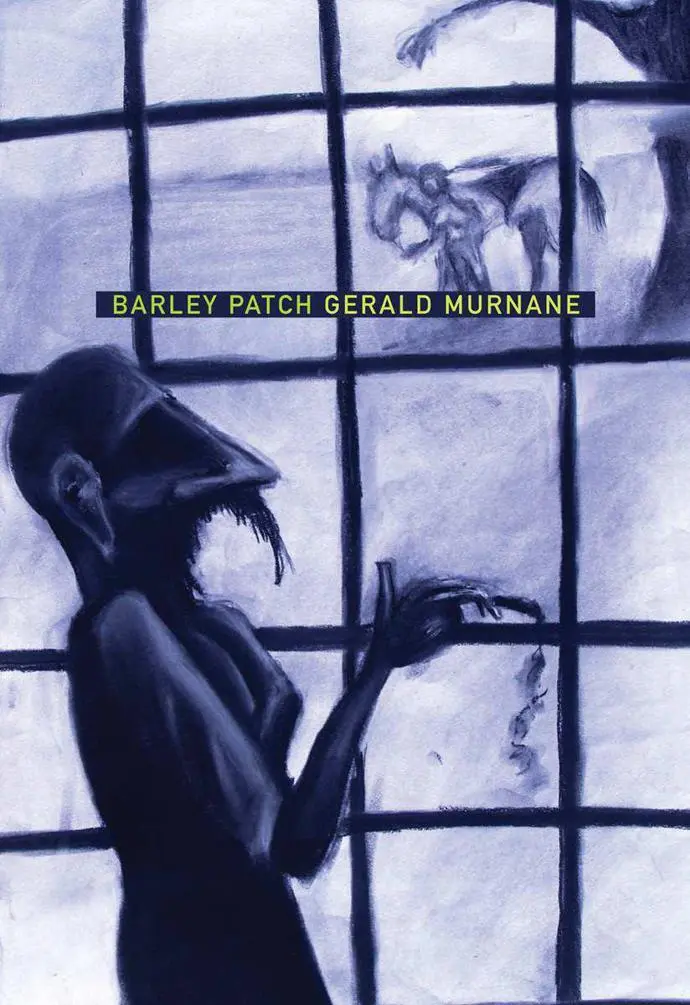
- Название:Barley Patch
- Автор:
- Издательство:Dalkey Archive Press
- Жанр:
- Год:2011
- ISBN:нет данных
- Рейтинг книги:5 / 5. Голосов: 1
-
Избранное:Добавить в избранное
- Отзывы:
-
Ваша оценка:
Barley Patch: краткое содержание, описание и аннотация
Предлагаем к чтению аннотацию, описание, краткое содержание или предисловие (зависит от того, что написал сам автор книги «Barley Patch»). Если вы не нашли необходимую информацию о книге — напишите в комментариях, мы постараемся отыскать её.
Barley Patch — читать онлайн бесплатно полную книгу (весь текст) целиком
Ниже представлен текст книги, разбитый по страницам. Система сохранения места последней прочитанной страницы, позволяет с удобством читать онлайн бесплатно книгу «Barley Patch», без необходимости каждый раз заново искать на чём Вы остановились. Поставьте закладку, и сможете в любой момент перейти на страницу, на которой закончили чтение.
Интервал:
Закладка:
The other persons in the upstairs flat, if ever they cared to imagine the chief character in his suite of rooms in the building of several storeys, could have seen him only as writing at a desk with shelves of books around him. Soon after he had talked to the others about his way of life in the non-existent building, they had begun to lose interest in the orgy-house, as it came to be called. The poker games and the other diversions and even the Black Masses were seldom mentioned again, although sometimes an image on the television screen of some or another young woman would prompt one or more of the young men to reminisce as it were, about the good looks of the high-class call girls. It began to seem to the chief character as though he had been left in charge of the house; the less the others talked about it, the more clearly and substantially it began to appear in his own mind. Sometimes, when the house had first been talked about, he had given much thought to protecting his privacy; and he had seen himself often in his mind as being alone in his rooms in the late afternoon or the early evening and trying not to be distracted by some or another drunken shout or playful squeal from far below. As the others in the upstairs flat talked less about the building of several storeys, it seemed in his mind sometimes so quiet that he might have felt urged to go downstairs and to stroll around the deserted chapel until he had recalled a few hectic moments from some or another orgy that he had watched long before.
The chief character had often sustained himself with daydreams about his future, but his wandering around a disused convent in his mind seemed unconnected with any life that he had previously wanted for himself. The empty upstairs rooms seemed more solid than any scenery from daydreams; the rooms seemed to be on the same level of existence as things that he would have called his faculties or his qualities; the rooms even caused him to feel a more ample person and a more worthy.
He was no mere observer of mental scenery. He was not long in learning that he could alter certain details and have them stay as he preferred them to be. He had wanted for some time to extend the part of the building that he thought of as his own. His particular wish was for more dormer windows, each with an attic-like room behind it. Then, after no effort that he could recall, he seemed to be strolling past doorway after doorway in a corridor that he did not recognise. When next he looked upwards towards his quarters from the grounds around the building, an entire wing seemed to have been added. His desk and his bookshelves, not to mention his rooms filled with models, were now even further away from the main living area. Even if the other young men and the high-class call-girls were to settle in the building after all, he would hear scarcely a sound from them.
He was in no hurry to call in the model-makers. He was now of a mind to have a number of attic-rooms filled each with a racecourse but he supposed that this would disturb the quietness of his suite for many weeks or even for months. For the time being, he was content to experience the subtle differences between room and room: in one room a red-gold hair still lay in the crack between two floorboards from the last days before the last girl-boarder there had gone home to her parents’ property far inland; in another room the hair, if he could have lighted on it, would have been black; the window of yet another room was the only window in all the building from which a person looking out might have seen on a day of sunshine the occasional distant flash of light from the windscreen of a motor-car and might have understood how far away was the nearest main road. (Seemingly, the chief character had shifted the building by the power of his imagination or by a supreme effort of his will; the reader will recall that the original of the building of several storeys was in one or another street of a small town.) Some rooms were distinguished one from another only by the mood that came over the chief character after he had stepped inside and had closed the door behind him. Perhaps the glimpse of the distant countryside that came to him through the sides of his eyes put him in mind of Tasmania or New Zealand, although he had never been to either of those places. Perhaps he felt weak and foolish to be an adult and yet to be devising elaborate games with painted toys. Perhaps, on the other hand, he felt that his life was all of a piece: the imagery that had sustained him as a child could yield still more meaning in his later life. This last-mentioned feeling came to him sometimes accompanied by an image of an old man staring at the shore of a lake or a swamp where a gentle wave was breaking against a clump of rushes. The original of the image was a photograph of the psychiatrist C. G. Jung that had once appeared on the cover of the news-magazine Time . The chief character had read the long article that accompanied the photograph. He had not been able to understand the theories of the famous psychiatrist but he, the chief character, never afterwards forgot his having read that the psychiatrist as an old man had set out to play again his favourite childhood games in the hope of learning about himself something of much value.
The chief character was most likely to bring to mind the building of several storeys during the many weekday evenings when he was alone in his rented room and was trying to write poetry or prose fiction. Instead of writing what he had intended to write, he would draw a plan of the upper floor of his wing of the building and would try to decide which of the rooms there would be the room where he would sit at his desk deciding such matters as the shape of each of the model racecourses, the sort of landscape that ought to be painted as a mural behind each racecourse, and whether or not each dormer window ought to be of stained glass and, if so, what should be the colours and the design of the glass.
I looked back just now at the previous few pages of this work of fiction and found that I have begun to write about the chief character as though he were the chief character of this present work. I have even begun to write as though I were still writing the work that I left off writing more than fifteen years ago on the bustling afternoon mentioned earlier. I have fallen into somewhat the same confusion that the chief character himself fell into when he sat down to write one or another piece of writing but began instead to write about a building that had already been abandoned by the persons who had first imagined it.
I ought to report one last detail from the chief character’s speculating about the upper rooms in the building of several storeys. As a small child, he had heard from the radio on Saturday afternoons many names of racehorses before he had seen even a photograph of a racecourse and long before he had seen any sort of representation of a set of racing colours. While he listened to the radio he knew, of course, that a number of horses far away were contesting a race, but there appeared in his mind a sequence of images derived only from the sounds of the names. He was listening to broadcasts of horse-races when he was still barely able to read simple words, so that names such as Hiatus, Latani, Icene, and Aggressor had for him no meaning. He learned in due course what most such words denoted, but he never forgot how the words had affected him. The name Hiatus, for example, brought to his mind an image of a grey-black bird struggling against winds high in the sky. The name Latani caused him to see a mole like a small black bead on the chin of an olive-skinned young woman. The name Icene gave rise in his mind both to a sight and to a sound: the sight of a long gown of silvery material and the sound of the gown’s trailing across a floor of white marble. When he heard the name Aggressor, he saw the grey-brown side of a steep railway-cutting wet with rain. Later, as a young man who went often to the races, he maintained his interest in the names of horses and took pleasure in the success of horses with names that sounded well or connoted rich imagery. Later again, he could never see in his mind an expanse of green cloth on a floor beneath a dormer window without hearing in his mind one or more name suitable for a racehorse. His hearing the names thus would often persuade him against having the model-makers build their white fences and set in motion their gliding horses and doll-jockeys. The sound in his mind of one or another name would often seem to denote not a mere painted toy and not even an actual straining, staring racehorse but a knot of what he might have called compressed mental imagery or, using the word in a sense particularly his own, meaning. And when he sensed the presence in his mind of this sort of meaning he wanted not to watch model horses gliding across green cloth but to go in what seemed the opposite direction: to search, if possible, behind the scenery in his mind for the further scenery that must have lain there: for the further racecourses and the horses that raced there with names that he had heard already in his mind. But for this sort of searching he would need paper, pens, the means for writing. In his thoughts, he went back to his desk among the bookshelves. The attic rooms, for the time being, were empty. If, for the time being, a young man or a high-class call-girl were to visit him, he might feel again the embarrassment that he sometimes felt when he had to confess that he spent most of his free time sitting at a desk and writing about the lives of invisible personages in invisible places, but he would be spared the task of explaining why he had lately turned to writing about contests between invisible horses and jockeys on invisible racecourses.
Читать дальшеИнтервал:
Закладка:
Похожие книги на «Barley Patch»
Представляем Вашему вниманию похожие книги на «Barley Patch» списком для выбора. Мы отобрали схожую по названию и смыслу литературу в надежде предоставить читателям больше вариантов отыскать новые, интересные, ещё непрочитанные произведения.







Обсуждение, отзывы о книге «Barley Patch» и просто собственные мнения читателей. Оставьте ваши комментарии, напишите, что Вы думаете о произведении, его смысле или главных героях. Укажите что конкретно понравилось, а что нет, и почему Вы так считаете.