Gerald Murnane - Barley Patch
Здесь есть возможность читать онлайн «Gerald Murnane - Barley Patch» весь текст электронной книги совершенно бесплатно (целиком полную версию без сокращений). В некоторых случаях можно слушать аудио, скачать через торрент в формате fb2 и присутствует краткое содержание. Год выпуска: 2011, Издательство: Dalkey Archive Press, Жанр: Современная проза, на английском языке. Описание произведения, (предисловие) а так же отзывы посетителей доступны на портале библиотеки ЛибКат.
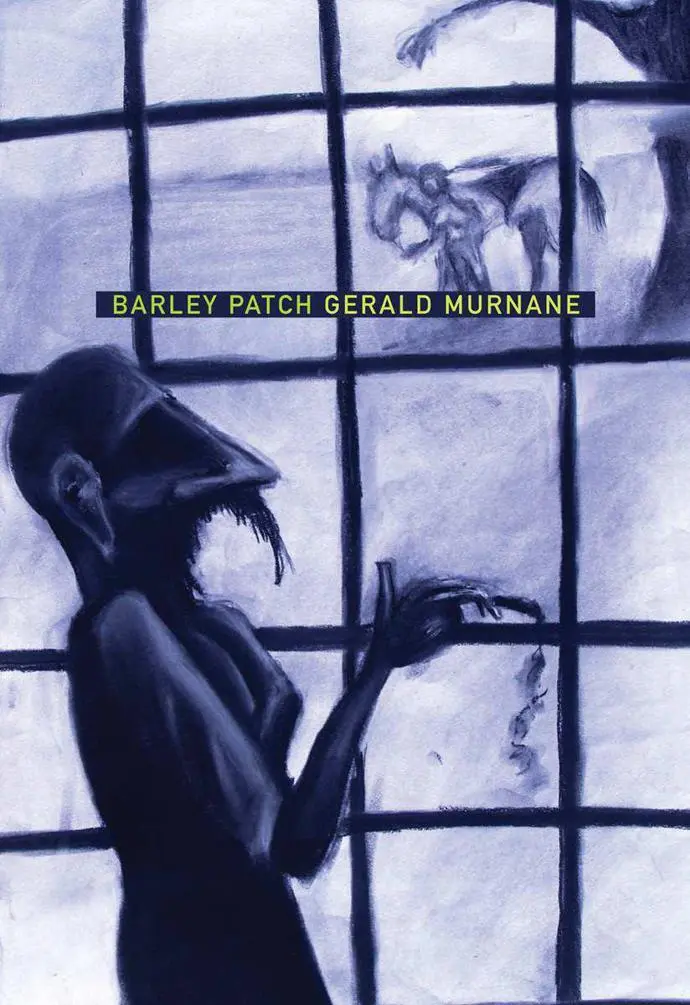
- Название:Barley Patch
- Автор:
- Издательство:Dalkey Archive Press
- Жанр:
- Год:2011
- ISBN:нет данных
- Рейтинг книги:5 / 5. Голосов: 1
-
Избранное:Добавить в избранное
- Отзывы:
-
Ваша оценка:
Barley Patch: краткое содержание, описание и аннотация
Предлагаем к чтению аннотацию, описание, краткое содержание или предисловие (зависит от того, что написал сам автор книги «Barley Patch»). Если вы не нашли необходимую информацию о книге — напишите в комментариях, мы постараемся отыскать её.
Barley Patch — читать онлайн бесплатно полную книгу (весь текст) целиком
Ниже представлен текст книги, разбитый по страницам. Система сохранения места последней прочитанной страницы, позволяет с удобством читать онлайн бесплатно книгу «Barley Patch», без необходимости каждый раз заново искать на чём Вы остановились. Поставьте закладку, и сможете в любой момент перейти на страницу, на которой закончили чтение.
Интервал:
Закладка:
For as long as he lay in the upper room, the chief character was in a light-hearted mood. Having found himself in the presence of God, the chief character directed towards God the sort of wordless message that he seemed able to send in his dreams. The content of the message was that there should be no hard feelings between God and the chief character. The flashing or winking from the wing-case of the Beetle-god then ceased. The chief character could no longer make out the orange-yellow markings or any other details in the shade beneath the bush. He understood that he had been politely dismissed; that nothing needed to be discussed between God and himself; that he ought to leave God to attend to his own affairs while he, the chief character, went on trying to write poetry or prose fiction.
While the chief character lay in the upper room of the hospital, the images that appeared to him were in no apparent order. He had always thought of the images in his mind as being arranged somewhat in the way that the names of townships were arranged on maps of mostly level countryside and that the images were connected by feelings in the way that the names of townships were connected by lines denoting roads. Whenever an image first appeared to him in the upper room, the image seemed to have appeared from behind one or another detail in the previous image, as though he was moving continually towards the seeming background of an illustration with no visible horizon. Sometimes, he felt for a moment before the appearance of an image as though the power of the image preceded it. And sometimes an image would be a mere detail, although his everyday mind, so to call it, was always aware of the undisclosed whole. He was aware, for example, that a certain blurred image of yellow-green fabric seen from close-up was a detail of an image of his father’s youngest sister as she would have appeared to him when he was hardly more than an infant. For a moment before the appearance in the upper room of the image of the yellow-green fabric, he had felt as though he was the object of strong affection. He understood from this and from the image of the yellow-green fabric that he had been embraced as a child, perhaps warmly and often, by his youngest aunt, she who had once tried to live as a nun in a building of several storeys. Strangely, so it seemed to him later, he was visited in the upper room by no image of either of his parents. He had never had reason for supposing that his parents were lacking in affection for him, and yet he had met up with no image of either parent among the images that had come into his view when he had seen into his essence, as he might have called it.
A brief section of the unfinished work of fiction would have reported the matters that are summarised in the following three paragraphs.
Very early in his life, the chief character became accustomed to thinking of his mind as a place. It was, of course, not a single place but a place containing other places: a far-reaching and varied landscape. He was sometimes aware that mountain-ranges and fast-flowing rivers and even, perhaps, an ocean might have existed on the farther side of his mental country, but he was not curious about such matters. He could never foresee himself tiring of the districts that most appealed to him. Those districts seemed to comprise long views of mostly level grassy countryside with lines of trees seemingly always in the distance. The countryside was watered by a few shallow creeks and by swamps that were mostly dry in summer. The houses were set far back from the road, and some were of two storeys. The interiors of the houses were little-known to him, even though he sometimes speculated as to the contents of the books in some of the libraries or the subject-matter of the paintings in some of the hallways or drawing-rooms as though he could have learned from one or another page or from the background of one or another painting some secret of much importance to him.
The father of the chief character had among his cousins seven siblings who had begun life as the children of a poor share-farmer and his wife in the south-west of Victoria. The children, both boys and girls, had worked beside their parents before and after school in the milking-shed. During their teenage years, the siblings worked full-time for their parents or on other farms. Only two of the seven married. The others, two females and three males, lived throughout their lives under the one roof. By means of hard work and thrift, the unmarried siblings became wealthy. When the chief character was still a small child, the siblings owned a large grazing property far inland from the coastal district where they had spent their childhood. On some or another day in the early 1940s, the chief character had been taken by his parents on a visit to the large grazing property. He was not yet four years of age, and he afterwards recalled only a few details from the visit.
The large grazing property was in a district of mostly grassy countryside that had been occupied for more than a century by a small number of families well known for their wealth. The siblings’ property had been formerly owned by one such family. The house on the property had been copied from some or another house in England. The house comprised two storeys and a tower that reached upwards beyond the second storey. At some time during his visit to the grazing property, the chief character was led to the top of the tower by the younger of the female cousins of his father. (He supposed, long afterwards, that he had begged his parents for some time beforehand to be taken to the top of the tower.) His female guide had led him by the hand up the spiral staircase in the tower. At the top of the staircase was a sort of balcony, so the chief character recalled later, but around the balcony was a wall of stones or bricks too high for the chief character to see above. His guide had knelt or had crouched and had lifted him by the armpits so that he could see the view. At some time afterwards, presumably, he had forgotten whatever details he may have noted in the view from the tower, which view would have been of mostly level grassy countryside with lines of trees in the middle and the far distance. However, he had never afterwards forgotten that he had rested himself, while he looked into the distance, against the changeable shapes of the first female breasts that he afterwards recalled himself resting against.
In the hallway of the house on the large grazing property was a wooden pedestal on which was a dome of clear glass under which was a parrot perched on a branch. The chief character had known from the first that the parrot was the preserved body of a dead bird, but he had longed to inspect the coloured feathers from close-up. He had studied illustrations of parrots in a book owned by his father’s youngest brother but he had never seen an actual bird. As soon as the young woman had led him down from the tower on the large grazing property, he had asked her in a pleading voice to lead him to the parrot so that he could study it through the glass. The young woman then led the chief character into the hallway of the house of two storeys where she would later live unmarried for forty years with her four unmarried siblings; she lifted the glass dome away from the stuffed remains of the living parrot; then she watched with seeming approval while he ran his fingers through one after another zone of feathers on the stuffed likeness — through the light green and the dark blue and the pale yellow.
One or another section of my never-completed work of fiction would have begun by reporting that the chief character decided during the last few months of his secondary schooling that he was called by God to be a Catholic priest.
The chief character liked to watch from the inside of some or another windowpane while rainwater fell against or trickled down the outside. He was watching thus in his classroom on the first floor of a building of two storeys on a day of rain four months before his final examinations, the so-called matriculation examinations. He was confident of passing the examinations and of obtaining a so-called Commonwealth scholarship that would enable him to study arts at university. Afterwards, so he supposed, he would train for a year as a teacher in secondary schools. He was indifferent towards so-called careers. He wanted only to be tolerably well paid and to be free during his evenings and his weekends to write poetry and, perhaps, prose fiction. He watched the rain on the window of his classroom as though the window overlooked a street parallel to the main street in some or another large town in the countryside of Victoria during one of the many years when he would teach English and history at the high school in the large town and would live as a bachelor in a self-contained flat on the upper floor of so-called business premises near the centre of the town. Even when the window was not blurred by rain, the man who lived behind the window could see through it no further than the nearest buildings. He understood that the large town was surrounded by mostly level grassy countryside and scattered trees but he believed that he was more likely to write poetry or prose fiction of worth if he was prevented from seeing the horizon in any direction. During the four years before he would be able to watch the rain trickling down the window of the upstairs room near the centre of the large town, so the chief character understood, he would be obliged to mix with young persons, both male and female, in a university. At some time during those years, he might decide to approach one or another young female person in the hope that he and she might later go out together, as the saying was, and later still might even become boyfriend and girlfriend.
Читать дальшеИнтервал:
Закладка:
Похожие книги на «Barley Patch»
Представляем Вашему вниманию похожие книги на «Barley Patch» списком для выбора. Мы отобрали схожую по названию и смыслу литературу в надежде предоставить читателям больше вариантов отыскать новые, интересные, ещё непрочитанные произведения.






Обсуждение, отзывы о книге «Barley Patch» и просто собственные мнения читателей. Оставьте ваши комментарии, напишите, что Вы думаете о произведении, его смысле или главных героях. Укажите что конкретно понравилось, а что нет, и почему Вы так считаете.