Howard Jacobson - Kalooki Nights
Здесь есть возможность читать онлайн «Howard Jacobson - Kalooki Nights» весь текст электронной книги совершенно бесплатно (целиком полную версию без сокращений). В некоторых случаях можно слушать аудио, скачать через торрент в формате fb2 и присутствует краткое содержание. Год выпуска: 2007, Издательство: Simon & Schuster, Жанр: Современная проза, на английском языке. Описание произведения, (предисловие) а так же отзывы посетителей доступны на портале библиотеки ЛибКат.
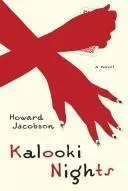
- Название:Kalooki Nights
- Автор:
- Издательство:Simon & Schuster
- Жанр:
- Год:2007
- ISBN:нет данных
- Рейтинг книги:5 / 5. Голосов: 1
-
Избранное:Добавить в избранное
- Отзывы:
-
Ваша оценка:
Kalooki Nights: краткое содержание, описание и аннотация
Предлагаем к чтению аннотацию, описание, краткое содержание или предисловие (зависит от того, что написал сам автор книги «Kalooki Nights»). Если вы не нашли необходимую информацию о книге — напишите в комментариях, мы постараемся отыскать её.
Spanning the decades between World War II and the present day, acclaimed author Howard Jacobson seamlessly weaves together a breath-takingly complex narrative of love, tragedy, redemption, and above all, remarkable humor. Deeply empathetic and audaciously funny, "Kalooki Nights" is a luminous story torn violently between the hope of restoring and rebuilding Jewish life, and the painful burden of memory and loss.
Kalooki Nights — читать онлайн бесплатно полную книгу (весь текст) целиком
Ниже представлен текст книги, разбитый по страницам. Система сохранения места последней прочитанной страницы, позволяет с удобством читать онлайн бесплатно книгу «Kalooki Nights», без необходимости каждый раз заново искать на чём Вы остановились. Поставьте закладку, и сможете в любой момент перейти на страницу, на которой закончили чтение.
Интервал:
Закладка:
‘The world.’
‘You’ve seen the world.’
‘Zoë, I’m a fucking artist. If I don’t see the world, we starve.’
‘An artist! You! Don’t make me laugh, Max. If anyone’s an artist in this relationship, I am. You’re just a cartoonist. Which means you don’t see the world at all. You only see your own sick view of it. What you do, you can just as well do blind.’
There wasn’t much of a future for us, anybody could see that. Fucking Bollocky Bill the sailor could see that. But I’d been brought up to do what women told me. Zoë wanted to find out what the whores looked like in Berlin, I took her to see what the whores looked like in Berlin. Zoë wanted me to forgive the German people, I forgave the German people. Zoë wanted me blind, I went blind. Very nearly I acceded to the nose job.
When she said she was an artist she was right. I’m not referring to her abusive ditties or the calligraphy which she only ever put her energy into fitfully, when friends wanted wedding invitations written for example, or she needed to inscribe some instruction to me in eyeliner on the bathroom mirror — Don’t say God fucking help me every time you take a leak, or Try imagining there isn’t something in the middle of your face stopping you from getting close enough to read this. No, Zoë’s artistry didn’t reside in anything she actually produced, any more than Chloë’s did. She was an artist by virtue of the power vested in her fancy. She was an artist in her disenchantments. It’s open to any old soul to imagine themselves hard done by, let down or disappointed; Zoë’s sense of being obstructed by the universe — personally spited, as though it were a face-off between the divinity and herself (a Jewish divinity was how she always saw him, a divinity with specifically my features) — was of an epic inventiveness. She could have been, she could have done, she could have achieved — anything ! She had been set down among us for that sole purpose,to astound us with her gifts, to change the language and conception of woman, to make Zoë the very currency of intelligence and beauty the world over. Forget celebrity: Zoë pre-dated celebrity and exceeded it in ambition. Nothing short of imperishable legend could answer to her sense of destiny.
In this, as in all things, she was encouraged by the devotion of parents to whom she had been a late and unexpected gift, a miracle almost, as Isaac was to Sarah. Together, just the three of them — her father a retired art teacher who rarely spoke, her mother an embroideress and potter who smiled at stars and squirrels — they strode the heathland heights of North London, Zoë papoosed to one or other of their chests, listening to their heartbeats and gathering intimation there, like Wordsworth’s pigmy poet, of all that nature had in store for her. They pointed out wild flowers to her, taught her the names of birds and butterflies, explained how you could tell a tree by the configuration of a single leaf, and, when she was ready, stretched out their hands so that she could see, over the rooftops, beyond the Finchley Road, the silhouetted golden city where she would make her name. As what, was immaterial. She was already a prodigy by virtue of being born to them at all. The rest would follow as surely as the wheeling night followed the deep slow satisfactions of the day. But they were careful not to leave it only to chance. For her fourth birthday they enrolled her in ballet classes. For her fifth birthday they bought her a little artist’s easel. For her sixth birthday a violin. For her seventh birthday they gave her singing lessons and sent her to acting school. And so on and so on, this showering of opportunity through the long summer afternoons in which she otherwise rowed on lakes and walked her dogs and smiled whereat her mother smiled and rolled down grassy banks laughing in her silent father’s arms, until — a genius in happiness as well as everything else — she reached the age of nine, when the Krystals moved in next door.
At first it seemed that they too were presents from her parents. Or another Annunciation, like the one that presaged her amazing birth. Behold my child, the Krystals, the angels for whom you have been waiting, through whose supernatural agency you will be brought before the breathless courts of public notice.
‘You can’t imagine how much I loved them,’ she told me. ‘They shone, they glowed, they sparkled. The first time I saw them as a family they burned my eyes. It was as though a giant candelabra had been installed next door, and whenever I passed their window or looked out of mine, there it was — blazing light!’
No mention of wings, but wings they clearly had.
They owned a factory making plastic bowls and mop buckets, everything for the kitchen, though nothing made of plastic ever turned up in their kitchen, that’s if they even owned a kitchen, which was highly unlikely given that angels have no stomachs and as a consequence no need of food. A library, that was what Zoë remembered most vividly about their house, the rows of bookshelves holding books unlike the books her parents showered on her — the ballet books and how-to books and I-spy nature books with pictures of snails and flowers and empty pages to press flowers of your own in — no, no books of that sort on the Krystal shelves, but Freud, Kafka, Gombrich, Wittgenstein (unless she was imagining Wittgenstein because of his name’s spitefully clever-clever all-mind-no-nature Jewish resonance), books with words in, words being the only thing her all-providing parents lacked, along, of course, with that which words enabled: worldliness. Celestial worldliness.
‘It was as if they moved in another dimension,’ she told me. ‘Neither the inside as I knew it, nor the outside as I knew it. They inhabited somewhere else.’
‘It’s called Jew-space,’ I explained.
‘Now, to my cost, I know that. Then, what did I know? What you have to remember is that I only ever saw my father in an open-necked shirt or a windcheater with a bobble hat. One for in, one for out. Footwear the same. Carpet slippers for in, walking boots for out. What else did he need? Where else was he going? Then suddenly there appeared these other-dimensional men in suits that seemed made of silver foil, wearing shoes in whose reflection I could see my face.’
‘We don’t polish them,’ I wanted her to understand. ‘You buy them pre-lacquered. There are Middle Eastern shops on Bond Street that sell nothing else.’
‘What, with the reflection of some gullible shikseh already burned in? How many pairs do you own, Max?’
‘I don’t know any gullible shiksehs. .’
‘Why don’t you shut the fuck up and let me tell you what I’m telling you. This is my story, not yours. It’s enough the Jews did this to me, without another Jew providing the fucking footnotes. What was I telling you?’
‘Shoes you could see your fucking face in—’
‘Don’t swear at me. Why must you always swear? And without laces, these shoes! Can you imagine how amazing that was? My father squandered his life doing up his laces, foot up on a little kitchen stool, starting again each time to be sure the ends were even, a little tug after every hook, remembering to tuck in the tongue, then twice around the ankle before being tied in a double hitch. That’s how I defined a man. A person with his head between his knees, roping up his feet. Now here was this laceless breed, who in a single movement could slip their feet into their shoes and be gone. And ties! Before the Krystals came I doubt I’d seen a tie. And certainly not silk. Wool, maybe, for when my father came to a school speech day. Or to keep his trousers up at home. But the Krystals wore ties so refulgent, Max, they danced.’
Читать дальшеИнтервал:
Закладка:
Похожие книги на «Kalooki Nights»
Представляем Вашему вниманию похожие книги на «Kalooki Nights» списком для выбора. Мы отобрали схожую по названию и смыслу литературу в надежде предоставить читателям больше вариантов отыскать новые, интересные, ещё непрочитанные произведения.



Обсуждение, отзывы о книге «Kalooki Nights» и просто собственные мнения читателей. Оставьте ваши комментарии, напишите, что Вы думаете о произведении, его смысле или главных героях. Укажите что конкретно понравилось, а что нет, и почему Вы так считаете.