Howard Jacobson - Kalooki Nights
Здесь есть возможность читать онлайн «Howard Jacobson - Kalooki Nights» весь текст электронной книги совершенно бесплатно (целиком полную версию без сокращений). В некоторых случаях можно слушать аудио, скачать через торрент в формате fb2 и присутствует краткое содержание. Год выпуска: 2007, Издательство: Simon & Schuster, Жанр: Современная проза, на английском языке. Описание произведения, (предисловие) а так же отзывы посетителей доступны на портале библиотеки ЛибКат.
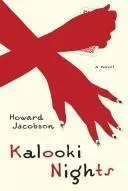
- Название:Kalooki Nights
- Автор:
- Издательство:Simon & Schuster
- Жанр:
- Год:2007
- ISBN:нет данных
- Рейтинг книги:5 / 5. Голосов: 1
-
Избранное:Добавить в избранное
- Отзывы:
-
Ваша оценка:
Kalooki Nights: краткое содержание, описание и аннотация
Предлагаем к чтению аннотацию, описание, краткое содержание или предисловие (зависит от того, что написал сам автор книги «Kalooki Nights»). Если вы не нашли необходимую информацию о книге — напишите в комментариях, мы постараемся отыскать её.
Spanning the decades between World War II and the present day, acclaimed author Howard Jacobson seamlessly weaves together a breath-takingly complex narrative of love, tragedy, redemption, and above all, remarkable humor. Deeply empathetic and audaciously funny, "Kalooki Nights" is a luminous story torn violently between the hope of restoring and rebuilding Jewish life, and the painful burden of memory and loss.
Kalooki Nights — читать онлайн бесплатно полную книгу (весь текст) целиком
Ниже представлен текст книги, разбитый по страницам. Система сохранения места последней прочитанной страницы, позволяет с удобством читать онлайн бесплатно книгу «Kalooki Nights», без необходимости каждый раз заново искать на чём Вы остановились. Поставьте закладку, и сможете в любой момент перейти на страницу, на которой закончили чтение.
Интервал:
Закладка:
‘What’s the difference between a Jew and a pizza?’
‘I don’t know, Zoë. What is the difference between a Jew and a pizza?’
‘Pizzas don’t scream when you put them in the oven.’
6
They give him a postcard to send to his family. On the front is a photograph of a railway line.
‘Here, Scooby-Doo, write to your parents.’
‘Do you have other ones?’ he asks.
‘Other ones?’
‘Different pictures.’
‘No. What’s wrong with this picture? We all like it, don’t we?’
They all agree. They all like it. All things considered it’s their favourite.
‘What about stamps?’
‘You don’t need a stamp. We’ll post it for you.’
‘What about a pen?’
They give him a pen. Roll it in through the cell door, throw it on to his shelf, pop it into the glass by his bed.
He recalls marvelling that they would do this for him. A postcard, for God’s sake! Yesterday they were getting him to eat his own shit, today they are providing postcards. What do they mean by it? He closes his eyes and opens them again, expecting the postcard to have gone — but no, it is still there.
An hour later they come to collect it.
‘Written to your parents yet, Scooby-Doo?’
‘I can’t think of anything to say,’ he says.
‘Tell them about the weather. Tell them about your friends. Describe your day. Tell them what you do. Tell them how much you think about them. Say you wish they were here.’
But he can’t. For some reason he can’t think of anything that would interest them.
When they come to collect his postcard the next time they see he has addressed it, but otherwise left it blank.
‘I would like this to go by the next post,’ he tells them. ‘There is some urgency.’
‘But you haven’t written anything.’
‘I haven’t anything to say.’
They scratch their heads under their caps and look at one another. ‘We are not sure that it’s allowed to send a blank postcard.’
‘I don’t think the post office will mind,’ he says.
They laugh. ‘It’s not the post office that’s worrying us. It’s we who are not allowed to post a blank postcard. Who knows — it might be code. You might be conveying secret information.’
‘I would use words for that.’
‘Oh, would you!’
‘If I wanted to, but I don’t.’
They scratch their heads again, then one of them has an idea. ‘We’ll have to get you another postcard,’ he says, ‘so that we can watch you leave it blank. That way we’ll know if you’re up to anything.’
‘Such as using invisible ink,’ a second says.
‘Or leaving it blank in a particularly suggestive way,’ puts in a third.
‘Why don’t you do it for me?’ he wonders.
They suck their teeth. ‘Oh no. We can’t write prisoners’ postcards for them. We’ll be accused of painting too rosy a picture.’
‘Not if you leave it blank.’
They think about that. ‘No,’ they say at last. ‘Then we’ll be accused of being uninformative. You’ll have to leave it blank yourself.’
They come back with a new postcard for him and smile between themselves when he fills in the address.
That’s the moment he realises what they are up to. The reason they have given him a postcard to write to his parents is that he has no parents. The address he writes — s-sssch — is obsolete. They don’t live there, no one lives there, any more.
S-sssch.
It is the same with his suitcase.
Twice a week they get him to sign for his suitcase. His signature is an acceptance that they are holding it for him with his permission.
‘What’s changed since the last time I signed?’ he asks.
‘You have,’ they tell him.
‘But what bearing does that have on my suitcase?’
‘We want your signature before you forget.’
‘Forget what?’
‘Forget that you have a suitcase.’
‘But if I forget, then it doesn’t matter, does it?’
They accuse him of solipsism. Just because he doesn’t apprehend his suitcase with his mind doesn’t mean his suitcase doesn’t exist. ‘The suitcase is still there, even if you aren’t,’ they say.
‘And why is that important?’
‘It’s important for our records. We need to know who the suitcase belongs to.’
‘It belongs to me.’
‘Not if you suddenly decide to deny it.’
‘And why would I do that?’
‘It’s something people do who have lost their minds.’
‘I don’t know why that would worry you.’
‘Because then we’d have a suitcase on our hands we couldn’t account for.’
‘Destroy it.’
They make a tutting noise in harmony, like a glee club. ‘We couldn’t do that. Too much paperwork.’

And how, I asked, was that the same as the postcards?
He was surprised I didn’t see it. Because in both instances the efficiency of the system was on the line. And in the end that was all that mattered — the efficient working of the s-system. How well organised everything was, right down to the smallest detail, how much care they took, how much pride they showed in their work. And how hurt they would be when that was not appreciated.
It’s when they come in with an iron and ironing board, get him to strip off his uniform and then order him to press the yellow star which adorns it, taking particular care with the six points, each of which must be smooth, and then when they begin beating him with their rifle butts because one of the points is not smooth, that I decide to say something.
‘Why are you messing with my head, Manny?’
‘People don’t know how beautifully made those stars were—’
‘Stop it, Manny.’
He looked away, up at the broken ceiling rose I was always promising Zoë I’d get fixed. His eyes were bluer than cornflowers. Confronted with such an expression, Shitworth Whitworth would have clobbered him for dumb insolence.
Had he been deliberately messing with my head, or was his own head so messed up that he no longer distinguished between what he’d read and what he’d experienced, where he’d been and where he had always feared they would take him?
‘Do you want to know what actually happened?’ he asked me, an hour later.
I made no reply.
‘I lay on my bed and tried to find a justification for every crime that had ever been committed against Jews.’
‘For twenty years?’
‘Why not? I could have taken longer.’
‘And did you succeed?’
‘Yes. We deserved everything that had been done to us.’
‘And did it make you feel better to think that?’
‘Yes, it did. It’s always better to feel you’ve played your part. Anything’s better than being a victim.’
‘And what do you think now?’
‘I think anything’s better than being a victim.’
‘So you don’t ever think of yourself as one?’
‘As a victim? Me? How could I be? I broke the Ten Commandments.’
‘Only one of them, Manny.’
‘You can’t break only one of them. Break one, break them all.’
‘You told me that when we were kids.’
‘Well, it’s not going to change, is it?’
‘So you reckon you got your desserts?’
He thought about it. Then he did something unexpected. He took off his jacket and rolled up his sleeve. He wanted me to see the numbers tattooed upon his arm.
TWELVE
Once he has served her, that’s the end of him as man.
Ilsa: She-Wolf of the SS1
Round about the time they were hauling Manny off to Belsen or Buchenwald or wherever he believed they were taking him, a young American film director, Don Edmunds, was handed the script of Ilsa: She-Wolf of the SS . ‘This is the worst piece of shit I’ve ever read,’ he said. When the producer peeled off $2,000, Edmunds relented. Maybe I can find something socially significant in it, he conceded. He shot the film in nine days on the abandoned set of Hogan’s Heroes . Waste not, want not.
Читать дальшеИнтервал:
Закладка:
Похожие книги на «Kalooki Nights»
Представляем Вашему вниманию похожие книги на «Kalooki Nights» списком для выбора. Мы отобрали схожую по названию и смыслу литературу в надежде предоставить читателям больше вариантов отыскать новые, интересные, ещё непрочитанные произведения.






Обсуждение, отзывы о книге «Kalooki Nights» и просто собственные мнения читателей. Оставьте ваши комментарии, напишите, что Вы думаете о произведении, его смысле или главных героях. Укажите что конкретно понравилось, а что нет, и почему Вы так считаете.