Howard Jacobson - Kalooki Nights
Здесь есть возможность читать онлайн «Howard Jacobson - Kalooki Nights» весь текст электронной книги совершенно бесплатно (целиком полную версию без сокращений). В некоторых случаях можно слушать аудио, скачать через торрент в формате fb2 и присутствует краткое содержание. Год выпуска: 2007, Издательство: Simon & Schuster, Жанр: Современная проза, на английском языке. Описание произведения, (предисловие) а так же отзывы посетителей доступны на портале библиотеки ЛибКат.
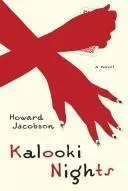
- Название:Kalooki Nights
- Автор:
- Издательство:Simon & Schuster
- Жанр:
- Год:2007
- ISBN:нет данных
- Рейтинг книги:5 / 5. Голосов: 1
-
Избранное:Добавить в избранное
- Отзывы:
-
Ваша оценка:
Kalooki Nights: краткое содержание, описание и аннотация
Предлагаем к чтению аннотацию, описание, краткое содержание или предисловие (зависит от того, что написал сам автор книги «Kalooki Nights»). Если вы не нашли необходимую информацию о книге — напишите в комментариях, мы постараемся отыскать её.
Spanning the decades between World War II and the present day, acclaimed author Howard Jacobson seamlessly weaves together a breath-takingly complex narrative of love, tragedy, redemption, and above all, remarkable humor. Deeply empathetic and audaciously funny, "Kalooki Nights" is a luminous story torn violently between the hope of restoring and rebuilding Jewish life, and the painful burden of memory and loss.
Kalooki Nights — читать онлайн бесплатно полную книгу (весь текст) целиком
Ниже представлен текст книги, разбитый по страницам. Система сохранения места последней прочитанной страницы, позволяет с удобством читать онлайн бесплатно книгу «Kalooki Nights», без необходимости каждый раз заново искать на чём Вы остановились. Поставьте закладку, и сможете в любой момент перейти на страницу, на которой закончили чтение.
Интервал:
Закладка:
The pot is black, made of metal, the sort cannibals stew missionaries in. It contains potatoes and carrots in a watery gravy. He eats.
Now shit, they say.
This is the fuller version.
It is also the cell version. Another time he tells it to me he is in a sort of ward, and he is lying on a shelf.
A shelf ! Well, what do I know?
In this version, because the room is populous, they say his name. Eat, Scooby-Doo. Shit, Scooby-Doo.
It sounds affectionate. Could they have liked him?
‘Why “Scooby-Doo”?’
‘He’s a dog. A cartoon dog. You should know that.’
‘I do know that. I’m asking you why they called you Scooby-Doo?’
‘Rhyming slang. Scooby-Doo, Jew.’
‘Did they all call you that?’
‘Who’s “they”?’
‘The other prisoners.’
‘Patients.’
‘Forgive me — the other patients.’
Had I said patients to begin with he’d have corrected the word to inmates. When I pick up on inmates he changes them to victims.
‘Yes. Scooby-Doo was their invention. The g-guards learn it from them.’
‘Guards?’
‘Wardens.’
On another occasion they are nurses.
Does he mind being called Scooby-Doo?
‘It’s not the worst of my worries,’ he tells me.
The worst of his worries, in this version at least, is that they will not feed him again until he defecates and defecating in these circumstances is beyond him. He has never before — at least not since he was an infant — had to defecate into anything that isn’t a lavatory bowl. He doesn’t know how he is going to manage a pot. Nor has he ever defecated in the hearing, let alone the sight, of other people. At school he would have to go to the lavatories at odd hours to be reasonably certain no one else was there. Or wait behind until everyone had gone home. The activity of voiding his bowels within a hundred miles of another living person was and always had been a torture to him. So defecating into the pot in the company of other men is not going to be easy.
My own view is that it would be impossible. That one would sooner explode. But then I have so far been spared extremity. More than that, I have gone to great lengths to avoid extremity. Not to find myself in an extreme circumstance — Chloë and Zoë excluded — has been the principal study of my life. It has kept me quiet. And law-abiding. It would have stopped me turning the taps on my parents, for example. But not everybody remembers how terrible the lavatories are going to be before they commit a crime.
After he finally succeeds in filling the pot he is instructed to empty it. I don’t ask how long this has taken him. A week? A month? A year? Nor do I ask him where he empties it. Ask a question and you might just get an answer. Shortly after his success, they — the guards, the wardens, the nurses — return with his food in a pot he recognises. His pot. It has not been washed. The next time he tells me the story they don’t bring him food, they bring him back his faeces. But what they say in all instances is the same.
Eat.
Not for me to have an attitude but I find it hard not to express surprise that things are quite so primitive in Her Majesty’s mental hospitals.
Once, when I do raise a question along those lines, he turns on me in irritation and tells me he is not describing life inside any kind of hospital I might have encountered.
Well, what do I know? For all my experience to the contrary he could be remembering what it’s like inside a yeshiva.
Or wherever it was in Lymm that tubercular Jewish boys were sent to.
And I am taking him to be exercising a degree of poetic licence, anyway, ordering his recollections in a fashion that can only be called metaphorical.
If I’d had the appropriate psychological language — something a touch more nuanced for him than catatonic schizophrenic, or frumkie — I might have been better positioned to decide whether he was actually meting out to himself, in memory, the punishment he thought he deserved. A life for a life, but with what do you pay for two lives?
5
I had offered him the use of a granny flat I’d had built as an extension just before Zoë left. Part of our trial separation. Got all you need, I’d told him — private entrance, galley kitchen, tiny living room, your own lavatory , no reason for you ever to come out. I hadn’t expected him to accept. Just because he was talking didn’t mean he’d turned sociable all of a sudden. Any more than it meant he had decided to like me. Nor, to be, honest, had I wanted him to accept. But if he was meting out punishment to himself, then maybe it was time I meted out punishment to my self. My punishment was him. This thing of darkness I acknowledge mine, etc etc.
He turned up with a few things in a cardboard suitcase of a sort I hadn’t clapped eyes on since the 1950s. I didn’t doubt it was the same suitcase that bore his belongings when they put him behind bars. Something in the sentimental way he carried it.
He took the keys from me without meeting my eyes. Then he asked whether he would need change for the gas meter.
Could that have been a hellish joke?
I decided probably not. He was simply pointing out the difference, I decided, between his circumstances and mine. But if it was a joke then I wished Zoë had been around to hear it. She enjoyed that sort of humour.
No one had slept in the granny flat since Zoë left. We exchanged farewells there. ‘Goodbye, Bollocky Bill,’ she said, extending her hand. Every time we reached the point of breaking up Zoë would offer me her hand, an action so piteous in its finality — reduced to this, a mere formal handshake, we who had rolled all our sweetness up into one ball — that we both dissolved into tears and fell in love with each other again. Not this time, though. This time we meant it.
‘Bollocky Bill’ was what she had called me, despite my scant resemblance to a Bill, bollocky or otherwise, in the early days of our marriage, before the romance went out of it. ‘Bollocky Bill from over the hill.’
No relation, that I knew of, to Barnacle Bill, although Barnacle Bill does become Bollocky Bill in saltier versions of the ditty. Mere coincidence. ‘Bollocky Bill from over the hill’ was pure Zoë coinage. The charm of nonsense had eluded her as a child, and the discovery in her maturer years that she could make rhymes and limericks and doggerel of her own — actually and of her own volition put nonsense into the world — gave her enormous pleasure. If the nonsense could at the same time comprehend an insult or two to me, her happiness was complete. Another man might have begrudged her this, I could not. The more particularly as she viewed these forays into verbal play as proof that we had not entirely destroyed in her the creative genius she could have been. ‘We’ being the Jews.
But this is not to say that Bollocky Bill didn’t proceed from an impulse even deeper in my Jew-besotted wife. I would not have put it past her, for example, to have detected my Bollocky/Barnacle Gentile ancestry long before I knew of it myself, discerning, in that uncanny way of hers, the Bill closeted behind the mask of Max. Yes, she married me to reconnect herself to that Jewishry from which, as a girl, she had been so brutally repulsed, but she also looked forward to a time when I’d have my nose off and look the goy I had it in me to look.
With Zoë, prognostication waited upon the iron of her will. What she foresaw was what she would make happen. She espied a moustache on my face and she made me grow one. Ditto the beard. Ditto the long hair. Ditto the rainforest eyebrows.
‘I’m not able to see out of here,’ I complained in the early days.
‘What do you want to see?’
Читать дальшеИнтервал:
Закладка:
Похожие книги на «Kalooki Nights»
Представляем Вашему вниманию похожие книги на «Kalooki Nights» списком для выбора. Мы отобрали схожую по названию и смыслу литературу в надежде предоставить читателям больше вариантов отыскать новые, интересные, ещё непрочитанные произведения.









Обсуждение, отзывы о книге «Kalooki Nights» и просто собственные мнения читателей. Оставьте ваши комментарии, напишите, что Вы думаете о произведении, его смысле или главных героях. Укажите что конкретно понравилось, а что нет, и почему Вы так считаете.