Howard Jacobson - Kalooki Nights
Здесь есть возможность читать онлайн «Howard Jacobson - Kalooki Nights» весь текст электронной книги совершенно бесплатно (целиком полную версию без сокращений). В некоторых случаях можно слушать аудио, скачать через торрент в формате fb2 и присутствует краткое содержание. Год выпуска: 2007, Издательство: Simon & Schuster, Жанр: Современная проза, на английском языке. Описание произведения, (предисловие) а так же отзывы посетителей доступны на портале библиотеки ЛибКат.
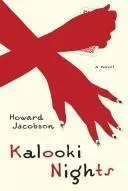
- Название:Kalooki Nights
- Автор:
- Издательство:Simon & Schuster
- Жанр:
- Год:2007
- ISBN:нет данных
- Рейтинг книги:5 / 5. Голосов: 1
-
Избранное:Добавить в избранное
- Отзывы:
-
Ваша оценка:
Kalooki Nights: краткое содержание, описание и аннотация
Предлагаем к чтению аннотацию, описание, краткое содержание или предисловие (зависит от того, что написал сам автор книги «Kalooki Nights»). Если вы не нашли необходимую информацию о книге — напишите в комментариях, мы постараемся отыскать её.
Spanning the decades between World War II and the present day, acclaimed author Howard Jacobson seamlessly weaves together a breath-takingly complex narrative of love, tragedy, redemption, and above all, remarkable humor. Deeply empathetic and audaciously funny, "Kalooki Nights" is a luminous story torn violently between the hope of restoring and rebuilding Jewish life, and the painful burden of memory and loss.
Kalooki Nights — читать онлайн бесплатно полную книгу (весь текст) целиком
Ниже представлен текст книги, разбитый по страницам. Система сохранения места последней прочитанной страницы, позволяет с удобством читать онлайн бесплатно книгу «Kalooki Nights», без необходимости каждый раз заново искать на чём Вы остановились. Поставьте закладку, и сможете в любой момент перейти на страницу, на которой закончили чтение.
Интервал:
Закладка:
‘It’s not need we’re talking, Ma. It’s curiosity. If it happened we should know about it. I’ve never understood all this secrecy. Who we are, where we come from, what we were really called. All this starting again, always starting again, for what — to hide a quarter of Gentile blood?’
‘Well, they do it, Max. They’ve all got some old Jew in the background they’re desperate to keep hidden.’
‘The worse for them if you’re right. But you’re not right. Not any more. Now they can’t wait to brag about it. Now you’re no one if you can’t produce a pedlar called Shmuel who inseminated Aunt Harriet on his way through Harrogate. Time we got our own back. You think you’re exotic? Look who inseminated our aunty — a shaygets called Skinner from the Humber! It’s nothing to be ashamed of, Ma, a quarter of Gentile blood. Or a half, in your own case.’
‘Who’s ashamed, Max?’
I took a moment to think about that. Who was ashamed?
‘Did Dad know about it?’ I asked, changing tack.
‘Of course. That’s to say he knew my mother’s version of events. I’m not sure he believed it all. As I’ve told you, your grandma liked to spin a yarn.’
‘Ah, so it’s Grandma suddenly. Hardly ever heard a word about her, almost never seen a photograph, no word until now about where she came from — Russia, somewhere, Novoropissik, who knows, who cares, fargess es — and now she’s my bobbeh, my bubbeleh. How come neither of you ever mentioned it before?’
‘Me and your grandmother?’
‘You and Dad.’
‘We didn’t want you unsettled.’
I thought about it. Was I unsettled? Yes, a bit. A quarter unsettled.
‘So where does that leave Ike?’ I asked, still working people out on my fingers.
‘Oh, he’s completely Jewish too. Even more completely Jewish than us.’
‘No, I meant, who is he to you by the latest calculation?’
‘My half-brother. Same mother, different fathers. It’s not all that weird, Max.’
‘And he knows?’
‘Of course.’
‘And you don’t think that’s what sent him tsedrait?’
‘What?’
‘The secrets, the shame, the dread of anyone seeing the inside of our lapels.’
‘No one’s ashamed, Max. There are just some things it isn’t necessary to talk about in front of the whole world.’
‘As I do, you mean?’
‘Well, you haven’t exactly been a private man, Max, splashing ink everywhere.’
‘Ma, I’m a cartoonist.’
‘The world’s full of cartoonists. They don’t all spill their kishkies for the world to see every five minutes.’
It was the same phrase my venerable ancestor had used on the crossing from the old country. Was it something in the family genes, then, spilling our kishkies in public places? — allowing that to be a fair description of what I did, which it categorically wasn’t. But I’d had this out with my mother and Shani too many times to go through it all again. They had their thoughts, I had mine. I believed Five Thousand Years of Bitterness was a story I couldn’t tell enough. They thought there were other subjects.
So I returned us to Tsedraiter Ike. ‘And being the son of a sailor — wouldn’t that send you tsedrait?’
‘What sailor?’
‘Barnacle Bill.’
‘You’re the tsedrait one,’ she said, waving away the ludicrous idea, before wondering if I’d stay for a hand or two of kalooki later.
But it would explain Tsedraiter Ike’s otherwise irrational aversion to Shani’s fiancé, wouldn’t it?
And the apologetic song he sang. Only me, from over the sea.
ELEVEN
1
Asher.
So how was Asher?
Gross of me, to pounce on Manny’s tears? Perhaps. But he’d been leading me a merry dance. Now inviting me in, now pushing me away. His right, of course. His ruined life. But he did know what we were about. He had agreed the deal.
And Asher was not a forbidden subject. Not even his late mother and father were forbidden subjects. Manny had alluded freely to them all in the course of our ‘reunions’. It was just that I felt he was teasing me with them, punishing me with them even, bringing them out of his own volition on to the open stage of our conversation, then fading them, turning the lights down on them, the moment I let my curiosity show.
‘So how is Asher?’
A risk. I did not know whether he was in communication with Asher or even whether Asher was still alive. Of Asher alive or dead since Manny made an orphan of him I had not heard a word. But sometimes you have to take a risk. And there was something about the intimacy of the tiny restaurant, serving home-made Italian soups and bruschettas to museum types, that emboldened me.
‘In love is how I imagine him,’ he said, as if speaking from a long way away. ‘Always in love.’
‘So he fell in love again, then, after Dorothy?’
‘Asher was never out of love.’
‘Were there many?’ I asked, smiling. My appreciation was genuine. I like incorrigible romanticism in ageing men.
‘You misunderstand. Asher was always in love with the same woman.’
‘With Dorothy?’
‘Always with Dorothy.’
Such statements break your heart. The flame that never dies. For a moment I wondered whether Lymm and all the rest of it had been a blind, a family subterfuge, a bit like Tsedraiter Ike, to hide from the Jewish community the fact that the great rabbinic hope had been living embowered in bliss with the fire-yekelte’s half-Germanic daughter in a little goyisher cottage in rural Cheshire. And if that were the case, had they been bowered together in bliss all the time poor Manny had been banged up, and were they bowered in bliss still, this very minute, a little grey-haired couple with eyes only for each other, while Manny and I, neither of us remotely blissful, traipsed the streets of London in half-silence?
Impossible, of course. This wasn’t that sort of story. Families who put their children’s happiness before everything else don’t end up getting gassed in their own beds by one of them.
‘What happened to Asher?’ I asked. ‘What happened after he was sent away?’
He looked at me evenly — for him. A little surprised, I thought — as indeed was I — by the directness of my question.
‘There’s a rabbinic saying,’ he said, ‘“Happy is the man whom God chastens. .”’
I waited. Here we go, I thought. Here we go again. But I made my face into a question mark. Yes? Happy is the man whom God chastens. .
‘“. . so he can study God’s law.”’
‘Study is a punishment?’
‘No, it’s a mitzvah.’
‘Then why the talk of chastisement?’
‘You have to think of it as a chastisement filled with love. God tries the righteous. There is no point trying the wicked. They would not endure it. There’s another saying — God’s rod comes only upon those whose heart is soft like the lily.’
‘So God broke Asher’s heart to make a better student of him, is that what you’re saying?’
‘God breaks all our hearts. Asher wasn’t the only one man whose heart was soft like the lily.’
Amen to that, I thought. But I wasn’t meant to be thinking of me. Asher, remember Asher.
‘I take it from what you’re saying, then, that he returned to the yeshiva?’
He nodded.
‘Where he pined for Dorothy?’
He rocked in his chair, his attention beginning to drift away. ‘He did and he didn’t.’
What was that supposed to mean? Did study blot up the pain? Did Asher find a more suitable woman to love, one with her dress down to her ankles and babies round her feet? One in whose fetid embrace he would try without success to forget the silvery loveliness of Dorothy’s? But before I could frame the question a little more nicely than that, Manny surprised me with a show of what sounded like irritation. ‘They met again,’ he said.
Читать дальшеИнтервал:
Закладка:
Похожие книги на «Kalooki Nights»
Представляем Вашему вниманию похожие книги на «Kalooki Nights» списком для выбора. Мы отобрали схожую по названию и смыслу литературу в надежде предоставить читателям больше вариантов отыскать новые, интересные, ещё непрочитанные произведения.










Обсуждение, отзывы о книге «Kalooki Nights» и просто собственные мнения читателей. Оставьте ваши комментарии, напишите, что Вы думаете о произведении, его смысле или главных героях. Укажите что конкретно понравилось, а что нет, и почему Вы так считаете.