Howard Jacobson - Kalooki Nights
Здесь есть возможность читать онлайн «Howard Jacobson - Kalooki Nights» весь текст электронной книги совершенно бесплатно (целиком полную версию без сокращений). В некоторых случаях можно слушать аудио, скачать через торрент в формате fb2 и присутствует краткое содержание. Год выпуска: 2007, Издательство: Simon & Schuster, Жанр: Современная проза, на английском языке. Описание произведения, (предисловие) а так же отзывы посетителей доступны на портале библиотеки ЛибКат.
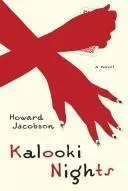
- Название:Kalooki Nights
- Автор:
- Издательство:Simon & Schuster
- Жанр:
- Год:2007
- ISBN:нет данных
- Рейтинг книги:5 / 5. Голосов: 1
-
Избранное:Добавить в избранное
- Отзывы:
-
Ваша оценка:
Kalooki Nights: краткое содержание, описание и аннотация
Предлагаем к чтению аннотацию, описание, краткое содержание или предисловие (зависит от того, что написал сам автор книги «Kalooki Nights»). Если вы не нашли необходимую информацию о книге — напишите в комментариях, мы постараемся отыскать её.
Spanning the decades between World War II and the present day, acclaimed author Howard Jacobson seamlessly weaves together a breath-takingly complex narrative of love, tragedy, redemption, and above all, remarkable humor. Deeply empathetic and audaciously funny, "Kalooki Nights" is a luminous story torn violently between the hope of restoring and rebuilding Jewish life, and the painful burden of memory and loss.
Kalooki Nights — читать онлайн бесплатно полную книгу (весь текст) целиком
Ниже представлен текст книги, разбитый по страницам. Система сохранения места последней прочитанной страницы, позволяет с удобством читать онлайн бесплатно книгу «Kalooki Nights», без необходимости каждый раз заново искать на чём Вы остановились. Поставьте закладку, и сможете в любой момент перейти на страницу, на которой закончили чтение.
Интервал:
Закладка:
I needed no convincing. Mine too. Once I was out of art school and no longer having to look like a goyisher housepainter, my ties leapt like Nureyev upon my chest. Never mind fringes and yarmulkes, a dancing tie is also a prescription of the Lord’s.
But Selwyn and Seymour Krystal were scarcely older than she was when they blazed for her through their window that first time. Ten, eleven. Were they in Jewish showbiz business suits already?
‘They were men, Max. They shaved. They had deep voices. They had the charm and confidence of grown men.’
‘And you fell in love with them?’
‘Of course. How could I not? But I wasn’t just in love with the boys. I adored the whole family. I am not going to say they were warm — I’ve had it with warm Jews, Max. And it’s a cliché anyway. It’s how you like to see yourselves. Loving. Generous. Gemütlich . Fuck all that. What they were was hot. Hot in the words they used. Hot in the jokes they told. Hot in the hurry they were in to top one another’s stories. Conversation was like a race. They didn’t drowse away the days as we did, they consumed them, they burned time. It was like a mission — to grow up, to move forward, to get somewhere. I was exhilarated by them. They came through my life like a train and I had to jump on. .’
Until they pushed her off.
Her breasts grew, but not too much, and Leila Krystal took fright. Poor Zoë. Of this part of the story at least, I believed every word. Oy gevalt, a gorgeous little shikseh with hand-grenade breasts and features so diminutive and precise she looked as though a fairy god had pinched them out of Plasticine. What chance of Selwyn and Seymour resisting that? She knew her boys. They weren’t rompers or wenchers. Gentile girls with rosy cheeks and udders to their ankles came and went without causing any lasting damage. But this brittle and unblemished piece with a haughty, pointed nose and icy, tragic purpose in her eyes — no, the moment they noticed what she had grown into they would not resist her. She would call to them in their brief sleep from across the river and they would plunge into the freezing waters though they knew they could not swim. They had no choice. The ancient music sang in their bones. It was a compliment to Zoë of course, but you couldn’t expect her to take it as one. Leila Krystal had been born with one foot in Berlin and another in Vienna, her mother had been born with one foot in Prague and another in Budapest, cities where beauty was understood to be a commodity you were a fool not to trade in if you had it. Telling Zoë to put on fishnet stockings and walk the Kurfurstendamm (or words to that effect) was not unappreciative advice. And who’s to say it wasn’t right, that this was not the big thing Zoë had been waiting for. Her calling. To be the whore to end all whores. After which, it was anybody’s guess. . A royal title? The movies?
I even put that to her once. ‘Maybe Leila Krystal was your angel after all,’ I said. ‘Maybe she was showing you your destiny. And you blew it.’
‘Only a Jew would have put her mind to what I had between my legs and seen a business opportunity in it,’ she said, slapping my face, ‘and only another Jew would have thought she was doing me a favour.’
She agreed with Hitler in the matter of Jews and prostitution. Hitler believed prostitutes were a Jewish invention, and Zoë swung between believing that every Jewish wife was a sort of prostitute to her husband and every Gentile woman was a prostitute in the eyes of every Jewish man. But they had it wrong, Zoë and Hitler both. There was nothing specifically Jewish in turning sex to your advantage commercially. The practice had attained a high level of refinement in what had once been the Austro-Hungarian Empire. It just so happened that in our journeying through this Gentile agglomeration of states, a number of us picked up the local way of thinking.
Thus Zoë’s myth of exile, anyway. It was like listening to the Kabbalah. A paradisal unity shattered, the vessels broken, the holy sparks scattered far and wide. A war waged between true primordial light and its imitators. At the end of which — and this you don’t find in the Kabbalah — poor little Zoë standing outside the gates of the garden, and the angel Krystal with his flaming sword, barring her from re-entering for ever. A myth of exile which she was bound to repeat, not only with me but to me, charging me with it whenever we fell out, for the reason that I was on the continuum of Jewish treachery which had precipitated it, and was therefore, in my own person, one of its primary causes.
Strange to say, I accepted this guilt. Just as I held every German alive or dead accountable for Germany’s misdeeds, so did I shoulder responsibility for all acts of wickedness perpetrated or still to be perpetrated by Jews on Gentiles. A hard theology, but at least consistent. Bearing Five Thousand Years of Bitterness entailed bearing Five Thousand Years of Culpability.
Another way of putting that is to credit Zoë with the gift — oh yes, she was loaded with gifts, and not all of them went unexploited — of getting me to know what it felt like to be inside her head. I would watch her standing at the window after one of our fights, and I could hear the sea raging behind her eyes. She would try to look out of herself, notice something happening in the street, a person getting into their car, a mother wheeling a baby, but everything that wasn’t me, wasn’t her, wasn’t the Krystals, would be swept away. Although she claimed she could remember every poisoned word Leila Krystal had said to her on the afternoon of the great betrayal, and every movement of Leila Krystal’s bejewelled hands — ‘Here, child, sit here,’ patting the tapestried cushion on the deep-sprung buttercup-yellow sofa, and then two fingers on the point of Zoë’s knee, as though she couldn’t trust even herself to make more fleshly contact with the girl than that — the story never came out quite the same way twice; but that was beside the point, because the poison, like the sea, was cumulative, each dosage increased by the memory of how it was the last time she remembered. To get through today meant getting through last week, and getting through last week meant getting through the week before. It was beyond her. It stretched too far back. The sea of her shame — the multiplying shame of so many failures to throw off shame — crashed in her ears. Had Leila Krystal appeared before us and Zoë plunged a knife into her heart, the noise in Zoë’s head would have been a mitigating circumstance. Not that it would have stilled the sea. Had she been able to quell the shame she would have been left with hatred, and had she been able to quell the hatred she would have been left with pain. Go all the way back, past the week before and the week before that, and she could only hope, at best, to come upon the little girl — for that was how she saw herself, no matter how luridly Leila Krystal apprehended her and feared her, just an unsuspecting little girl — whose starry, dazzling universe of love and optimism was about to be smashed into a thousand tiny fragments.
It had happened, could never be made not to have happened, would always go on happening — I was the living proof of that, another shatterer of stars, another stealer of Zoë’s rightful glory — and only a brute would not have wept for her. Yes, she passed it on, made herself so vivid to me that for years the sea in her head became the sea in mine, though I have to say she was not herself made any quieter by the companionship. We simply suffered it together, until finally she saw that as the latest and most diabolical Jewish trespass upon her of them all — my attempt to muscle in on her sorrow.
After which there was only one thing she could say to me.
Читать дальшеИнтервал:
Закладка:
Похожие книги на «Kalooki Nights»
Представляем Вашему вниманию похожие книги на «Kalooki Nights» списком для выбора. Мы отобрали схожую по названию и смыслу литературу в надежде предоставить читателям больше вариантов отыскать новые, интересные, ещё непрочитанные произведения.





Обсуждение, отзывы о книге «Kalooki Nights» и просто собственные мнения читателей. Оставьте ваши комментарии, напишите, что Вы думаете о произведении, его смысле или главных героях. Укажите что конкретно понравилось, а что нет, и почему Вы так считаете.