Howard Jacobson - Kalooki Nights
Здесь есть возможность читать онлайн «Howard Jacobson - Kalooki Nights» весь текст электронной книги совершенно бесплатно (целиком полную версию без сокращений). В некоторых случаях можно слушать аудио, скачать через торрент в формате fb2 и присутствует краткое содержание. Год выпуска: 2007, Издательство: Simon & Schuster, Жанр: Современная проза, на английском языке. Описание произведения, (предисловие) а так же отзывы посетителей доступны на портале библиотеки ЛибКат.
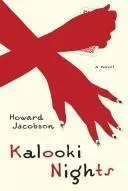
- Название:Kalooki Nights
- Автор:
- Издательство:Simon & Schuster
- Жанр:
- Год:2007
- ISBN:нет данных
- Рейтинг книги:5 / 5. Голосов: 1
-
Избранное:Добавить в избранное
- Отзывы:
-
Ваша оценка:
Kalooki Nights: краткое содержание, описание и аннотация
Предлагаем к чтению аннотацию, описание, краткое содержание или предисловие (зависит от того, что написал сам автор книги «Kalooki Nights»). Если вы не нашли необходимую информацию о книге — напишите в комментариях, мы постараемся отыскать её.
Spanning the decades between World War II and the present day, acclaimed author Howard Jacobson seamlessly weaves together a breath-takingly complex narrative of love, tragedy, redemption, and above all, remarkable humor. Deeply empathetic and audaciously funny, "Kalooki Nights" is a luminous story torn violently between the hope of restoring and rebuilding Jewish life, and the painful burden of memory and loss.
Kalooki Nights — читать онлайн бесплатно полную книгу (весь текст) целиком
Ниже представлен текст книги, разбитый по страницам. Система сохранения места последней прочитанной страницы, позволяет с удобством читать онлайн бесплатно книгу «Kalooki Nights», без необходимости каждый раз заново искать на чём Вы остановились. Поставьте закладку, и сможете в любой момент перейти на страницу, на которой закончили чтение.
Интервал:
Закладка:
In which case futile. Futile all of it. My father’s life, my father’s principles, every word he’d spoken to me — futile. Not what the rabbi was saying, but who cared about the rabbi? He was futile too. So what did that leave? The mere brute physical fact of my father, his unthinking bulk — and I knew where that was going.
I wouldn’t look. Where it went I know but didn’t see. That way there was — that way there remains — the possibility it went somewhere else.
I was meant to recite Kaddish at the graveside, the great booming lamentation for the Jewish dead, but I botched it. Tsedraiter Ike had transliterated it for me. Yisgadal veyiskadash . . Those dreaded words. Like the tolling of the final bell. You hear them in synagogue when you are young, chanted by orphans and bereaved brothers, and you wonder when your time will come and whether you will be up to it. Well, the time had come, and I wasn’t. Yisgadal veyiskadash shemey rabo, Be’olmo di’vero chir’usey . Botched, but not the time for blaming my dad for never teaching me the Hebrew or its meaning. May His great Name grow exalted and sanctified — Amen — in the world He created as He willed .Tsedraiter Ike helped me through. He was just about the only man there who had any inkling of what we were doing or saying. My father’s friends looked at the ground or moved their lips at what they hoped were the right moments. Of no use to him whatsoever now. Die and any atheist friends you have are blown away like the leaves from winter’s trees.
As though to compensate for his shortcomings at my father’s funeral, where his sole concession to the solemnity of the occasion had been to remove his ironic spectacles and dab twice at his eyes, Rodney Silverman wrote me a sweet letter the week following, telling me how he had always admired my father, what a fine and upright man he was, and how he had thought of him recently when he saw Rembrandt’s painting of Abraham sacrificing Isaac. ‘It is a most terrifying portrait of the eternal Jewish father,’ he wrote, ‘his hand completely covering Isaac’s face, manhandling it in a way that suggests the boy’s life is his to do with as he pleases. In this way it denies the rights of the mother absolutely. But look again, Max, and you will see that Abraham’s action is in fact loving. The reason he covers his son’s face so completely is that he wishes to spare him the sight of the knife going into his heart. Your father was an Abraham. If he sometimes appeared brusque or brutal with you, it was only because he wanted to save you from the cruelty of the world. But you are the artist, so I don’t have to explain any of this to you.’
He also sent me a gift. While on one of his many visits to America on union business he had come across a comic book called Impact # 1 which contained an illustrated story he thought would interest me. ‘Master Race’ written by Al Feldstein and drawn by Bernard Krigstein. These Jews! Feldstein and Krigstein! Where would any of us be without these Jews? Rodney Silverman didn’t say that, I did. What Rodney Silverman said was that he thought ‘Master Race’ was pretty good, and he thought I would too. .Continuing heartfelt condolences and all good wishes, Rodney.
He was right. I did think it was pretty good. Noirish, I suppose we would call it now, futuristic in its line, the sequences of panels cold and filmic, vertiginous in their perspective and their morality, the wicked falling from the height of their wrongdoing in a series of incontrovertible frames, the good almost static in their icy vengefulness, never to be satisfied, existentially inconsolable. The story — though the story is secondary to its illustration — depicts Carl Reissman, a commandant of a Nazi death camp who somehow managed to escape before the Russians arrived, losing himself ‘among the streams of refugees that choked the roads and highways before the advancing allied armies. .’ Also surviving the camp is one of Reissman’s victims. In a flashback he swears, ‘I’ll get you, Reissman. I’ll get you if it’s the LAST THING I DO!’ It is this nameless survivor who one day sees Reissman as he travels on the New York subway. The two men, torturer and victim, recognise each other. The survivor chases the ex-Nazi down a platform which is emptied of every other living soul. It is just one-to-one, as each of them has no doubt a thousand times imagined it one day would be. In his haste to escape, Reissman is drawn falling in slow motion, like Lucifer being hurled from heaven — or does he hurl himself? — under an approaching train. Black-hatted, black-coated, cadaverous, expressionless, the survivor is left watching the train rage past, every face in every window as blank and pitiless as his own.
‘What happened?’ people gather from nowhere to ask. ‘Ever see him before?’
’No,’ the survivor answers, averting a head which in the shadows looks almost shaven. Then, in a narrow panel of unrelieved gloom — the survivor’s coat blacker than the darkness of the Underground, his back completely turned now — he delivers his final line, as though to no one: ‘He was a perfect stranger.’
Did Krigstein see himself as the survivor, at the mercy of the cruelty of strangers? Did I see myself as Krigstein? Perhaps because I had just lost my father I adopted him from a distance. At one and the same time I identified him with my father, with Rodney Silverman, and with the artist I aspired to be. It wasn’t hero worship. Outside of Rembrandt and Goya and Rubens and one or two others of similar stature, I didn’t do heroes. And it wasn’t as though I wanted to draw like him. There were no visual jokes in Krigstein. He was too quiet for my taste. Too stark. But something troubled in him spoke to me. So that I wasn’t too surprised to learn, years later, not only that he had been an agitator for the rights of illustrators and cartoonists — a union man, which was probably what Rodney Silverman saw in him — but that he’d grown to be desperately unhappy in what he did, and considered himself to be a serious artist who had squandered his genius on a trivial form. The eternal Jewish conundrum. Do you dedicate your talents to God, who never laughs, or do you make a clown of yourself to win the love and admiration of mere mortals? Eventually, Krigstein gave up illustrating comic books in order to return to painting. According to critics who knew what they were talking about, the serious paintings he produced in his later years were leaden compared to his comic-book illustrations.
Hard, once the imp of high-art ambition leaps on the back of a cartoonist. Or vice versa.
Had I ever met Krigstein I’d have told him that his expressionless survivor, surveying the emptiness of his revenge, haunted me as much as any image of moral futility I’d encountered in high art. But I doubt he would have thanked me for that.
7
My mother took in less of what had happened at my father’s funeral than I did. Even while my father was still alive she had begun to turn away. Shani did the looking for her. Shani did the arranging. Shani did the welcoming, the comforting and the goodbyes. I hadn’t realised, until the day my father was buried into the Jewish faith, how tall Shani was. It’s possible this was the first time I had ever seen her upright and in shoes. Very fine she looked, buttoned and veiled, having found an outfit that suited her, and an occasion on which to wear it, at last.
We sat shiva for not quite as long as we should have done, my mother picking up the threads of my father’s testiness. ‘Enough of this machareike,’ she said, sending back the foreshortened stools and taking the coverings off the mirrors. Tsedraiter Ike was scandalised. He loved sitting shiva. ‘The only time you can ever get him to go out,’ I remember my father saying, ‘is when someone dies.’ We used to marvel at Tsedraiter Ike’s knowledge of the houses of the dead. Where did he get his information? Was there some publication that came for him in a brown, or would it have been a black, wrapper? Was he on some hellish guest list? Or did he just go out into the street and follow his nose? He was never happier, anyway, than taking chopped fish round to some grieving family and wishing them long life. Only the principal mourners rend their clothes, but Tsedraiter Ike would have sat on a low stool in a torn jacket for all eternity had it been permitted. And here was my mother curtailing an opportunity for a shiva of which he had been at the very centre.
Читать дальшеИнтервал:
Закладка:
Похожие книги на «Kalooki Nights»
Представляем Вашему вниманию похожие книги на «Kalooki Nights» списком для выбора. Мы отобрали схожую по названию и смыслу литературу в надежде предоставить читателям больше вариантов отыскать новые, интересные, ещё непрочитанные произведения.






Обсуждение, отзывы о книге «Kalooki Nights» и просто собственные мнения читателей. Оставьте ваши комментарии, напишите, что Вы думаете о произведении, его смысле или главных героях. Укажите что конкретно понравилось, а что нет, и почему Вы так считаете.