Howard Jacobson - Kalooki Nights
Здесь есть возможность читать онлайн «Howard Jacobson - Kalooki Nights» весь текст электронной книги совершенно бесплатно (целиком полную версию без сокращений). В некоторых случаях можно слушать аудио, скачать через торрент в формате fb2 и присутствует краткое содержание. Год выпуска: 2007, Издательство: Simon & Schuster, Жанр: Современная проза, на английском языке. Описание произведения, (предисловие) а так же отзывы посетителей доступны на портале библиотеки ЛибКат.
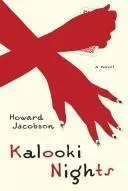
- Название:Kalooki Nights
- Автор:
- Издательство:Simon & Schuster
- Жанр:
- Год:2007
- ISBN:нет данных
- Рейтинг книги:5 / 5. Голосов: 1
-
Избранное:Добавить в избранное
- Отзывы:
-
Ваша оценка:
Kalooki Nights: краткое содержание, описание и аннотация
Предлагаем к чтению аннотацию, описание, краткое содержание или предисловие (зависит от того, что написал сам автор книги «Kalooki Nights»). Если вы не нашли необходимую информацию о книге — напишите в комментариях, мы постараемся отыскать её.
Spanning the decades between World War II and the present day, acclaimed author Howard Jacobson seamlessly weaves together a breath-takingly complex narrative of love, tragedy, redemption, and above all, remarkable humor. Deeply empathetic and audaciously funny, "Kalooki Nights" is a luminous story torn violently between the hope of restoring and rebuilding Jewish life, and the painful burden of memory and loss.
Kalooki Nights — читать онлайн бесплатно полную книгу (весь текст) целиком
Ниже представлен текст книги, разбитый по страницам. Система сохранения места последней прочитанной страницы, позволяет с удобством читать онлайн бесплатно книгу «Kalooki Nights», без необходимости каждый раз заново искать на чём Вы остановились. Поставьте закладку, и сможете в любой момент перейти на страницу, на которой закончили чтение.
Интервал:
Закладка:
We didn’t shake hands. I took my cue from him. He didn’t want to. Indeed, for the first half-hour it was difficult to discover anything he did want, other than food.
Watching him having trouble cutting his pizza, then having to resort to biting into it directly from the plate, it occurred to me that he might never have eaten pizza before. Carrots served with potatoes where he ’d been. And maybe at weekends, or when they changed the chef because the previous one had been knifed, potatoes served with carrots. When he was last out and about there weren’t any pizza restaurants in Manchester. When Manny was last at large — that’s if one could think of Manny ever being at large — pizza hadn’t even been invented.
‘The place must look very different to you,’ I said.
‘Here?’
I made a little world with my hands. Meaning the restaurant, Manchester, the universe. The everywhere to which, if he needed any questions answering, I was happy to be his guide and mentor. In loco parentis was how I felt; the man to his boy.
‘I’ve had seven years to get used to it,’ he said.
What did he mean, seven years? Had they moved him up here from wherever he ’d been, and let him out for walkies, like a dog?
He read my confusion. ‘I’ve been a free man’ — this, talking of dogs, accompanied by a strange, quick barking noise, as though a dog might laugh — ‘for seven years.’
‘Seven years!’
‘That’s when I came out. Seven years ago. Didn’t you know?’
What I didn’t know was where to look. The fuckers! That fucking writer and those fucking film girls, why had they sold him to me as hot property, a man that very hour released whose story we needed to pounce on before Hollywood beat us to it? Seven years! Jesus Christ!
But of course the fault wasn’t theirs. If I was Manny’s friend, why hadn’t I known he’d been out so long? Why hadn’t my mother or Shani, who still lived within the ghetto walls and read its newspapers — why hadn’t Tsedraiter Ike, come to that, who vibrated like an old cello with every ghetto shock or perturbation — why hadn’t any of them told me that Manny had been released? Or were they, too, in their kalooki, like me in my cartoons, happy to know nothing of this particular item of intelligence, content for it all to stay where it belonged, and where he belonged, behind bars. Whatever his original sentence, however much of it he ’d served, we’d put him away for life.
He smiled into his fingernails, deriving satisfaction from my embarrassment. Something like mirth, or the corpse of mirth, rattled in his neck.
‘I’m not arguing with you,’ he said at last.
He was a gift for a cartoonist — never still, the expression on his face never matching what he said, and what he said interrupted by so many half-coughs and clicks and other muffled ejaculations — as though he were punctuating his own lapses of concentration in his throat — that only coloured stars and broken bits of typeface exploding out of his mouth could capture the demented carnival of his conversations. One sound he made, though, I feel I have to try to render in language. It was somewhere between an exclamation of impatience and an invitation to forgetfulness or sleep — a hush almost, but more jittery, and more sibilant. And with something of Tommy Cooper’s displeasure with Adolf Hitler in it. ‘S-sssch’ is the nearest I can get to it with letters. Like someone stuttering on the word ‘shit’, and then giving up.
I’d said nothing when he told me he wasn’t arguing with me, partly because I hadn’t understood him. So he went on without waiting for me to catch up. ‘I am of the opinion I should have stayed in longer myself.’
‘That’s not what I was thinking. Or think,’ I assured him.
‘S-sssch. .’ he said, while I waited. ‘A life for a life.’
‘Nor is that what I think.’
‘Isn’t it? Why not? But I’m glad to hear it. It’s not what I think, either. I think they should put you away for a short time, for appearances’ sake, then let you out no matter how many lives you take. Like H-horst S-ssschumann. You couldn’t count the numbers of people he killed, but he was out and about in a year.’
‘Was he someone you were in with?’
He laughed through his nose — more a bark than a laugh. ‘Horst S-ssschumann? You don’t know Horst S-ssschumann? That’s a pity. I’ve a feeling you would have liked him. Many people did.’
I didn’t only not know who H-horst S-ssschumann was, I didn’t know how much of that was his name, how much was stutter, and how much of it was Manny’s hushing one of us either into sleep or vigilance.
‘Why would I have liked him?’ I asked, keeping it simple. ‘What were his qualities?’
‘An enquiring mind. A love of science. And a curiosity about Jews. All three took him to Au-auschwitz to run their mass sterilisation programme. There, he X-rayed the testicles and ovaries of Jewish men and women the age we were when we last met, then castrated them to make sure the X-rays had worked. Sometimes, on the assumption that they were as interested in his scientific findings as he was, he would carry out these experiments in view of the next patients. If you happened to survive the burning from the X-rays you’d die from t-terror or s-ssshock. I think that interested him scientifically as well — the amount of s-ssshock to which you could submit a Jew.’
‘May his name be blotted out,’ I said.
He looked at me as though I were a moral simpleton, stuck in some childish game of expunging our enemies from human speech, a ploy which hadn’t worked when we last tried it and certainly wasn’t going to work now. He’d changed, that was what he wanted me to see. He’d had a long time to consider tactics. Now he loved the enemies of the Jewish people. And wanted them remembered evermore.
‘S-ssschumann’s name wasn’t blotted out, I am pleased to say. After leaving the mass sterilisation programme he worked as a doctor all over the world. No less conscientiously than he ’d worked at Au-auschwitz by all accounts. You should be sorry you were never able to consult him yourself. We both should be. He had a good bedside manner with Jews. Finally, after twenty years of good work, the Germans found him, brought him back and put him on trial. A series of events which, as you might imagine, he found very distressing. Fortunately they discovered he had — ha! — h-high blood pressure, and released him halfway through his trial. No l-laughing matter, h-high blood pressure. So they let him go. Which I call justice.’
My turn to bark. I would have adopted Manny’s crazy circus of verbal emissions had I dared. H-high b-blood pressure? S-ssssssch! The f-f-f-f-fucker! But I didn’t know whether they were an affliction brought on in anticipation of Nazi nomenclature or his throat’s refusal to accept his decision to love his enemies. Either way, they served the function of denying the f-f-f-fuckers decent articulation.
‘Well, the consolation is that they are released into the torments of hell,’ I said.
‘Is that what you think happens? Ha! Well, you might be right in some cases. It’s possible we will run into a few of them in hell when we get there, or at least when I do. But not any of the doctors in charge of the Nazi sterilisation and extermination programmes. After being released into a comfortable life here on earth, they will probably be in heaven now. S-ssschumann lived until he was seventy-seven, quietly in F-frankfurt. Klaus E-endruweit, accessory to the murder of thousands of the mentally ill, was still in medical practice when I was inside. S-some of them are digging their gardens or cradling their greatgrandchildren while we speak. And I’m pleased to say that those who did die enjoyed obituaries from their profession of a s-sort we are unlikely to get from ours.’
Читать дальшеИнтервал:
Закладка:
Похожие книги на «Kalooki Nights»
Представляем Вашему вниманию похожие книги на «Kalooki Nights» списком для выбора. Мы отобрали схожую по названию и смыслу литературу в надежде предоставить читателям больше вариантов отыскать новые, интересные, ещё непрочитанные произведения.











Обсуждение, отзывы о книге «Kalooki Nights» и просто собственные мнения читателей. Оставьте ваши комментарии, напишите, что Вы думаете о произведении, его смысле или главных героях. Укажите что конкретно понравилось, а что нет, и почему Вы так считаете.