Howard Jacobson - Kalooki Nights
Здесь есть возможность читать онлайн «Howard Jacobson - Kalooki Nights» весь текст электронной книги совершенно бесплатно (целиком полную версию без сокращений). В некоторых случаях можно слушать аудио, скачать через торрент в формате fb2 и присутствует краткое содержание. Год выпуска: 2007, Издательство: Simon & Schuster, Жанр: Современная проза, на английском языке. Описание произведения, (предисловие) а так же отзывы посетителей доступны на портале библиотеки ЛибКат.
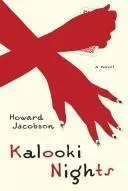
- Название:Kalooki Nights
- Автор:
- Издательство:Simon & Schuster
- Жанр:
- Год:2007
- ISBN:нет данных
- Рейтинг книги:5 / 5. Голосов: 1
-
Избранное:Добавить в избранное
- Отзывы:
-
Ваша оценка:
Kalooki Nights: краткое содержание, описание и аннотация
Предлагаем к чтению аннотацию, описание, краткое содержание или предисловие (зависит от того, что написал сам автор книги «Kalooki Nights»). Если вы не нашли необходимую информацию о книге — напишите в комментариях, мы постараемся отыскать её.
Spanning the decades between World War II and the present day, acclaimed author Howard Jacobson seamlessly weaves together a breath-takingly complex narrative of love, tragedy, redemption, and above all, remarkable humor. Deeply empathetic and audaciously funny, "Kalooki Nights" is a luminous story torn violently between the hope of restoring and rebuilding Jewish life, and the painful burden of memory and loss.
Kalooki Nights — читать онлайн бесплатно полную книгу (весь текст) целиком
Ниже представлен текст книги, разбитый по страницам. Система сохранения места последней прочитанной страницы, позволяет с удобством читать онлайн бесплатно книгу «Kalooki Nights», без необходимости каждый раз заново искать на чём Вы остановились. Поставьте закладку, и сможете в любой момент перейти на страницу, на которой закончили чтение.
Интервал:
Закладка:
Ours? Which profession was Manny in? I wondered.
List-maker of murderers — did that count as a profession?
Eerie, all this. As though time had not happened anywhere but on our faces. If I kept staring at him would the years fall away, would we be back in the air-raid shelter, I with my pencil in my mouth, making Donald Duck noises, Manny running through the names of our eternal enemies, enumerating their crimes, biting their specialities into my flesh so that I would never forget them? Not much had changed, considering all that had happened to both of us. Not much of an advance, despite Manny’s apparent conviction that by pretending to love our enemies we could achieve some sort of moral victory over them. H-horst S-ssschumann — what a great bloke! And yet it was strangely consoling to be back doing what we were doing. I was impressed that he had continued with his studies while he ’d been out of circulation. There was something wonderful about it, Manny locked away all those years still pursuing in his head those who’d persecuted us. It was what he was for. His conscientiousness was a lesson to us all. And who was to say that this wasn’t what I was for as well: to listen to what he told me, to be his pupil — no matter that I saw myself as in loco parentis to him — to study at his feet.
One question I wanted to ask him about his cataloguing — whether he now included his own name, E-emanuel Eli W-wwashinsky, among the roll-call of unpronounceable killers of Jews?
But there were some smaller questions to be asked, before the greater. Where he lived now, for example, what he did for money, what he did to pass the time, how he had found the courage to return to Manchester where not everybody, surely, was unaware of his existence. But even they seemed premature. ‘Pizza OK?’ was the best I could do.
He nodded, but gravely as though in response to one of the questions I hadn’t been brave enough to put to him.
‘So why Stroganoff?’ I asked at last. It was my way of trying to get him to make a declaration of friendship. In memory of the old days , I wanted to hear him say. In memory of us .
But all he said was, ‘I needed another name.’
Why that should have distressed me as much as it did I am unable to explain. I had been careful not to think of him as a friend even in the days when he was a friend. And he had never shown me any warmth to speak of. It was a bit of a shock, nonetheless, to discover that time had no more softened him to me, than me to him.
We both looked at our food for a while, then suddenly he asked, without a stutter or any other impediment to speech, ‘How’s your father?’
‘He’s dead, Manny. You know that.’
He made a peculiar motion with his lips, half as though licking them to make them moist, half as though flicking something away.
‘He died years ago,’ I reminded him. ‘In your time. After the funeral you said you envied me not having a father. I have never forgotten that.’
‘Don’t remember,’ he said.
He was holding his left hand tightly in his right, the thumb of the one squeezing all colour out of the knuckles of the other. He protruded his jaw — a weak man’s resolution. But again, he wasn’t arguing with me. If he said that about my father, he said it. At the time to which I was probably referring he could, frankly, have said anything. The remark would have been directed at his father, not mine. He believed he had rather liked my father. And my mother. Whereas his own parents he did not, at that time, like. He had turned against them. Grown ashamed of them. Had I lost my mother he might have said he envied me not having one of those as well.
Strange. I had been thinking it would take us a thousand meetings for us ever to get anywhere, for me to find the form of question I felt I had any right to ask, for him to concentrate his attention long enough to answer me. Now here we were, in the very thick of things after only fifteen minutes. Manny grown ashamed of his parents. At this rate we would have the gas taps on before coffee.
And wouldn’t Francine be pleased.
What he told me came out haltingly, and much of it was addressed to someone who wasn’t there, and certainly wasn’t me. But what it amounted to was this:
4
After his outburst against Asher, he had fallen into one of those fits of despondency well known to people who act out of character. It had been exhilarating at first, losing his temper, making something happen, even if that something was Asher’s running away from home. Good. Excellent. Asher needed time to clear his head. And Manny needed not to hear his family screaming at one another. But when days went by and Asher did not return, Manny’s spirits deserted him. What if he had succeeded only in throwing his brother into the fire-yekelte ’s daughter’s arms? Worse — if anything could be worse — what if his brother had grown desperate and thrown himself under a bus? Was this to be the consequence of Manny’s single deviation from the laws of his own undemonstrative nature — the loss, one way or another, of his brother? But then, when Asher returned, Manny was exhilarated again. He had done some good after all. Asher had sorted himself out, come to his senses, and was now back where he belonged, trailing between home and the synagogue, without the girl. Wonderful, for Manny, to see before his eyes, as the very proof of his effect, the family reunited.
Or it would have been wonderful had they — ‘they’ meaning his mother and his father and himself and maybe even Elohim — taken a little longer to pass from heartache to happiness. It was too sudden. Wounds don’t heal that quickly. Not if they are real wounds in the first place. No — I tried him with this — no, it wasn’t that he had wanted Asher to be kept longer in purgatory. Absolutely not. His eyes fluttered like trapped birds. Yes, he could see that his feelings were open to cynical interpretation. Why should Asher be rewarded with the fatted calf for going off the rails, while he, Manny, the good boy who had gone nowhere, was rewarded with nothing? Unjust, the jubilation which always awaits the return of the prodigal. But that wasn’t the cause of his depression. His mother and father were the cause of his depression. The fact that their affliction could turn to rejoicing in a second. The screaming, the emergency ambulance, the fisticuffs, a son raising his hand to his own father, Manny himself driven into an epilepsy to which he had not hitherto had any idea he was disposed — hadn’t any of it meant anything?
What’s the worth of rage that cools so quickly? What does it tell you about the cause? As a matter of seemliness, if nothing else, Manny believed his parents should have thought twice before trumpeting their relief with such blatancy. Should have thought twice before showing it to each other, but more importantly should have thought twice before blaring it at Asher. Was there not bad taste in that? Was it not gross of them to suppose that Asher would concur quite so promptly, if at all, in their felicity? And was it not cruel of them not to wonder how things were in Asher’s heart?
Manny talked about Asher’s heart as though it were an empty bed. Someone had lain in it beside him, and now she was gone. Manny could see the impression her body had made. He had been a lonely boy himself and was now an even lonelier man. Perhaps it was this that made him exquisitely aware of Asher’s loss. Never mind that the girl was German. It had surprised him, he told me, to catch himself not minding, because he had at first minded a great deal. A German was a German. A person you could not forgive and should not go near. But he got to the humanity of not caring what she was via the impression she had left behind her in Asher’s heart. The impression was without religion or nationality. The impression — the sad, simple indentation — humanised her.
Читать дальшеИнтервал:
Закладка:
Похожие книги на «Kalooki Nights»
Представляем Вашему вниманию похожие книги на «Kalooki Nights» списком для выбора. Мы отобрали схожую по названию и смыслу литературу в надежде предоставить читателям больше вариантов отыскать новые, интересные, ещё непрочитанные произведения.











Обсуждение, отзывы о книге «Kalooki Nights» и просто собственные мнения читателей. Оставьте ваши комментарии, напишите, что Вы думаете о произведении, его смысле или главных героях. Укажите что конкретно понравилось, а что нет, и почему Вы так считаете.