Howard Jacobson - Kalooki Nights
Здесь есть возможность читать онлайн «Howard Jacobson - Kalooki Nights» весь текст электронной книги совершенно бесплатно (целиком полную версию без сокращений). В некоторых случаях можно слушать аудио, скачать через торрент в формате fb2 и присутствует краткое содержание. Год выпуска: 2007, Издательство: Simon & Schuster, Жанр: Современная проза, на английском языке. Описание произведения, (предисловие) а так же отзывы посетителей доступны на портале библиотеки ЛибКат.
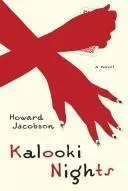
- Название:Kalooki Nights
- Автор:
- Издательство:Simon & Schuster
- Жанр:
- Год:2007
- ISBN:нет данных
- Рейтинг книги:5 / 5. Голосов: 1
-
Избранное:Добавить в избранное
- Отзывы:
-
Ваша оценка:
Kalooki Nights: краткое содержание, описание и аннотация
Предлагаем к чтению аннотацию, описание, краткое содержание или предисловие (зависит от того, что написал сам автор книги «Kalooki Nights»). Если вы не нашли необходимую информацию о книге — напишите в комментариях, мы постараемся отыскать её.
Spanning the decades between World War II and the present day, acclaimed author Howard Jacobson seamlessly weaves together a breath-takingly complex narrative of love, tragedy, redemption, and above all, remarkable humor. Deeply empathetic and audaciously funny, "Kalooki Nights" is a luminous story torn violently between the hope of restoring and rebuilding Jewish life, and the painful burden of memory and loss.
Kalooki Nights — читать онлайн бесплатно полную книгу (весь текст) целиком
Ниже представлен текст книги, разбитый по страницам. Система сохранения места последней прочитанной страницы, позволяет с удобством читать онлайн бесплатно книгу «Kalooki Nights», без необходимости каждый раз заново искать на чём Вы остановились. Поставьте закладку, и сможете в любой момент перейти на страницу, на которой закончили чтение.
Интервал:
Закладка:
What I think stopped him putting up more of a fight was grief. For all that he and my father had never seen eye to eye on a single subject, my father continually reminding him that he was tolerated only out of deference to my mother, and that he couldn’t count on being tolerated for ever even then, Tsedraiter Ike was as devastated by my father’s death as any of us, and as a consequence had developed a new habit of vigorously shaking his head, as though in mortal disagreement with Somebody. When my mother shortened the shiva period, he registered his complaint by sitting it solo in his own room. He knew what was owing to the sacred memory of the dead, even if we didn’t. Where we had abbreviated, he extended. Day after day we didn’t see him, just heard him davening. My mother indulged him for a while then called him down. ‘Ike, what are you doing up there? Trying to kill yourself? That won’t bring Jack back.’ She berated him for being ghoulish, and ordered him back into normal clothes and the routines of the living. He didn’t argue with her. He knew which side his bread was buttered, prayers for the dead or no prayers for the dead. ‘It’s only me from over the sea, said Barnacle Bill the sailor,’ he sang as he withdrew, nodding, from her presence.
Thus did my mother take over from my father the responsibility of making Tsedraiter Ike feel unwanted. It suited him. He needed someone to make him feel that.
At the same time she informed me that she was about to resume kalooki.
I looked at her as Hamlet looks at his mother in every production of the play I have ever seen. That it should come to this: but two months dead, nay, not so much, not two. . Not even one month in my father’s case. Not two weeks. .
‘Are you upset with me?’ she wanted to know.
‘Ma, it’s a bit soon.’
She sat me down at the kitchen table and stretched her hands out so that they were touching mine. Not holding, just a light rhythmic tap of her fingers on my fingers. ‘Your father asked me to promise him that I would marry again,’ she said.
I was discomforted by the intimacy. We didn’t go in for this kind of talk in our house. None of the Jews I knew did. Whatever Gentiles surmise, sometimes enviously surmise, of the closeness of Jew to Jew, of the hothouse which is the Jewish family, the home life of Jews is in truth marbled with the finest traceries of reticence. Yes, we live in each other’s pockets, often long after the historical necessity to do so has been removed, but you can live in each other’s pockets and still be strangers. It took death to acquaint me with Shani. But since my mother had brought up the subject of her marrying again, I had no choice but to ask, ‘And will you?’
‘What do you think?’
‘Well, if you’re up for cards, why not a husband?’
‘They’re not exactly the same thing, Maxie. Your father asked me to promise him solemnly that I would find another man — he even suggested a couple of names. .’
‘Who?’
‘Little Ike and Liverpool Ike, if you must know.’
‘But they’re Jewish. Surely he’d have wanted you to take a Catholic. Or at least an atheist. And if he has to be a Jew, what’s wrong with “Long John” Silverman? Dad loved “Long John” Silverman. And “Long John” Silverman has always drooled at the mouth for you.’
She inclined her lovely head. No point denying what was undeniable, and, let’s face it, due. ‘Maxie, “Long John” Silverman has a wife of his own.’
‘Big deal. Get Little Ike to run away with her.’ Little Ike, for the record, being known, despite his size, as something of a runner with other men’s wives.
My mother curled her mouth at me. ‘Very funny, darling. Marital musical chairs. But you know how bad I’d be at that. Everyone else gets a seat, I’m left standing.’ She paused, surveying herself marooned at the party, only her on her feet. Then she shook herself out of it. No self-pity. It was her great strength. She refused sadness. ‘None of it’s of any relevance just now, anyway,’ she went on. ‘I refused to make the promise your father asked for. I don’t want another husband. I cared too deeply for your father to suppose I can care deeply for someone else. I don’t intend even to try. I don’t want to care deeply, in that way, for another man. It’s foolish, I accept that, to pretend to know how I’ll feel ten or fifteen years from now, but I hope I will be saying the same to you then.’
‘Well, I don’t,’ I said. ‘But just for the moment. .’
‘You’d like me not to play kalooki?’
Against the hosts of other men lined up waiting for my mother — she was a beauty, don’t forget, and the more beautiful, I thought, for being a widow, with lovely lugubrious ovals, like ashen teardrops, looped beneath her eyes — against the Little Ikes, and even the Big Ikes for all I knew, a game of kalooki, when all was said and done, did not represent the greatest of derelictions. But then it wasn’t a matter of one or the other, was it? For a little while at least, it was open to her not to take another husband and not to play kalooki. ‘Or is that,’ I asked, twisting the corners of my mouth this time, ‘too much to ask?’
She had a way of nodding her head — not shaking it from side to side as Tsedraiter Ike had taken to doing, in apparent disagreement with Someone — but as though to concur in everything you were saying while not really listening to a word of it. ‘No,’ she said, ‘it isn’t too much to ask, and if you’d rather I didn’t, then I won’t.’
‘What does Shani think?’ Shani, the new arbiter of right and wrong, the new Moses Maimonides in our family. Guide us out of our perplexity, Shani.
‘Shani thinks I should ask myself what your father would have wanted.’
‘You know what my father would have wanted. He hated kalooki. He believed it was the name of a shtetl.’
She looked hurt. ‘You’re wrong there, Max. That was just his teasing. He had no desire to play himself, I grant you, but he liked it that I played. He said he’d rather know where I was, that he’d rather have me sitting shuffling a kalooki deck at home with my friends than see me dolling myself up to go to shul, or busybodying myself in Jewish causes.’
’I thought kalooki was a Jewish cause.’
‘Only when I made it one to get you your gala night.’ No mistaking the reprimand. As though to say this was a poor way to thank someone who’d delivered me Gittel Franks and Simone Kaye.
I inclined my head in acknowledgement of that, then scratched it. ‘So you’d really be getting back into kalooki for Dad, is that what you’re saying? You’re really doing it as a favour to him.’
‘You know what your father was like. No fuss. No sentimentality. Life is for the living. You could make fun of me, Maxie, if I came home tomorrow with a new prospective husband and said I was marrying him for your father. But I have no intention of doing that.’
It was a trade-off. I can bring a Mr Murdstone back, or you can leave me to my kalooki. You choose, Maxie.
I threw up my hands, much as my father would have done. ‘Play your cards,’ I said.
Thereafter, though there were no further conversations on the subject, I thought a great deal about what she’d said to me. She was frightened, I could see that. She feared she would be rudderless and didn’t want to go down the usual route of finding another man to rudder her. Fair enough. More unsettling was the bold implication — for such I took it to be — that by returning to kalooki before decency allowed she was at a stroke reinstating the provocatively secular regime of my father. The unbeliever is dead, long live the unbeliever! Continuity — that was how she was selling it to me and no doubt to herself. Get kalooki back into the house, quick, and it would be as though my father had never left us.
Читать дальшеИнтервал:
Закладка:
Похожие книги на «Kalooki Nights»
Представляем Вашему вниманию похожие книги на «Kalooki Nights» списком для выбора. Мы отобрали схожую по названию и смыслу литературу в надежде предоставить читателям больше вариантов отыскать новые, интересные, ещё непрочитанные произведения.





Обсуждение, отзывы о книге «Kalooki Nights» и просто собственные мнения читателей. Оставьте ваши комментарии, напишите, что Вы думаете о произведении, его смысле или главных героях. Укажите что конкретно понравилось, а что нет, и почему Вы так считаете.