Howard Jacobson - Kalooki Nights
Здесь есть возможность читать онлайн «Howard Jacobson - Kalooki Nights» весь текст электронной книги совершенно бесплатно (целиком полную версию без сокращений). В некоторых случаях можно слушать аудио, скачать через торрент в формате fb2 и присутствует краткое содержание. Год выпуска: 2007, Издательство: Simon & Schuster, Жанр: Современная проза, на английском языке. Описание произведения, (предисловие) а так же отзывы посетителей доступны на портале библиотеки ЛибКат.
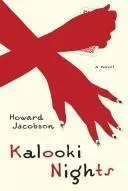
- Название:Kalooki Nights
- Автор:
- Издательство:Simon & Schuster
- Жанр:
- Год:2007
- ISBN:нет данных
- Рейтинг книги:5 / 5. Голосов: 1
-
Избранное:Добавить в избранное
- Отзывы:
-
Ваша оценка:
Kalooki Nights: краткое содержание, описание и аннотация
Предлагаем к чтению аннотацию, описание, краткое содержание или предисловие (зависит от того, что написал сам автор книги «Kalooki Nights»). Если вы не нашли необходимую информацию о книге — напишите в комментариях, мы постараемся отыскать её.
Spanning the decades between World War II and the present day, acclaimed author Howard Jacobson seamlessly weaves together a breath-takingly complex narrative of love, tragedy, redemption, and above all, remarkable humor. Deeply empathetic and audaciously funny, "Kalooki Nights" is a luminous story torn violently between the hope of restoring and rebuilding Jewish life, and the painful burden of memory and loss.
Kalooki Nights — читать онлайн бесплатно полную книгу (весь текст) целиком
Ниже представлен текст книги, разбитый по страницам. Система сохранения места последней прочитанной страницы, позволяет с удобством читать онлайн бесплатно книгу «Kalooki Nights», без необходимости каждый раз заново искать на чём Вы остановились. Поставьте закладку, и сможете в любой момент перейти на страницу, на которой закончили чтение.
Интервал:
Закладка:
Consistent with his appearance at the time, Manny had no recollection of the encounter when I mentioned it to him in the course of our second attempt to get reacquainted. Steps of the Central Library, night-time, I with a very lanky Danish woman, bit like a giraffe? Ring no bells? No. Not a tinkle. And he thought he would have remembered the giraffe. As for whether he had indeed returned to God whenever that was, 1961. .1962 — that was like asking a man when he had stopped beating his wife.
‘And now?’
He put his lips together as though he were going to whistle a tune. But no sound issued from them.
I waited. Had he forgotten what he was going to say? Had he forgotten what his thoughts were on the subject? That could easily happen, I imagined, when you were locked away. Your mind could just empty.
But he hadn’t lost his thoughts, he was just organising them. ‘If you’re asking me whether I believe in God,’ he said at last, ‘you’re asking the wrong question.’
‘So what’s the right question?’
‘There might not be one. But belief isn’t optional. You can’t choose it.’
‘It chooses you, is that what you’re saying?’
‘Not exactly, no. People think they can believe if they feel like it. They can’t. It’s a privilege, not an entitlement. Yes, I think God probably does exist. But I have lost the right to believe in Him.’
3
The effect of Errol Tobias’s betrothal to Melanie Kushner, the girl with woman’s breasts, was to helter-skelter me through my teenage years. Long before I was ready for it, Errol fixed me up with one of Melanie’s friends — Tillie Guttmacher, a super-Jewess with wrestler’s shoulders, a furry upper lip (not all that unlike Manny’s) and Cleopatra eyes. The idea was a foursome, then we’d pair off.
We met at a cheap curry restaurant in Rusholme, Errol believing in the aphrodisiacal qualities of vindaloo. ‘Maxie’s an artist,’ was how he introduced me; then, after a stage pause — ‘a dick-artist.’
The girls laughed. At a nearby table a man whose face I thought I recognised paused from apportioning rice to his two female companions to stare our way. He had prim yet fleshy lips, a lisper’s lips I thought, which he shaped into a little prune of disapproval. He appeared to be making a mental note, so as to avoid having any contact with one in the future, of what a dick-artist looked like.
I have to say dick-artist was new to me as well. It’s my belief that there was no such existing expression, that in the late 1950s we weren’t even talking bullshit-artists yet, and that Errol, who had a genius for this sort of thing, had coined it. I can’t pretend I was grateful. It bore so little resemblabnce to reality that I took it to be a sarcasm. I didn’t believe that Tillie Guttmacher was much enamoured of it as a description of her date for the night either, for all that she had shaken her head and laughed, the gypsy hoops ringing at her ears. Perhaps because my mother never allowed a coarse word to pass her lips, and Shani had only ever cursed her wardrobe in nursery profanities, I entertained a rarefied idea of what constituted the sensibility of a Jewess. It even crossed my mind that Tillie Guttmacher had laughed her big laugh only to conceal the fact that she didn’t have the first idea what a dick, let alone an artist, was.
It is sometimes said of Jewish men that they go to Gentile women for sex so as not to disrespect their own women. This was never the case with me. I would willingly have disrespected a Jewess had I thought there was the remotest chance she’d have understood my intentions. The shock of finally discovering that Jewish women put out for Gentile men with even more alacrity than Jewish men put out for Gentile women was what precipitated a series of irritably lewd cartoons I once drew, a sort of Rake’s Progress set in Stamford Hill, where every strumpet was a Jewess in a sheitel, but which no reputable publication was prepared to take, not even Playboy , despite my offering to redraw the location to make it look like Crown Heights.
Tillie Guttmacher apart, I had a further reason for being angry with Errol. I had suddenly worked out who the man at the next table was. Isaiah Berlin. Sir Isaiah Berlin, for I had recently seen a photograph of him in the newspaper receiving his knighthood.
I nudged Errol. ‘Isaiah Berlin,’ I whispered.
‘Geezer!’ Errol said. ‘Why would Isaiah Berlin be eating a curry in Rusholme?’
‘Shush,’ I said. ‘He can hear you. He’s already heard you call me a dick-artist, thanks very much.’
‘Who’s Isaiah Berlin?’ Melanie Kushner wanted to know.
I waited to see if Tillie Guttmacher might be able to help her out, but no.
Errol screwed his eyes at me disgustingly. Birds! they said. What else do you expect from Jewish birds?
He was loathsome but you had to hand it to him, he was educated. Had I told him Freddie Ayer was sitting next to us, or Karl Popper, he ‘d have known who I was talking about. ‘Philosopher,’ he told the girls, who seemed offended by the word.
‘Otherwise known as an ideas-artist,’ I helped out.
‘Except,’ Errol said, ‘that that isn’t him. You’re confusing him with someone else.’
‘Who?’
He thought about it. ‘Bronowski.’
I looked again. The big spectacles, the half-benign, half-disapproving face, the slightly angelic but ironic mouth, the lugubriousness. ‘That’s not Bronowski. It’s Isaiah Berlin.’
‘In Rusholme?’
‘Well, if Bronowski could be in Rusholme, why can’t Isaiah Berlin? He’ll be visiting the university.’
‘And having a curry while he’s here?’
‘Why not? He’s got to eat, hasn’t he?’
‘A fucking biriani?’
‘Errol, do me a favour, keep your voice down.’
‘I can’t stand this. We’re here to have a nobbel and you’ve gone all ungelumpert. Go and ask him if you think it’s him. Then we can all relax.’
‘What’s “ungelumpert”?’ Melanie asked.
‘What it sounds like — acting like an awkward lump.’
‘Excuse me, I’m not ungelumpert.’
‘What are you then?’
What was I? ‘Curious, that’s all.’
‘So satisfy your curiosity. Go and ask him.’
‘Errol, are you mad!’
‘Then I will.’ And he would have — Are you Sir Isaiah Berlin? I thought as much. Then let me introduce you to my friend Maxie Glickman, dick-artist — had the vindaloos not arrived to save me.
Whether or not vindaloos were aphrodisiacs as Errol claimed, they did have the effect of making women go hot around the neck, which had the further effect of making them undo at least one of the buttons on their blouses. Tillie Guttmacher, who had as much reason to be proud of her chest as Melanie Kushner did of hers, undid two. Already red with the make-up of the Nile when she arrived, she had begun to glow like a volcano. After every forkful of vindaloo she took her napkin and fanned her face and throat with it, but that only made the volcano burn the brighter. At the moment it became apparent that she was about to fall off her chair, Errol dug me in the ribs. ‘Blow on her, Max,’ he urged me.
I had never blown on a woman before. But an emergency was an emergency. I made a bellows of my lungs, puffed out my cheeks, and sent such a crosswind Tillie Guttmacher’s way that I stirred a maelstrom in her plate — rice, sauce, pickles, bits of pappadom, all swirling in a hurricane that blew itself out finally on and down her unbuttoned blouse. At which moment Sir Isaiah Berlin raised his heavy head and pruned his lips in my direction for the final time.
I had not read any Isaiah Berlin. I was a bit young for his urbanity of thought. But I knew two things about him. One was that he had written a book on Marx, and I knew that because I’d heard ‘Long John’ Silverman speaking to my mother about it in unflattering terms. According to ‘Long John’ Silverman, Isaiah Berlin was the wrong person to write that book because he lacked instinctive sympathy with Marx’s view of history. ‘I’d like to write a book one day,’ had been my mother’s response to that. ‘And I would like to read it,’ had been ‘Long John’ Silverman’s response to her. The other thing I knew about Isaiah Berlin was that he’d written about Tolstoy. So profound an impression had his description of the aged Tolstoy at Astapovo made on one of my English teachers, David Brennan, that he would recite it to us at the close of almost every lesson, his eyes brimming with tears — ‘At once insanely proud and filled with hatred, omniscient and doubting everything, cold and violently passionate, contemptuous and selfabasing, tormented and detached. . he is the most tragic of the great writers, a desperate old man, beyond human aid, wandering self-blinded at Colonus.’ The passage had the identical effect on me. I couldn’t breathe while David Brennan was reading it. The sound of my swallowing filled the classroom. Had Brennan asked me to comment on it I’d have collapsed into sobs. Me, of course — it was me Berlin was writing about, me as I would be at the end, the most tragic of the great cartoonists, omniscient and doubting everything, Jewish and yet not, a torment to myself, beyond human aid.
Читать дальшеИнтервал:
Закладка:
Похожие книги на «Kalooki Nights»
Представляем Вашему вниманию похожие книги на «Kalooki Nights» списком для выбора. Мы отобрали схожую по названию и смыслу литературу в надежде предоставить читателям больше вариантов отыскать новые, интересные, ещё непрочитанные произведения.





Обсуждение, отзывы о книге «Kalooki Nights» и просто собственные мнения читателей. Оставьте ваши комментарии, напишите, что Вы думаете о произведении, его смысле или главных героях. Укажите что конкретно понравилось, а что нет, и почему Вы так считаете.