Howard Jacobson - Kalooki Nights
Здесь есть возможность читать онлайн «Howard Jacobson - Kalooki Nights» весь текст электронной книги совершенно бесплатно (целиком полную версию без сокращений). В некоторых случаях можно слушать аудио, скачать через торрент в формате fb2 и присутствует краткое содержание. Год выпуска: 2007, Издательство: Simon & Schuster, Жанр: Современная проза, на английском языке. Описание произведения, (предисловие) а так же отзывы посетителей доступны на портале библиотеки ЛибКат.
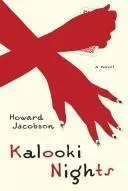
- Название:Kalooki Nights
- Автор:
- Издательство:Simon & Schuster
- Жанр:
- Год:2007
- ISBN:нет данных
- Рейтинг книги:5 / 5. Голосов: 1
-
Избранное:Добавить в избранное
- Отзывы:
-
Ваша оценка:
Kalooki Nights: краткое содержание, описание и аннотация
Предлагаем к чтению аннотацию, описание, краткое содержание или предисловие (зависит от того, что написал сам автор книги «Kalooki Nights»). Если вы не нашли необходимую информацию о книге — напишите в комментариях, мы постараемся отыскать её.
Spanning the decades between World War II and the present day, acclaimed author Howard Jacobson seamlessly weaves together a breath-takingly complex narrative of love, tragedy, redemption, and above all, remarkable humor. Deeply empathetic and audaciously funny, "Kalooki Nights" is a luminous story torn violently between the hope of restoring and rebuilding Jewish life, and the painful burden of memory and loss.
Kalooki Nights — читать онлайн бесплатно полную книгу (весь текст) целиком
Ниже представлен текст книги, разбитый по страницам. Система сохранения места последней прочитанной страницы, позволяет с удобством читать онлайн бесплатно книгу «Kalooki Nights», без необходимости каждый раз заново искать на чём Вы остановились. Поставьте закладку, и сможете в любой момент перейти на страницу, на которой закончили чтение.
Интервал:
Закладка:
On the face of it, the logic was hard to follow, but once followed, hard to fault. I was even prepared to be admiring of it. My mother, the heroine of the unconventionalities. No wonder my father had loved her.
But what if she were simply shallow?
BOOK TWO. NO BLOODY WONDER
NINE
1
Manny had no more recognised me than I had recognised him that first time we got together again at the pizza restaurant in Manchester. But he didn’t tell me that until the second time we got together again.
‘You’re different,’ he’d said, without quite looking at me.
‘Well, it has been half a lifetime since we last saw each other,’ I’d reminded him.
‘We ate together last week.’
‘I thought we were talking about before that.’
‘Thirty-eight years.’
I had no idea when he was counting from. ‘Not surprising then.’
This time he did half look in my direction. So blue the eye he showed me, so much bluer than I’d remembered, that for a moment or two I seriously wondered if it were glass. The consequence of a prison fight? Or of an operation to extract the patricidal section of his brain? But then he showed me the other eye, and that too was the colour of the sky. ‘No,’ he said, ‘something’s different. Your nose is different.’
He was right. My nose was different. Not different in the way that Zoë in her time would have liked — not smaller, but then again not exactly bigger either. The adjective is hard to find. But Manny probably put his finger on it. ‘It seems to have spread across your face more,’ he said, with a cruel indifference to my feelings which I at first attributed to the hardening influence of incarceration, until I remembered that he had always been like that. Not rude, just unaware of politeness.
Not without its ironies, what had happened to my nose. Not without ironic implications for Zoë, anyway. When Zoë wasn’t pestering me to get it shortened she was complaining about the noises I made through it when I breathed. Not much I could do about that, I told her, short of giving up breathing altogether.
As always she gave consideration to whatever I suggested, the sweetest of quizzical expressions lighting up her impeccable and soundless features.
My own theory was that my breathing, which I freely acknowledged could be over-audible at times, was a consequence of the same condition that gave me nosebleeds, the epistaxis which I had inherited from my late father.
‘And did your father also snore like an express train?’ Zoë wanted to know.
‘Whether he did or he didn’t,’ I answered, ‘I believe my mother slept like a normal person and therefore didn’t notice.’
This was a reference to what I considered to be the ab normality of Zoë’s sleep patterns, a matter of some contention between us, since she believed she slept the way a person was meant to sleep, that’s to say stretched between waking and unconsciousness like piano wire, her eyes wide open and every millimetre of her flesh aquiver to the faintest rustle, let it be breath issuing from my nostril or the wind fluttering a sweet wrapper three streets away.
‘There is nothing wrong with the way I sleep, were I only allowed to,’ was how she made the point to me.
‘Same here,’ I said. ‘Do you not suppose I would sleep more soundly and therefore more silently myself if I didn’t have to lie there, awake even when I’m not, listening to the sound of you not sleeping?’
‘You’re so Jewish,’ she said. ‘You’re so fucking illogically, argumentatively Jewish.’
Which I suppose was just another way of making my point, that we are a dialectical people.
We resolved our differences in the end. She sent me to an ear, nose and throat specialist. Who sent me to an otolaryngologist. Because I was uncertain what one of those would do to me I checked him out with Kennard Chitty, the plastic surgeon Zoë had unearthed a year or two before with a view to getting him to harmonise my face with hers. It was Chitty who had refused to lay a scalpel anywhere near my nose because of the patriarchal associations it held for him, he being of the opinion that a Jewish appearance was the noblest on earth, wanting only the true conviction that came with Christ. ‘Jesus must have had a nose like yours,’ he’d told me, ‘so it would be unchristian to change it surgically in any way.’ We’d become friends of a kind, with him buying a set of my Old Testament cartoons to hang on his consulting-room walls, along with other odds and ends, and I allowing him to invite me to his Christmas parties and shtupp me with cheaply printed literature explaining how it was only by learning to love Jews that Christians would finally save the world, but first the Jews had to consent to becoming Christians. All that apart, he told me not to worry about otolaryngology and even recommended a treatment he’d read about for someone with my condition. Sphenopalatine artery ligation it was called, which excited Zoë when I mentioned it because she assumed it meant I was getting surgery after all.
‘While they’re at it. .’ she began.
But I had to explain to her that it was surgery from the inside not the out, and that if she thought I’d be coming home from the otolaryngologist retroussé, she’d do well to think again.
Here’s the irony I talked about. In the end the otolaryngologist advised against ligation in my case — some issue with the septum nasi which I was not capable of grasping — and put me on a regimen of what can only be called ‘packing’, all manner of materials being stuffed into my nose over a long period, the eventual effect being that it took on the appearance of being larger rather than smaller, even if Manny’s description of it spreading all over my face was exaggerated. I did bleed less frequently, as a result, and I snored less too. But it was a cruel blow to Zoë who found it harder than ever to look at me.
2
My memory draws a blank when I try to picture Manny and me after my father died. I see no air-raid shelter, recall no further talk of the Brothers Stroganoff, retain nothing of any conversations we might have had about the Nazis. He came to my father’s funeral with his father, that much I know. I see them standing together, to one side, both in long black coats. But no Asher. Shortly afterwards Manny delivered himself of that sick nonsense about his envying me not having a father, but I cannot see the place or remember the circumstances in which he delivered it. Then there was his crisis of faith or whatever it was which I spitefully threw back in his face; though that, too, will not locate or define itself. Otherwise a black hole. We didn’t fight, we didn’t in any of the usual ways fall out, we simply stopped.
Sex stopped it partly. At fifteen, Errol Tobias started going out with Melanie Kushner, a South Manchester girl with a woman’s breasts, and that was that — goodbye to the carefreeness of childhood. No more Scourge of the Swastika , no more breaking a religious man’s windows, no more spluttering circle of onanists. ‘Won’t be needing you now,’ Errol had announced at a sort of extraordinary general meeting of the latter, called, as it were, to wind up the company’s affairs. All over. We were in business for real, suddenly. Or at least Errol was. For the rest of us there was some serious catching up to be done and we weren’t going to manage that with meshuggeners like Manny Washinsky hanging around. I became one of the boys, that’s why I lost touch with him. I hit the town.
And Manny? No idea. He didn’t exist.
Not entirely true. Something comes back to me, dimly, in the reluctant half-light of shame. Me and a girl, hand in hand, leaving the Library Theatre, an Arthur Miller, I think, always Arthur Millers at the the Library Theatre, me and Märike it must have been, stepping into the wintry dark, stopping for a kiss on the steps of the Central Library itself, this is how we kiss in Kobenhavn, this is how we kiss in Manchester, and then there, sitting in an old raincoat, on the cold stone, scratching his face, giving the air of waiting for somebody, but obviously not, Manny Washinsky, not looking my way. How old would I have been? Nineteen? I was already at art college, I am sure of that, because I had met Märike, if indeed it was Märike, at a college dance and was bringing her home to meet my mother. So this was probably me showing off the sights of Manchester to her. Theatre, Library, Mother, Art Gallery — now will you put your hand inside my trousers? Showing off the sights of Manchester to her, but also showing off her to Manchester. Oh, to have been able to show her off to Errol Tobias, but he was married already, a child bridegroom, and living in the South with pictures of women exposing their vaginas on his toilet door. So poor Manny, sitting there, thinking his own thoughts, had to suffice. There were losses and gains to this. No points for showing her I knew Manny. But points aplenty for showing Manny how intimately I knew her. Why that should be, when Manny was now as nothing to me, and no measure of anything I any longer valued, I cannot explain. Some imp of malice or uncertainty, though, some hunger for validation, explain it how you will, made me make him notice us. See what you’re missing, Manny. See what I’ve got and you haven’t. I even effected a cursory introduction — Manny, Märike; Märike, Manny. He didn’t get up from where he was sitting. Just nodded his head, then looked away again. Whether he was feigning indifference, or genuinely didn’t care who I was with, I am unable to say for sure, but at the time I feared the latter. He was otherwise absorbed, as incurious about me as I had been about him, but more self-sufficient than I was, it appeared, since I had set about attracting his attention, whereas he hadn’t shown the remotest interest in attracting mine. Elohim? Was that the explanation? Was Manny back on friendly terms with Him? I decided yes. He had the look: not transfigured with light — that had never been his way — more as though returned to antiquity, in the process of turning back into the mud out of which the first man was fashioned. In which case, fine. I could live with losing to Elohim. But just between me and myself, I felt a clown.
Читать дальшеИнтервал:
Закладка:
Похожие книги на «Kalooki Nights»
Представляем Вашему вниманию похожие книги на «Kalooki Nights» списком для выбора. Мы отобрали схожую по названию и смыслу литературу в надежде предоставить читателям больше вариантов отыскать новые, интересные, ещё непрочитанные произведения.







Обсуждение, отзывы о книге «Kalooki Nights» и просто собственные мнения читателей. Оставьте ваши комментарии, напишите, что Вы думаете о произведении, его смысле или главных героях. Укажите что конкретно понравилось, а что нет, и почему Вы так считаете.