Howard Jacobson - Kalooki Nights
Здесь есть возможность читать онлайн «Howard Jacobson - Kalooki Nights» весь текст электронной книги совершенно бесплатно (целиком полную версию без сокращений). В некоторых случаях можно слушать аудио, скачать через торрент в формате fb2 и присутствует краткое содержание. Год выпуска: 2007, Издательство: Simon & Schuster, Жанр: Современная проза, на английском языке. Описание произведения, (предисловие) а так же отзывы посетителей доступны на портале библиотеки ЛибКат.
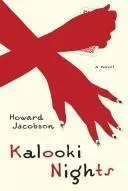
- Название:Kalooki Nights
- Автор:
- Издательство:Simon & Schuster
- Жанр:
- Год:2007
- ISBN:нет данных
- Рейтинг книги:5 / 5. Голосов: 1
-
Избранное:Добавить в избранное
- Отзывы:
-
Ваша оценка:
Kalooki Nights: краткое содержание, описание и аннотация
Предлагаем к чтению аннотацию, описание, краткое содержание или предисловие (зависит от того, что написал сам автор книги «Kalooki Nights»). Если вы не нашли необходимую информацию о книге — напишите в комментариях, мы постараемся отыскать её.
Spanning the decades between World War II and the present day, acclaimed author Howard Jacobson seamlessly weaves together a breath-takingly complex narrative of love, tragedy, redemption, and above all, remarkable humor. Deeply empathetic and audaciously funny, "Kalooki Nights" is a luminous story torn violently between the hope of restoring and rebuilding Jewish life, and the painful burden of memory and loss.
Kalooki Nights — читать онлайн бесплатно полную книгу (весь текст) целиком
Ниже представлен текст книги, разбитый по страницам. Система сохранения места последней прочитанной страницы, позволяет с удобством читать онлайн бесплатно книгу «Kalooki Nights», без необходимости каждый раз заново искать на чём Вы остановились. Поставьте закладку, и сможете в любой момент перейти на страницу, на которой закончили чтение.
Интервал:
Закладка:
It would have been interesting to know how many more were billeted there. And what they talked about together when their visitors had left. But I didn’t enquire. There had always been something about Manny that inhibited curiosity, and on his home turf, if you could call it that, I felt I was obliged to spare him questions of a personal kind. Gas taps yes, who his friends were now, no.
His hands were on the pine table in front of him, the left holding the right, pressing the knuckles white. For a moment I wondered if he was another Ilse Cohen, himself a victim of Alien Hand syndrome, one more person who couldn’t control the waywardness of half his will. Another hysteric. He saw me looking at him, and changed hands.
‘Other Jewish artists have answered the challenge of Leviticus 26 differently,’ he said, at the very moment I was thinking of changing the subject.
You have to be prepared, when you’re talking art to Jews who once wore fringes, and wear them surreptitiously still for all you know, for them to mean the junk you find for sale in the lobbies of the Red Sea hotels — rabbis fashioned out of silver wire, sentimental woodcuts of old Jaffa, menorahs encrusted with Eilat stone. (Coincidentally, there was an Eilat-encrusted menorah in the kitchen where we sat, in an open cupboard alongside bottles of vinegar and olive oil.) With Jews, philistinism flourishes in direct proportion to Orthodoxy. You can see it on the bookshelves of the holy. Everything is written by God or Enid Blyton. But Manny had educated himself in the years he’d been away, he had given himself back to the world, and by ‘other Jewish artists’ I at once knew that he meant Rothko. Don’t ask me how I knew, I just knew. There is a Rothko face that people pull. They go dreamy. Rothko reminds them of some long sojourn somewhere else. It’s possible Manny had a reproduction Rothko hanging on the wall of his cell, or wherever they put him, and he was recalling his days there. Where are they now, the Rothko snows of yesteryear?
Mark Rothko. Born Marcus Rothkowitz, as Errol would have known, and once upon a time a yeshiva boy, like Asher Washinsky, and like Manny himself. So why did he change his name? And why, like Errol whom I would much rather not be like, do I hold it against him that he did?
Or is what I hold against him that he made his equivocal Jewishness lovable to Jews and non-Jews alike by taking all the joking out of it?
When non-Jews love a Jewish artist I’m suspicious — let’s leave it at that.
‘Yeah, yeah,’ I said to Manny, without mentioning any of the above. ‘As by painting exquisitely expiring spiritual abstracts. Fading even as we look at them, like the flesh which houses us. Very beautiful, I grant you, and in their own way biblical, I grant you that too. But precisely for the reason that they seduce us by their beauty, are they not any sort of riposte to Leviticus 26. They are still graven images. They might not be images of prancing gods in animal or human form, but they are idealised images of the soul. And therefore they remain idols in whose shape we worship a sentimentalisation of ourselves. Abstraction doesn’t solve it, Manny. Abstraction’s a con. Only ridicule solves it. Only mockery keeps you the right side of idolatry.’
He quarter turned his eyes towards me, showing me something (though it was very hard to be sure) much like mockery in return. It was a queer thing for me to be doing in his or whoever’s little kitchen, haranguing him with my views on art.
Only afterwards did it occur to me that as far as he was concerned, at least, we weren’t discussing art at all. We were discussing my fitness, as a man of comedy and exaggeration, to interpret his story.
Given the choice, he’d have gone for Rothko.
Tough. Given the choice, I’d have gone for Rembrandt. But you don’t get to choose who tells your story.
At the time, feeling that the fault for the haranguing was mine, I reached out to touch him, apologetically. But he started from the contact. Not knowing what else to do he reached for the pages of my comic history again, and alighted on the caricature of Shrager.
‘My d-doctor,’ he said, passionlessly.
His stutter had returned to us. Evidently doctors brought it on.
‘Shrager? Was there anyone whose doctor he wasn’t? But I’m flattered you recognise him’ — through the maze of unconsidered ugly unseriousness, I was going to say, but satisfied myself with the bad-taste jest of stuttering his name instead, as though he were one of Manny’s Nazis. ‘Dr A-alvin S-sssch-shrager. Another evil man of medicine.’
Manny didn’t respond to my needling. There’s a chance he didn’t notice it. He disagreed with my estimate of Shrager, though. ‘I’m not aware that he gassed children in order to be able to experiment on their brains.’
He’d abandoned the lumbering pretence of loving our enemies. He was back where I preferred him, in the realm of unequivocal hate.
‘I grant you that,’ I said, ‘but he still played around with mine.’
Manny fell quiet. Then suddenly he remembered something which struck him as more cheerful. ‘He tried to interest me in your sister once.’
‘He what?’
‘He asked me to take your sister out. Asher told me he’d asked him as well.’
‘Shrager asked you and Asher to go out with Shani?’
‘Well, not asked , s-suggested. And not at the same time.’
‘I’m assuming not at the same time, Manny. But on whose say-so did he put that suggestion to either of you? What made him think. . Christ, Manny, Shani was years older than you for starters.’ And you were a frummie freak, I wanted to add, upon whom she would not have looked had her life depended on it. Family — family first.
‘He said he thought it would be a good idea. He said he thought your father would approve.’
‘Well, that’s a joke! Hard enough — excuse me — to imagine what Shani would have said about it, but my father! In the first place my father would not under any circumstances have gone telling Shrager what he wanted for Shani — why would he for God’s sake? — and secondly what he wanted was a well-to-do left-wing atheistical goy with a double-barrelled name from some cathedral town in Hampshire.’
‘Perhaps he changed his mind. He talked to my father a lot when they were in hospital together. He said he was worried for your sister. What would happen to her when he died. He wondered about Asher. My father even mentioned it to Asher, but Asher, as you know. .’
Yes, Asher was in love with someone else. And Manny, presumably, was at that time still in love with God. So sorry, Shani, looks like you missed out on frumkie bliss!
I did not know what to make of any of this, except that it was profoundly insulting to my sister, my father, and to me. Which left only my mother, and who was to say that Shrager hadn’t suggested Manny or some other epileptic creep of medieval Yiddishery as a husband to her?
But just because it was insulting didn’t mean it hadn’t happened. Anything was possible. Without doubt my father had begun to entertain some strange notions in the last months of his life, and maybe finding himself in a hospital ward in a bed next to Selick Washinsky, where they were both equal in the hands of the Almighty, softened his attitudes. I had also to accept that when it came to Shani, his lifelong views about the need for Jews to shed their Jewishness were already pretty soft — vaporous, vapid, like the bubbles he blew from the clay pipe he once bought me as a Christmas present. Karl Marx, presumably, was the same with his daughter. What is the object of the Jew’s worship in this world? Usury. Only not in your case, my darling daughter. From everything I say against Jews, assume that I exempt your dear self . Takes some explaining all that. But it’s what Jewish daughters do to their Jewish fathers. They make monkeys out of them. And if it tells you anything, it is that my father was mistaken on another score: Jewishness is not what you get when you lock people in a ghetto, Jewishness is what even the harshest Jewish father sees when he looks into his baby daughter’s eyes. Shmaltz.
Читать дальшеИнтервал:
Закладка:
Похожие книги на «Kalooki Nights»
Представляем Вашему вниманию похожие книги на «Kalooki Nights» списком для выбора. Мы отобрали схожую по названию и смыслу литературу в надежде предоставить читателям больше вариантов отыскать новые, интересные, ещё непрочитанные произведения.






Обсуждение, отзывы о книге «Kalooki Nights» и просто собственные мнения читателей. Оставьте ваши комментарии, напишите, что Вы думаете о произведении, его смысле или главных героях. Укажите что конкретно понравилось, а что нет, и почему Вы так считаете.