Howard Jacobson - Kalooki Nights
Здесь есть возможность читать онлайн «Howard Jacobson - Kalooki Nights» весь текст электронной книги совершенно бесплатно (целиком полную версию без сокращений). В некоторых случаях можно слушать аудио, скачать через торрент в формате fb2 и присутствует краткое содержание. Год выпуска: 2007, Издательство: Simon & Schuster, Жанр: Современная проза, на английском языке. Описание произведения, (предисловие) а так же отзывы посетителей доступны на портале библиотеки ЛибКат.
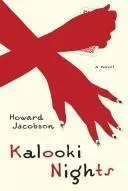
- Название:Kalooki Nights
- Автор:
- Издательство:Simon & Schuster
- Жанр:
- Год:2007
- ISBN:нет данных
- Рейтинг книги:5 / 5. Голосов: 1
-
Избранное:Добавить в избранное
- Отзывы:
-
Ваша оценка:
Kalooki Nights: краткое содержание, описание и аннотация
Предлагаем к чтению аннотацию, описание, краткое содержание или предисловие (зависит от того, что написал сам автор книги «Kalooki Nights»). Если вы не нашли необходимую информацию о книге — напишите в комментариях, мы постараемся отыскать её.
Spanning the decades between World War II and the present day, acclaimed author Howard Jacobson seamlessly weaves together a breath-takingly complex narrative of love, tragedy, redemption, and above all, remarkable humor. Deeply empathetic and audaciously funny, "Kalooki Nights" is a luminous story torn violently between the hope of restoring and rebuilding Jewish life, and the painful burden of memory and loss.
Kalooki Nights — читать онлайн бесплатно полную книгу (весь текст) целиком
Ниже представлен текст книги, разбитый по страницам. Система сохранения места последней прочитанной страницы, позволяет с удобством читать онлайн бесплатно книгу «Kalooki Nights», без необходимости каждый раз заново искать на чём Вы остановились. Поставьте закладку, и сможете в любой момент перейти на страницу, на которой закончили чтение.
Интервал:
Закладка:
But then my father knew that too.
Shmaltz! He pronounced it with the fiercest disdain. Which just goes to show that you can know the name and still not be able to resist the substance.
6
Whatever my father’s fears for her, Shani had not needed anyone to keep an eye on her, or to find her a nice Yiddisher beau. After my father’s death, several of the bachelors or widowers among his friends, including some whose first choice would have been my mother — let me frank about this: everyone’s first choice would have been my mother — took the early steps to wooing her. Chocolates, flowers, invitations to rambles, dances, even kalooki evenings in other people’s homes. And one or two who weren’t bachelors or widowers, I am afraid to say, essayed the same. But she kept them all at arm’s length. She was a changed person. If I were to put what was changed about her in a nutshell, other than that she now dressed every day and found shoes to fit her, I would say that she had decided to occupy my father’s place in the world. Not only to fill his social and secretarial role about the house, paying bills and looking after guests while my mother went her merry way kalooki-ing, and Tsedraiter Ike sucked at his single tooth and dribbled into histories of Israel, and I cartooned and got the clap — but actually to supplant him. There was something epic about it, something that would have reminded me of Greek tragedy had the omens been bad, but in fact no great collapse of dynasties was in the wind, no gods had been enraged other than Elohim who had never been much pleased with us anyway, and the House of Glickman felt, if anything, more secure than it had for a long time. So I suppose I meant Greek only in that it seemed archetypal, Shani moving into the space my father had vacated, as though one of us was bound by some elemental law of family to do it, and actually shouldering the burden he had dropped, thinking like him, talking like him — a touch brusque, determined to be watchful of sentimentality, the shmaltz as she had now taken to calling it — and keeping alive the principles of anti-religiosity by which he’d lived his own life and protected ours from fanaticism.
This was what made Manny’s recollections of Dr Shrager’s matchmaking so preposterous: a Jewish man, never mind a Jewish boy, was the very last of Shani’s wants.
It would have been neat of her to fall in love with a goyisher boxer with a broken nose and low-caste cauliflower ears, maybe a lad my father had once trained and seen a gloriously bloody future for, but she didn’t. She fell in love with a sailor. Mick.
‘Mick!’ Even my mother, who was the inverse of her late husband when it came to Shani and me — wanting me to have a Jewish bride if I had to have a bride at all, someone called Bathsheba or Hepzibah at the very least, and with a complexion to match the Arabian silkiness of her name, but not caring who Shani took up with provided he treated her well — even my mother drew the line at a Mick. ‘He isn’t Irish?’ she pleaded not to hear. ‘Please say he isn’t Irish.’
‘Mick Kalooki is his name,’ Shani said. ‘Draw your own conclusions.’
My mother made a bouquet of her hands and thrust it at my sister. ‘Don’t toy with me, Shani. On your father’s life, tell me the truth. Is he or isn’t he?’
‘On my father’s life you shouldn’t be asking me that question, Ma. You know what he’d have said. A man’s man for a’ that .’
‘That’s Scottish,’ I put in. ‘He’s not a Scotsman, is he?’
You can never tell who’s going to be the last straw in a family. A Hottentot, a German, a Jew as outlandish as I must have looked to the protected eyes of Chloë’s light-heartedly Jew-despising mother. In our family it was an Irishman. No idea why. Something to do with the Irish epitomising what we meant by a bates, the male equivalent to yekelte only worse, the proletarian drunkard whom we feared, in the abstract, more than any other being because we did not understand from the inside the workings of a mind befuddled by alcohol and could not calculate what it would do. If you want to understand a culture, look at how it goes about subverting itself. Carnival contains everything you need to know about Catholics, and Purim, the most carnivalesque of all Jewish festivals, renders up the Jew. At Purim even the holiest of men are required to get so drunk that they will not, for a whole day, be able to distinguish Mordechai from Haman, the friend from the enemy, the saint from the sinner. Behold then why Jews fear alcohol: in alcohol we lose the one quality that guarantees our humanity — our ability to distinguish good from evil.
They will tell you, the anti-Semites who collect my cartoons and show them on websites much visited by extremists with too much time on their hands, that our disdain for non-Jews, measured by the size and hostility of our vocabulary for them, is proof of our belief in our inherent superiority. Bad psychology, my farbrenteh friends. Your reasoning is as flawed as your hearts. Colourful language did never yet proceed from confidence. The confident are languid in their contempt; what fuels the vivacity of our mistrust is fear. All those goyim and batesemeh, all those yekeltes and shaygetsim — what are they but characters in a recurrent nightmare, the Grand Guignol of our waking terrors? Not just our enemies, blind with drink, but that to which we might ourselves be reduced if we do not keep our wits about us. If the Jews felt easier in their chosenness they would be sweeter to get along with. As it is, they start in fright whenever an Irishman who isn’t W. B. Yeats or Oscar Wilde (and they aren’t all that sure about Oscar Wilde) approaches them with a glass in his hand.
‘An Irish son-in-law,’ my mother wailed. ‘What have I done to deserve an Irish son-in-law?’
‘And a sailor, Mother,’ Shani reminded her. ‘So the house will stink of rum as well as whiskey.’
In fact he was purser on a luxury liner, came from a good cheese-smoking family in County Cork, had been educated in England, so didn’t sound like a tinker, and by any standards other than ours would have been counted teetotal. Although Shani had tried to keep the details of her meeting him a tight secret, and would have liked us to imagine her haunting the docks in the early hours of the morning, looking for seamen, it came out that they’d fallen into conversation in Radiven’s, the kosher delicatessen at the bottom of our street. He was in Manchester seeing relatives, and could not forgo the opportunity to buy a pound of chopped liver and a packet of matzohs, food he had acquired a taste for as a boy when his parents took him to stay with Jewish friends in Dublin. He had already got what he wanted when Shani walked in, whereupon he realised that what he really wanted, to go with his chopped liver and matzoh, was a beautiful Jewess to serve it to him.
He had a day in town before his train left for Southampton and persuaded Shani to spend it with him in Heaton Park. How far you can fall in love in a single afternoon in a park, depends partly on the park and partly on your physical and mental availability. In Jane Austen’s words, ‘He had nothing to do, and she had hardly anybody to love.’ The ‘he’ in question, incidentally, also a sailor. Though the ‘she’ a long way from being a Jewish girl from Crumpsall Park with a thousand pairs of unworn stilettos in her wardrobe. It had happened that way at any rate — love in a single afternoon — for Asher and Dorothy. It had happened that way for me and Zoë, for me and Chloë, and for me and several öthers. And it happened that way for Shani and Mick. By the time they separated in body they were engaged in spirit. He wrote to her every hour from his boat, she replied with cables to Aden and Colombo and other places Shitworth Whitworth correctly supposed we could not point to on a map — Shani, this was, who had never previously sent a postcard to anybody in her life — and so we became aware that something very serious was taking place in Shani’s heart long before we met the cause of it.
Читать дальшеИнтервал:
Закладка:
Похожие книги на «Kalooki Nights»
Представляем Вашему вниманию похожие книги на «Kalooki Nights» списком для выбора. Мы отобрали схожую по названию и смыслу литературу в надежде предоставить читателям больше вариантов отыскать новые, интересные, ещё непрочитанные произведения.






Обсуждение, отзывы о книге «Kalooki Nights» и просто собственные мнения читателей. Оставьте ваши комментарии, напишите, что Вы думаете о произведении, его смысле или главных героях. Укажите что конкретно понравилось, а что нет, и почему Вы так считаете.