Howard Jacobson - Kalooki Nights
Здесь есть возможность читать онлайн «Howard Jacobson - Kalooki Nights» весь текст электронной книги совершенно бесплатно (целиком полную версию без сокращений). В некоторых случаях можно слушать аудио, скачать через торрент в формате fb2 и присутствует краткое содержание. Год выпуска: 2007, Издательство: Simon & Schuster, Жанр: Современная проза, на английском языке. Описание произведения, (предисловие) а так же отзывы посетителей доступны на портале библиотеки ЛибКат.
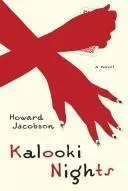
- Название:Kalooki Nights
- Автор:
- Издательство:Simon & Schuster
- Жанр:
- Год:2007
- ISBN:нет данных
- Рейтинг книги:5 / 5. Голосов: 1
-
Избранное:Добавить в избранное
- Отзывы:
-
Ваша оценка:
Kalooki Nights: краткое содержание, описание и аннотация
Предлагаем к чтению аннотацию, описание, краткое содержание или предисловие (зависит от того, что написал сам автор книги «Kalooki Nights»). Если вы не нашли необходимую информацию о книге — напишите в комментариях, мы постараемся отыскать её.
Spanning the decades between World War II and the present day, acclaimed author Howard Jacobson seamlessly weaves together a breath-takingly complex narrative of love, tragedy, redemption, and above all, remarkable humor. Deeply empathetic and audaciously funny, "Kalooki Nights" is a luminous story torn violently between the hope of restoring and rebuilding Jewish life, and the painful burden of memory and loss.
Kalooki Nights — читать онлайн бесплатно полную книгу (весь текст) целиком
Ниже представлен текст книги, разбитый по страницам. Система сохранения места последней прочитанной страницы, позволяет с удобством читать онлайн бесплатно книгу «Kalooki Nights», без необходимости каждый раз заново искать на чём Вы остановились. Поставьте закладку, и сможете в любой момент перейти на страницу, на которой закончили чтение.
Интервал:
Закладка:
Whether she had so arranged it that when he was next on leave he would turn up at our house in his purser’s uniform just as one of my mother’s kalooki evenings was about to kick off, I can only guess. But if she hadn’t, she was damned lucky. He took the gathering by storm. Handsomish and certainly well formed, if not exactly dashing or imposing, but in naval whites, with the colour of the high seas in his cheeks, an unshaveable dimple in his chin and a proven way with red-nailed matrons, he would have made a big impression had he merely popped his head around the door, said Hello, ladies and left immediately. That he should have been a card-player, to boot, that he should have loved kalooki in particular, being expected to play it every night in the saloon of the Oriana with the wealthier version of just such women as were gathered here tonight, that he should have been able to take his place at my mother’s table as though he had never parked his trim behind in any other seat, and be expert enough to keep everyone on their toes but not so expert or indiscreet as to win every hand, and that he should have declined the peach brandy my mother kept for rabbis and alcoholics — well, an angel sent by Elohim could not have managed things better.
‘So you’re Mick,’ my mother trilled, when her other guests had left, while in the shadows of the hall Tsedraiter Ike rolled his shabby little fingers into fists and called upon the Almighty to intervene.
TEN
1
Little by little I fancied I was getting Manny to relax. Whenever the trainee PAs at Lipsync Productions had nothing better to do, they would contact me, mentioning meaningless deadlines for outlines, citing the names of impossibly stellar directors whose windows of opportunities would soon be closing, and cut-off dates beyond which we would be plunged into the perilous uncertainties of another tax year. I told them Manny couldn’t be rushed. I explained that there was difficult, even intractable matter which could be coaxed out of him only gingerly, if he was not to take fright and bolt. The word ‘intractable’ usually got them off the phone and Francine on it. Was there anything she could do, she wondered. Had she been a man I’d have deduced from her tone that she meant like breaking both the bastard’s arms.
‘Time will do it,’ I said. ‘Leave him to me a little longer.’
What was I up to, I could hear hear her thinking. What’s your little game, Maxie Glickman?
It was always a little shivery getting Francine in person on the phone. She had a way of making you feel she was taking a moment off from tea with Henry Kissinger, or a Bellini with Berlusconi, to talk to you. If you listened hard you could hear them breathing at her elbow. The other thing you could hear if you listened hard was Francine’s beauty. It had an audible quality, like temperature. You can hear heat and you can hear cold; in Francine’s case you could hear the strained patience in her green eyes, and the challenge that was so important an element in her mellifluous looks. I could not have drawn her from her voice, but I immediately remembered how it felt to be in her company. Above all, the sensation of having let oneself down. But whether that was because I didn’t measure up to her, or disliked myself for trying, I couldn’t decide.
As for Manny, with whom for very different reasons I felt something similar, the truth was that after four or five meetings I still hadn’t said a word to him about there being a scriptwriter at my elbow wanting to empty my mind of that of which I’d emptied his. Of course he knew the basis on which we ‘d been meeting, and wasn’t naïve enough to suppose I’d be spending this much time in his company simply for the love of it. But getting his story down on paper hadn’t come up as an issue between us. And the business Lipsync was most interested in — the gas taps, the gas taps, Max — was not proving to be as imminent as I’d first thought. My own fault. I’d got him on to theology and art. I’d made him teleologically self-aware. Now he thought twice before he mentioned God, and God, I felt, held the key to it.
However, so long as no one rushed either of us, I saw no reason not to believe we would eventually get there.
It might have been my imagination, but I thought he found it easier to talk when he was out of Manchester. He seemed to like coming off the train at Euston with The Times under his arm and being surprised to see me waiting for him. It must have felt to him as though he had business to attend to. And I was beginning to prefer it when he came to me. A trip north inevitably incurred family obligations which I didn’t always have the mental strength to honour. Jewishly, it didn’t feel healthy up there any longer either. The air was not bracing. There were no Jewish ramblers left. If there were still Jewish atheists in town they were lying low. The sky had darkened. People were waiting for the Messiah. My mother’s kalooki nights went on almost as before, but I noted that she suspended play on the High Holy Days and even on some of the Lower Holy Days, a respectfulness she would not have dreamed of exercising once upon a time. ‘Frummers got to you again, Ma?’ I would say when I called in and found the tables empty. But there was no teasing her. ‘Without the frummers as you call them, Maxie, we wouldn’t be here.’ See! They’d slipped into the vacancy left by my father and blackmailed her. They’d made her feel that it was they who had kept us going for five thousand years, the lungs and bellows of the Jewish people, precisely so that Jews like her could lead their frivolously irreligious lives unimpeded. Left to her, there’d be no Jews. That was the package of obligation they’d sold her. Left to her — and me — we’d have died out. Someone the spitting image of her might have persisted, paying for her hair to be sculpted, painting her nails and playing kalooki, but she wouldn’t have been Jewish. So she owed them.
Made no sense to me, but I wasn’t living there, breathing in the tainted air.
Made no sense to my poor father either, I’d have staked my life on that, and he was still there.
Occasionally I’d visit his desolate grave in Failsworth, a blasted Jewish cemetery for the privilege of lying in which my mother had been paying a burial board functionary a penny per week per person by my calculation since Cromwell let us back into the country. Failsworth — it describes what happens to your heart when you get within a mile of the place. But that’s the way of it with Jewish graves and graveyards: they are of necessity sites of failing strength and failed imagination. After death, nothing.
I hadn’t fought when my father’s grey slab went up, commemorating the bare bones of his existence in Hebrew script. I hated the look of Hebrew characters almost as much as I hated German. On a grave they reduced the inmate to nothing but an addendum to Jewish history, a mere slip of an ancient tongue which alone enjoyed eternity. But we hadn’t been able to come up with a satisfactory alternative. My mother could not abide the idea of burning him, I knew of no country churchyard with an enclosure for amateur boxers with names like Jack ‘The Jew’ Glickman, and Shani believed that burying him in the manner his father and his father before him had been buried was, though unsatisfactory, best.
So much for his attempt to change the course of Jewish history.
For which failure on our part — because that was how I saw it: our failure not his — I apologised each time I went to see him.
And each time there seemed more to apologise to him for.
2
It wasn’t only being out of Manchester that appeared to relax Manny’s tongue. It was being out full stop. He didn’t move well, but as long as he felt he wasn’t under pressure to get anywhere, he liked wandering around. Sightseeing. Shopping. Hanging about, or zikh arumdreying, as it pleased him to call it, laughing to himself about the expression, as though it delighted him to remember a Yiddishism he’d had no reason to employ for years. There was no zikh arumdreying where he ’d been. He ’d shlumped, but that was different. Zikh arumdreying implied active, even ingenious hanging about, whereas a shlump just quietly rotted into the earth.
Читать дальшеИнтервал:
Закладка:
Похожие книги на «Kalooki Nights»
Представляем Вашему вниманию похожие книги на «Kalooki Nights» списком для выбора. Мы отобрали схожую по названию и смыслу литературу в надежде предоставить читателям больше вариантов отыскать новые, интересные, ещё непрочитанные произведения.







Обсуждение, отзывы о книге «Kalooki Nights» и просто собственные мнения читателей. Оставьте ваши комментарии, напишите, что Вы думаете о произведении, его смысле или главных героях. Укажите что конкретно понравилось, а что нет, и почему Вы так считаете.