Howard Jacobson - Kalooki Nights
Здесь есть возможность читать онлайн «Howard Jacobson - Kalooki Nights» весь текст электронной книги совершенно бесплатно (целиком полную версию без сокращений). В некоторых случаях можно слушать аудио, скачать через торрент в формате fb2 и присутствует краткое содержание. Год выпуска: 2007, Издательство: Simon & Schuster, Жанр: Современная проза, на английском языке. Описание произведения, (предисловие) а так же отзывы посетителей доступны на портале библиотеки ЛибКат.
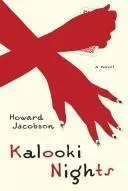
- Название:Kalooki Nights
- Автор:
- Издательство:Simon & Schuster
- Жанр:
- Год:2007
- ISBN:нет данных
- Рейтинг книги:5 / 5. Голосов: 1
-
Избранное:Добавить в избранное
- Отзывы:
-
Ваша оценка:
Kalooki Nights: краткое содержание, описание и аннотация
Предлагаем к чтению аннотацию, описание, краткое содержание или предисловие (зависит от того, что написал сам автор книги «Kalooki Nights»). Если вы не нашли необходимую информацию о книге — напишите в комментариях, мы постараемся отыскать её.
Spanning the decades between World War II and the present day, acclaimed author Howard Jacobson seamlessly weaves together a breath-takingly complex narrative of love, tragedy, redemption, and above all, remarkable humor. Deeply empathetic and audaciously funny, "Kalooki Nights" is a luminous story torn violently between the hope of restoring and rebuilding Jewish life, and the painful burden of memory and loss.
Kalooki Nights — читать онлайн бесплатно полную книгу (весь текст) целиком
Ниже представлен текст книги, разбитый по страницам. Система сохранения места последней прочитанной страницы, позволяет с удобством читать онлайн бесплатно книгу «Kalooki Nights», без необходимости каждый раз заново искать на чём Вы остановились. Поставьте закладку, и сможете в любой момент перейти на страницу, на которой закончили чтение.
Интервал:
Закладка:
By this stage he had brought a pen and notebook out of his pocket. It was odd. He knew the lexicon of delicatessen nosh backwards — the bagels, the challas, the kes, the wursts, the apricot and almond rugalach, and of course the chopped herrings and chopped livers in all their subtle variations. But Jewish restaurant food was different. Nobody had taken him, that seemed to be the problem. Nobody wanted to take him. ‘If we’re going to eat out we’re not going to eat that pap,’ my father had always said, meaning we were having Indian or Chinese full stop, and that tradition had been kept alive by Shani. The only person in the house who might have been up for a kosher meal on the town was Tsedraiter Ike, but he did all his dining away from home in houses of the dead. And would not have entertained the company of Mick anyway. Thus this poor Irish sailor, thinking he had gained admittance to that penetralium of mystery, a haimisheh Jewish family, was reduced to dragging himself down to Whitechapel to dine Yiddler-wise with his girlfriend’s younger shikseh-doting brother who, to tell the truth, wasn’t all that keen on the pap either.
‘I think I know what kreplach are,’ he said, keeping with the k s, ‘but how are they different from kneidlach?’
‘Well, kreplach are like little ravioli, as you know, whereas kneidlach are dumplings, only rounder in general than k’nishes. But I’m not an expert.’
‘You have a lot of words for dumplings.’
And a lot of words for vagina, I thought, remembering pirgeh and peeric and pyzda and pupke — unless Errol Tobias who had taught them to me had made them up out of devilment.
‘Isn’t there something called kochleffel?’
‘Yes, but you don‘t eat it. A kochleffel is a busybody. A stirrer. You want to watch it when Shani starts to call you that.’
He beamed at me. ‘So lovely.’
‘Shani?’
‘No. . I mean yes, of course, but I was talking about the language. Such a lovely language, Yiddish!’
Indeed. But then I hadn’t told him what k’nish meant in slang.
I was prepared, this once, for Shani’s sake, to take him through every dish on the menu, but I had to stop him when his curiosity grew more philosophical and he tried to get me on the difference between shmendrik and shmerrel and shmuck and shmegege and shmulky and shlemiel and shlimazel and shvontz and the hundreds of others — the rich roll-call of dishonour in which a people who prize intelligence above all things register the minutest distinctions between ignorance, simplicity, folly, buffoonery, ineptitude, sadness and sheer bad luck.
‘Just one thing more,’ he said, after he ‘d paid the bill. ‘If you had to choose between shmendrik, and shmerrel and shmegege—’
‘No,’ I said. ‘No, I can’t. There aren’t enough hours in the day.’
He laid his hand on mine. ‘Let me finish. If you had to choose one of those to describe me , which would it be?’
I was horrified. ‘Mick, why are you asking me that? You are none of those things.’ For a terrible moment I wondered whether Shani or my mother had been abusing him. And then I realised. Tsedraiter Ike — himself named after a weakness of the brain that was nearly but not quite the same as that suffered by a meshuggener. Tsedraiter Ike, I felt sure, had been undermining him in Yiddish, no doubt spitting the words at him through the letter box when he arrived for kalooki. And no doubt spitting them at him again from his bedroom window when he left.
‘Take no notice of a word that wicked old bastard says,’ was my advice. ‘My father, who was a good judge of character, and who it’s a great shame you never met, wanted to throw him out of the house.’
Mick smiled at me, not bothering to pretend he didn’t know who I meant. ‘He’s a momzer, yes?’
‘Mamzer. Momzer’s London Yiddish.’
He looked alarmed. ‘You’re telling me there’s London Yiddish and Manchester Yiddish?’
‘And Glasgow. And Leeds. And Dublin, too, presumably.’
He rolled his eyes. ‘Oy, oy, oy — I’ll never master it.’
‘Just don’t try to rush it,’ I said. ‘It takes five thousand years.’
Though he’d paid the bill he didn’t want to leave.
‘Just a coffee.’
Fine by me, but I had to stay his hand before he could ask the waiter to bring him cream. ‘They can’t serve you dairy after meat,’ I told him.
He punched the side of his face, and took his notebook out again. ‘Sorry,’ he said. ‘I did know that, but it didn’t feel like meat.’
‘It never does,’ I reassured him.
Funny, how protective of him I felt, though he was older than me by a dozen years or more. He was a sweet man. Much the sweetest Irishman I had ever met. I could see why Shani liked him. I’d have kissed the dimple in his chin myself had I been a woman. Shani was very lucky, I thought. We all were. He was an addition to our little family. But I was worried for him. No one should want to be that Jewish. Certainly no one who wasn’t Jewish to begin with. The shaygets who would be Jew. . it felt self-harming, pathological in the way that explorers who’d lost their way and cheerfully ended up as tribesmen with bones through their noses seemed pathological. Had I suggested circumcision I’m sure he’d have agreed to it. That’s supposing he hadn’t taken that drastic step already.
I shook his hand warmly when we parted — a ‘you’re one of us now’ sort of shake — but he insisted on hugging me, this a good twenty years before hugging between men had been normalised. Such goodwill, I thought on the bus home. We enjoy such goodwill from so many. Do we make it all up, this anti-Semitism? Is it a fire in us we need to feed? Could we possibly have called the Nazis down on us because we couldn’t exist without them?
For an hour or so I felt as though I had woken into a different universe, where everything was love. Had someone asked me to empty my pockets into his I’d have agreed to do it. All men were brothers. There wasn’t a person anywhere who didn’t wish me well. I was lucky I made it home in one piece. Certainly lucky I didn’t fall off the bus. These moments can rob you of your balance.
But the next night I started going out with Chloë, and I was firmly on two feet again.
5
Why I fell for Chloë Anderson when she enrolled in art college in a Chanel suit and French high heels with two cameras carried diagonally across her chest like small arms is not a question in need of an answer. You couldn’t not. You couldn’t not if you were me, anyway. The shoes had something to do with it. As the son and brother of women who between them owned every pair of shoes that had ever come off a shoemaker’s last, I understood the poetry of shoes. But Shani, at least prior to my father’s death, no sooner put something on her feet than she looked like a mill girl off for a Saturday night eating fish and chips out of a newspaper in Blackpool. She clomped, she teetered, she clickety-clacked, often not even making it down the stairs before realising she couldn’t go out in what she was wearing, returning to her room and hurling her entire wardrobe against the wall. My mother the same. Despite the classical attenuation of her ankles — the heel narrowly incurved, the ankle bone itself a perfect sphere, and with a glisten on it, like sucked caramel — my mother had only to put on a heel higher than her thumb and she metamorphosed into a fine piece of ass, the sort of dame that gave a Chicago mobster cachet.
Whereas Chloë. . Chloë in shoes was all paradox. Austere and yet with daggers for feet, the convent girl and the streetwalker, slightly scuffed and yet somehow scuffed to plan — how did she do that?
She made me sorry for Shani and my mother even as I fell for her. Sorry for all Jewish women if I am to tell the truth. No instinct for ambivalence, you see. No double meanings.
Читать дальшеИнтервал:
Закладка:
Похожие книги на «Kalooki Nights»
Представляем Вашему вниманию похожие книги на «Kalooki Nights» списком для выбора. Мы отобрали схожую по названию и смыслу литературу в надежде предоставить читателям больше вариантов отыскать новые, интересные, ещё непрочитанные произведения.









Обсуждение, отзывы о книге «Kalooki Nights» и просто собственные мнения читателей. Оставьте ваши комментарии, напишите, что Вы думаете о произведении, его смысле или главных героях. Укажите что конкретно понравилось, а что нет, и почему Вы так считаете.