Howard Jacobson - Kalooki Nights
Здесь есть возможность читать онлайн «Howard Jacobson - Kalooki Nights» весь текст электронной книги совершенно бесплатно (целиком полную версию без сокращений). В некоторых случаях можно слушать аудио, скачать через торрент в формате fb2 и присутствует краткое содержание. Год выпуска: 2007, Издательство: Simon & Schuster, Жанр: Современная проза, на английском языке. Описание произведения, (предисловие) а так же отзывы посетителей доступны на портале библиотеки ЛибКат.
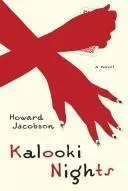
- Название:Kalooki Nights
- Автор:
- Издательство:Simon & Schuster
- Жанр:
- Год:2007
- ISBN:нет данных
- Рейтинг книги:5 / 5. Голосов: 1
-
Избранное:Добавить в избранное
- Отзывы:
-
Ваша оценка:
Kalooki Nights: краткое содержание, описание и аннотация
Предлагаем к чтению аннотацию, описание, краткое содержание или предисловие (зависит от того, что написал сам автор книги «Kalooki Nights»). Если вы не нашли необходимую информацию о книге — напишите в комментариях, мы постараемся отыскать её.
Spanning the decades between World War II and the present day, acclaimed author Howard Jacobson seamlessly weaves together a breath-takingly complex narrative of love, tragedy, redemption, and above all, remarkable humor. Deeply empathetic and audaciously funny, "Kalooki Nights" is a luminous story torn violently between the hope of restoring and rebuilding Jewish life, and the painful burden of memory and loss.
Kalooki Nights — читать онлайн бесплатно полную книгу (весь текст) целиком
Ниже представлен текст книги, разбитый по страницам. Система сохранения места последней прочитанной страницы, позволяет с удобством читать онлайн бесплатно книгу «Kalooki Nights», без необходимости каждый раз заново искать на чём Вы остановились. Поставьте закладку, и сможете в любой момент перейти на страницу, на которой закончили чтение.
Интервал:
Закладка:
‘And just don’t you tell him that you’re not. We ’ve had enough of your unhappiness, Asher. It’s been in the house with us for months.’
‘It will be with me for a lot longer.’
She sucked her teeth at him. ‘I hope you’re not asking me, Asher, as your mother, to be sorry about this?’
‘About “this”, no. I’m asking you, as my mother, to be sorry for me .’
She looked at him, as he thought — as he told Manny that he thought — with hatred for him in her eyes. ‘Well, I can’t be. If she doesn’t want to see you, that’s for the best. You’ll get over her. You’re a child. At your age feelings don’t run so deep.’
Having said which, and having told her husband the good news, her hatred turned once again to love.
But she was wrong on several points. It wasn’t for the best. At Asher’s age feelings did run deep. And he didn’t get over her.
3
When I reminded Manny Stroganoff that as Manny Washinsky he had once said he envied me not having a father, he claimed to have no recollection of it. But he gave no sign that he cared whether he ’d said it or not. It was as though I were describing events in another life. .
I would not yet reintroduce Manny in his Stroganoff incarnation were there any way of avoiding it. In this, a comic strip is preferable: you can foreshadow more suggestively when you are not at the mercy of linear narrative, you can prefigure the future in the clouds of the past, you can intimate a likeness of that which has not yet occurred. Turn to the earliest pages of Five Thousand Years of Bitterness and you will swear you can make out Hitlerian storm troopers, or at the very least a moustache suggestive of the Führer, bobbing on the waters of the Red Sea. That’s how I would prefer the older Manny to make his presence felt — not here just yet, never here just yet, but always waiting to happen.
From which it will be evident that I didn’t want to see him again, whatever the inducements offered by Lipsync Productions and whatever the promises I’d made to the sisters Bryson-Smith. Why? Because I couldn’t imagine how you talked to someone you used to know quite well who had, since you saw him last, murdered both his parents. The comedian Tommy Cooper once performed a sketch in which he found himself sitting opposite Hitler in a railway carriage. Not knowing what else to do he buried his face in a newspaper. But his conscience would not leave him alone. Conscious of the moral inadequacy of silence, he would from time to time look up from his newspaper and hiss. Ssss! I took this to be a profound exploration of the impossibility of ever expressing outrage sufficient to a monstrous crime. Ssss! I’m not saying I equated meeting Manny with meeting Hitler, but wasn’t it required of me to demonstrate some reprobation, however feeble — Ssss, Manny, ssss! — before asking him how life otherwise had been treating him?
There was reason to believe Manny felt as awkward about our getting together as I did. At first he denied all knowledge of me. And if he didn’t know me he couldn’t, as a matter of simple logic, want to see me again, could he? Then he said he did in fact vaguely remember my name but wouldn’t discuss his past with me for anything less than a million pounds. I stayed out of this, leaving all negotiations to Francine and Marina, the progress of which was reported to me on a regular basis by a succession of trainee PAs with improbably throaty voices, not one of whom had the most basic grasp of who Manny was and what he had done, still less of where I fitted into the picture, but who relayed the latest manoeuvre by either party as though their working and creative lives depended on it. Eventually, they found a price which they could afford and Manny was prepared to take — fifty pounds was my guess — and couriered me a train ticket.
That a further six weeks elapsed before our meeting was my fault. I couldn’t face it. I had not supposed when I agreed to what was after all an excavation of my own past as well as Manny’s that he would have returned to Manchester on his release. Stamford Hill was where I imagined him, Stoke Newington or Hackney, in some charitable home for broken-down old Jews with a criminal past. I’m not saying that seeing him anywhere would have been easy, but in situ, so to speak, in the environs of our innocent childhood, where we played ball, drew pictures, and huddled, breath hot on each other’s necks, over The Scourge of the Swastika — that took a bit of preparing for.
I’d made a booking in a pizza restaurant off Deansgate and had he not been at the table before me I would never have recognised him. I’d thought a lot about who I was going to find, obsessed about him even, partly I suppose because you dread marking in those you haven’t seen for so long the imperceptible changes in yourself. And not just the changes, but the emotional expenditure, the history of unachievement, the waste. On the one hand I’d imagined him as one of those neurasthenic Jews out of Otto Dix, the brains showing through the forehead, the skin white with the over-interiority of the Hebrew. On the other — and this was a conscious corrective to that expectation, considering where Manny had been for the last however many years — I was ready for a hardened lag, head shaved, shoulders widened, a man with a closed face and flattened ears, thick about the neck, much like Broderick ‘The Bull’ Chisnall had been before Errol Tobias felled him. Had I drawn the person I was going to meet, combining these two versions, he ’d have come out as The Mekon, Lord of the Treens, Dan Dare’s green-faced genius antagonist, on the body of the Hulk.
Ssss!
The one description I would never have got to on my own was dapper. Dapper-deranged. He looked like someone out of H. G. Wells, a draper’s assistant who had gone too long without advancement, or a railway clerk working in a station where the trains no longer ran. Still the boy’s skull, smooth high brow and small vulnerable neck, topped with a little hair, like an omelette, yellowish in colour, with a diminutive quiff. And a wan moustache which looked no less foreign to his face than the outcrop of baby fluff had, forty years before. Nor was he dressed as I’d imagined he would be. But that was the fault of my imagination which had stopped, like a clock after an explosion, at the sepulchral uniform — white shirt, black suit, fringes, homburg — of an Orthodox Jewish boy as seen by an un-Orthodox Jewish cartoonist. It had crossed my mind to put him in rolled-up jeans, brown suede shoes and a green polo neck pulled tight across the chest, as worn by someone Errol once introduced me to sotto voce — Merton Friedlander, at the time the only Jewish boy any of us had ever met who had been to borstal. Stealing cars. Think of that. A Jew stealing cars! A Jew in borstal! But Manny would not transliterate into clothes like Merton Friedlander’s. Now here he was in a dogstooth jacket, a Viyella shirt, a dull silvery, diamond-patterned tie and grey trousers. The clothes of a man who had never been anywhere and to whom nothing had ever happened.
He was half the size I’d remembered. Had he always been small, or had they shrunk him in there? Had they lobotomised half his frame away?
Normally when you meet someone you haven’t seen for a lifetime you register the shock at the beginning, then little by little become reacquainted with the familiar. With Manny it was the opposite. He had been better than I’d expected at first, but with every minute that passed he seemed worse. There was nothing of him. And what there was seemed of another place. What did he keep smiling at on the restaurant ceiling? Why did he push his jaw out as though he wanted to chin away every word I said to him? Where was he?
Читать дальшеИнтервал:
Закладка:
Похожие книги на «Kalooki Nights»
Представляем Вашему вниманию похожие книги на «Kalooki Nights» списком для выбора. Мы отобрали схожую по названию и смыслу литературу в надежде предоставить читателям больше вариантов отыскать новые, интересные, ещё непрочитанные произведения.









Обсуждение, отзывы о книге «Kalooki Nights» и просто собственные мнения читателей. Оставьте ваши комментарии, напишите, что Вы думаете о произведении, его смысле или главных героях. Укажите что конкретно понравилось, а что нет, и почему Вы так считаете.