Howard Jacobson - Kalooki Nights
Здесь есть возможность читать онлайн «Howard Jacobson - Kalooki Nights» весь текст электронной книги совершенно бесплатно (целиком полную версию без сокращений). В некоторых случаях можно слушать аудио, скачать через торрент в формате fb2 и присутствует краткое содержание. Год выпуска: 2007, Издательство: Simon & Schuster, Жанр: Современная проза, на английском языке. Описание произведения, (предисловие) а так же отзывы посетителей доступны на портале библиотеки ЛибКат.
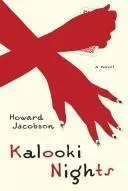
- Название:Kalooki Nights
- Автор:
- Издательство:Simon & Schuster
- Жанр:
- Год:2007
- ISBN:нет данных
- Рейтинг книги:5 / 5. Голосов: 1
-
Избранное:Добавить в избранное
- Отзывы:
-
Ваша оценка:
Kalooki Nights: краткое содержание, описание и аннотация
Предлагаем к чтению аннотацию, описание, краткое содержание или предисловие (зависит от того, что написал сам автор книги «Kalooki Nights»). Если вы не нашли необходимую информацию о книге — напишите в комментариях, мы постараемся отыскать её.
Spanning the decades between World War II and the present day, acclaimed author Howard Jacobson seamlessly weaves together a breath-takingly complex narrative of love, tragedy, redemption, and above all, remarkable humor. Deeply empathetic and audaciously funny, "Kalooki Nights" is a luminous story torn violently between the hope of restoring and rebuilding Jewish life, and the painful burden of memory and loss.
Kalooki Nights — читать онлайн бесплатно полную книгу (весь текст) целиком
Ниже представлен текст книги, разбитый по страницам. Система сохранения места последней прочитанной страницы, позволяет с удобством читать онлайн бесплатно книгу «Kalooki Nights», без необходимости каждый раз заново искать на чём Вы остановились. Поставьте закладку, и сможете в любой момент перейти на страницу, на которой закончили чтение.
Интервал:
Закладка:
You howl when you hear your dying father remembering when he first held his baby in his arms, regardless of whether that baby was you or someone else. And that was what I did, I ran out of the house and howled the rest of the day away in the air-raid shelter. Was I jealous of Shani? I’m not sure the question is even worth asking. Jealousy and envy are so constituent to our natures we might as well factor them into every consideration of our dealings with one another and not refer to them again. But beyond that, beyond that mole of inwrought meanness, I don’t believe I was put out. My father hadn’t named me after anything beautiful, but I did bear the name of a boxer he admired, and boxing had certainly been as important in his life as beauty. Yes, I howled for me because I would soon be fatherless, but otherwise I howled for him, and, though it goes against the grain professionally for me to say this, for the love he bore his daughter. Call that my Jewish sentimentality. He adored her. She was his shaineh maidel, which meant that he adored her with some part of himself that was mysterious to me, and must have been equally mysterious to him. Was it his father who was talking through him, or his father’s father before him? I had never known either, but I howled for them as well.
She never left his side. There were complications. Pneumonia? I don’t know. I couldn’t bear to take in the physical facts of his illness. Nor could my mother. We closed our ears when the doctor spoke to us. It wasn’t my father’s death we were in denial of but the truth about bodies. And not just our bodies, all bodies. We didn’t want to know how they worked. Offered the choice between ignorance and knowledge, we chose ignorance. Shani was different. Shani took in every detail of what was wrong with him, saw to the medication, told him what to expect, cleaned him up, changed his pyjamas, turned him in his bed, everything. And all without a single expression of petulance or complaint. Gone, the angry fretful girl who had locked herself away all day, unable to reconcile her eyes to her appearance, gone as though she had never existed. Unable to comprehend what we were seeing, my mother and I exchanged wide-eyed stares of astonishment when we passed on the stairs, but otherwise said nothing. It was as though we didn’t want to speak in case we broke the spell. It’s also possible we were too ashamed to speak. Ashamed of our incompetence and squeamishness, but equally ashamed of the bad opinion we ‘d had of Shani. She wasn’t who we thought she was. Not simply unlike herself, but a different person entirely.
The only one who didn’t seem surprised by this was my father. At an hour when Shani would normally have been immured in her bedclothes, there she was, taking his temperature or delivering him his breakfast. And dressed . Dressed not in a sheet either! ‘And how’s my beautiful daughter this fine morning?’ he would say to her, as though she ’d been ministering to him with precisely this efficiency every morning of her life.
She sponged his face, emery-boarded his nails, shaved him — though until the final days he wasn’t so weak that he couldn’t have shaved himself — even cut his hair. He behaved like a child throughout these procedures, submitting to her, as he had never submitted to the decisions of any referee, with the sweetest compliancy, smiling, gazing up at her, and sometimes laughing to himself.
‘Why are you laughing?’ she would say, gently pinching his cheeks.
‘So that you will do that.’
She could barely catch her breath. ‘You’re trying to make me cry.’
He would smile at her, his turn now to touch her face. ‘I’m not. I wouldn’t make you cry for the whole wide world.’
But sometimes, usually in the late afternoon when she ‘d finished her tasks, they wept openly together. And then he would call her his shaineh maidel again. Which only made her weep the more copiously.
Whether he wept with my mother, I don’t know. That would have happened, if it happened at all, in the night. What occurred between them had always been subject to the strictest blackout. No jocularity, no ribaldry, in our house in the matter of intimate relations between man and wife. They could have been a rabbi and rebitsin, so decorous were they. Indeed, I am hard-pressed to think of any rabbi I have ever met who was as instinctively modest as my father. Never once, for example, did I see him naked. I have photographs of him in the ring, with his chest bare and his chin out and his nose about to bleed, but even in these he is wearing shorts up to his neck and down to his ankles. My mother the same, and I don’t mean with regard to the chest and the shorts. I cannot recall ever having seen her anything but dressed and made-up for the day, and certainly never in a bathrobe. I can only guess, then, at what it must have been like for them in the night, organising their goodbyes, with my father so respectful of her, and she so unwilling to approach the failing of his body. But black circles were appearing around her eyes, and she was beginning to fall absent, forgetting what she had to do, and on occasions who she was talking to.
To me, my father was soldierly. I had to be a strong boy and look after my mother and my sister. Unfortunately I was rarely able to be soldierly in return. No sooner did he say those words — ‘You’re going to have to be a strong boy, Maxie, and look after your mother and your sister’ — than I would begin my howling again. I do no better remembering the words today.
He asked for me one evening, gave me his hand to hold, which I hadn’t done since I was about six, and told me to fight the good fight. When I asked him what he meant he said he didn’t know but I should fight it anyway.
I said I would.
He released his hand from mine, then squeezed my fingers. ‘I’ve worked out what it all adds up to,’ he said. ‘It adds up to my family.’
Howl, Maxie! Except I knew I didn’t dare.
‘That’s what I’ll take,’ he said. ‘That’s what I’ll settle for. A long shlof and my family.’
‘Gai shlofn,’ he used to say to me when I was small. Go to sleep, but also sometimes meaning put a sock in it. I loved the word. You could hear peace in it. After life ’s fitful fever, he shlofs well.
‘Shlof now,’ I said, ‘you look tired.’
‘I mean a longer shlof than that,’ he said with a little laugh. ‘A much longer shlof than that, Maxie.’
It was almost Christian. A long sleep in the arms of the Lord. But then it’s from us the Christians learned it. The shlof that passeth understanding.
But waiting for the Lord was becoming harrowing.
‘Do you know what,’ my mother said to me in the final days, ‘I think I’d have preferred it if he’d died in a road accident.’
I tried to smile at her.
‘Do you think that’s terrible of me, Maxie?’ she asked.
‘No, I don’t. I know what you mean. It’s the saying goodbye.’
She looked distraught. ‘But our Shani has been doing it for
weeks.’
This was the first mention we had made of it. ‘I know,’ I said. ‘It’s amazing.’
She stared at me, her eyes wild. ‘Where do you think she gets it from?’
I’d already decided that. ‘From him,’ I said.
Shani was with him when he died. I cannot say whether they planned it that way. I doubt it. I am sure he would have wanted all of us there, but then again he knew who the strong ones were and weren’t.
She came out of his room, a whiter white than you would have thought a living person could be. My mother sank to her knees when she saw her.
‘He’s gone,’ Shani said. ‘He was very good. Very good. He asked me to comb his hair. Then he told me to say that he loved you all, then he closed his eyes.’ She shrugged her shoulders. ‘And that was that.’
Читать дальшеИнтервал:
Закладка:
Похожие книги на «Kalooki Nights»
Представляем Вашему вниманию похожие книги на «Kalooki Nights» списком для выбора. Мы отобрали схожую по названию и смыслу литературу в надежде предоставить читателям больше вариантов отыскать новые, интересные, ещё непрочитанные произведения.












Обсуждение, отзывы о книге «Kalooki Nights» и просто собственные мнения читателей. Оставьте ваши комментарии, напишите, что Вы думаете о произведении, его смысле или главных героях. Укажите что конкретно понравилось, а что нет, и почему Вы так считаете.