Howard Jacobson - Kalooki Nights
Здесь есть возможность читать онлайн «Howard Jacobson - Kalooki Nights» весь текст электронной книги совершенно бесплатно (целиком полную версию без сокращений). В некоторых случаях можно слушать аудио, скачать через торрент в формате fb2 и присутствует краткое содержание. Год выпуска: 2007, Издательство: Simon & Schuster, Жанр: Современная проза, на английском языке. Описание произведения, (предисловие) а так же отзывы посетителей доступны на портале библиотеки ЛибКат.
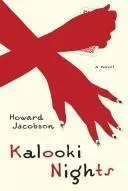
- Название:Kalooki Nights
- Автор:
- Издательство:Simon & Schuster
- Жанр:
- Год:2007
- ISBN:нет данных
- Рейтинг книги:5 / 5. Голосов: 1
-
Избранное:Добавить в избранное
- Отзывы:
-
Ваша оценка:
Kalooki Nights: краткое содержание, описание и аннотация
Предлагаем к чтению аннотацию, описание, краткое содержание или предисловие (зависит от того, что написал сам автор книги «Kalooki Nights»). Если вы не нашли необходимую информацию о книге — напишите в комментариях, мы постараемся отыскать её.
Spanning the decades between World War II and the present day, acclaimed author Howard Jacobson seamlessly weaves together a breath-takingly complex narrative of love, tragedy, redemption, and above all, remarkable humor. Deeply empathetic and audaciously funny, "Kalooki Nights" is a luminous story torn violently between the hope of restoring and rebuilding Jewish life, and the painful burden of memory and loss.
Kalooki Nights — читать онлайн бесплатно полную книгу (весь текст) целиком
Ниже представлен текст книги, разбитый по страницам. Система сохранения места последней прочитанной страницы, позволяет с удобством читать онлайн бесплатно книгу «Kalooki Nights», без необходимости каждый раз заново искать на чём Вы остановились. Поставьте закладку, и сможете в любой момент перейти на страницу, на которой закончили чтение.
Интервал:
Закладка:
And this applied to discussing the subject as well. So other than pull the same face as Asher, there wasn’t much of a response I was able to make. Germans ironing their underwear in front of you — ugh!
If Manny had wanted to confide in me about his brother, or about the girl, I didn’t exactly make it easy for him. It’s possible I was too similar to him to be much use as a friend. There I was, lost inside the refined unspokennesses of my own head at a time Manny might have wanted me to help him get out of his.
5
It finally fell out as it was bound to.
They were seen. The irony of it is that they were probably arguing at the time. As they thought, hid in hugger-mugger, each accusing the other of being a racist. Maybe even deciding to call it a day. No matter. They were seen and they were reported. Whether with diabolic intent, or with inside knowledge of the relative mental strengths of the Washinskys, whoever was the bearer of the news bore it to Mrs Washinsky first.
And Mrs Washinsky’s initial impulse was interesting. She decided to keep it from her husband.
‘This will kill him,’ she told Asher, who had always thought it would kill her .
They were sitting in the kitchen — as I conceive it, the debris of a dozen meals around them. Which you can be certain is me cartoonifying them again. The house was as one of the rubbish dumps of hell, but they were particular about food. They had to be. The Lord had ordered it. Merely to separate what was flaishikeh from what was milchikeh — not just the meat but the meat-associated from not just the dairy but the dairy-associated — occupied half a day. And that’s not to mention the amount of salting that went on. ‘I’d get nothing else done if I had to keep a home that was even ten per cent kosher,’ my mother used to say. By ‘nothing else ’, she was thinking of kalooki. And Channa Washinky kept a home 110 per cent kosher. Hence the rest of the house looking the way it did. Kosher ruled the roost. Kosher was king. Separating this from this — habdalah, keeping apart what didn’t belong together, the great act of discrimination at the centre of Jewish thought as well as Jewish diet — made it virtually impossible for the poor woman to lift a finger to anything else.
Couldn’t the fire-yekelte have helped? Couldn’t the fire-yekelte have done a bit of general cleaning up — making the beds, dusting the furniture, taking the towels off the bathroom floor — after she ’d swept the grate? She did, she tried, but a fire-yekelte, too, was a thing apart, and besides, this was not a good time to be bringing up the fire-yekelte.
Eerily, to Asher, his mother brought up nothing. She didn’t charge him. She didn’t ask how much of what she’d heard was true. She didn’t take him through the sacrifices both she and countless generations of Jewish mothers before her had made so that he, Asher, could with impunity find a Jewish woman who would in turn be mother to generations of Jews to come. She simply conjured her husband’s presence — his ghost in advance of his dying, as it were — and told Asher who would be held responsible.
It was good psychology. A boy mindful of the sacredness of his father’s life cannot prevaricate, cannot lie or make excuses, when the ghost-to-be is in the room. It was also — depending where you’re coming from — good morality. It asserted the primacy of his father’s life over everything. Asher would be a father himself one day, all being well. And would expect to receive the same respect from his son. Thus, without saying much, without even having recourse to the J-, let alone the G-word, did she play the continuity card.
She was a problem for the cartoonist, Channa Washinsky. I keep wanting to put her in a sheitel, the wig that every Orthodox Jewish wife is supposed to wear in order to prevent a man not her husband from lusting after her in his heart; but in all honesty, although they are usually easy enough to pick, on account of their making the wearer look tipsy and slow of wit, like some catatonic Netherlandish doll, I am not able to say whether she wore one or not. I want to make her pallid as well, but again without justification. I saw a photograph of her not long ago, and not only was her hair her own — it was too fine and lifeless to be anything else — but her complexion was halfway to being swarthy. Which shouldn’t be at all surprising, given Asher’s Levantine colouring. So why can’t I, why couldn’t I, see her as she was? Caricature is a methodology for telling a greater truth — that’s where I stand — but even I accept that what the artist caricatures, the ordinary eye must recognise as just. So why couldn’t I be just to Channa Washinsky? Why couldn’t I, to cite another example of my determination to distort her, not see that she had rather fine dark eyes, a little sleepy it is true, but poignant in their thwarted lustre? A sentence of Zoë’s returns to me. ‘Unless a woman is made up to the nines, dressed to kill, smelling like the perfume counter in Harrods and beckoning you with her little finger which must have gold on it, you don’t notice her — do you know that?’ ‘I noticed you,’ I reminded her. ‘Of course you noticed me — I was spotlit, fuckwit, standing on a stage, imitating Marlene Dietrich, in six-inch heels and a see-through gown that was slit to my vagina. . I’m speaking metaphorically.’ Point taken. I didn’t notice Manny’s mother because she wasn’t anybody I wanted to see. She wasn’t immodest.
But even in the matter of modesty I must try to be true to her. Modesty was not then what it is now. On the night before her wedding Channa Washinsky would certainly have immersed herself in the ritually cleansing waters of the mikveh. Even my sophisticated mother, Leonora Axelroth, about to be the wife of a notorious non-believer, visited the mikveh without telling him that one time. Thereafter, if she wasn’t sheiteled, it was unlikely that Channa Washinsky would have fussed about her body religiously at all. We were coming out of the dark ages in those days, not going back into them again. The laws of modesty have been around a long time, the obligation on a Jewish woman to make herself appear pleasant in a quiet way, to avoid brightly coloured or tight-fitting clothing, to choose her decorations with moderation and discretion, to be sure not to ‘make a tinkling with her feet’ (Isaiah 3:16). But the great love of the vividness of the world which Jews enjoy (the shadow side of our longing to be invisible) kept even the reticent tinkling. Kept . Past tense. Half a century later we are born again, and with born again comes clean again. Except that there ’s nothing more unclean, is there, nothing lewder, nothing more likely to lead the mind to thoughts of what is im modest, than the modesty consciousness of the fanatical. (See the little comic book on mikveh practices I published privately a few years ago — if you can find it.)
Whatever problem she poses for the cartoonist, Channa Washinsky posed even greater problems for her son. Not the least of these being that he was all at once smitten by her. It’s often at this time that men fall in love with their mothers all over again, whether or not their mothers make a tinkling with their feet. Maybe the mothers have been waiting patiently for this very opportunity. Wheel out the opposition and watch me chop her into tiny pieces. Sometimes they do it with exaggerated vitality, as my mother did. You bring another woman into your life and suddenly your mother is a Busby Berkeley Musical Extravaganza. But sometimes they do it by being exquisite in their reserve. This was Channa Washinsky’s method.
And it worked. Worked in the sense of making Asher appreciate her, anyway. He didn’t know she could be so self-possessed. He didn’t know that she could vest such authority in herself. As for working in the other sense. .
Читать дальшеИнтервал:
Закладка:
Похожие книги на «Kalooki Nights»
Представляем Вашему вниманию похожие книги на «Kalooki Nights» списком для выбора. Мы отобрали схожую по названию и смыслу литературу в надежде предоставить читателям больше вариантов отыскать новые, интересные, ещё непрочитанные произведения.












Обсуждение, отзывы о книге «Kalooki Nights» и просто собственные мнения читателей. Оставьте ваши комментарии, напишите, что Вы думаете о произведении, его смысле или главных героях. Укажите что конкретно понравилось, а что нет, и почему Вы так считаете.