Howard Jacobson - Kalooki Nights
Здесь есть возможность читать онлайн «Howard Jacobson - Kalooki Nights» весь текст электронной книги совершенно бесплатно (целиком полную версию без сокращений). В некоторых случаях можно слушать аудио, скачать через торрент в формате fb2 и присутствует краткое содержание. Год выпуска: 2007, Издательство: Simon & Schuster, Жанр: Современная проза, на английском языке. Описание произведения, (предисловие) а так же отзывы посетителей доступны на портале библиотеки ЛибКат.
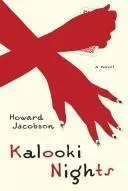
- Название:Kalooki Nights
- Автор:
- Издательство:Simon & Schuster
- Жанр:
- Год:2007
- ISBN:нет данных
- Рейтинг книги:5 / 5. Голосов: 1
-
Избранное:Добавить в избранное
- Отзывы:
-
Ваша оценка:
Kalooki Nights: краткое содержание, описание и аннотация
Предлагаем к чтению аннотацию, описание, краткое содержание или предисловие (зависит от того, что написал сам автор книги «Kalooki Nights»). Если вы не нашли необходимую информацию о книге — напишите в комментариях, мы постараемся отыскать её.
Spanning the decades between World War II and the present day, acclaimed author Howard Jacobson seamlessly weaves together a breath-takingly complex narrative of love, tragedy, redemption, and above all, remarkable humor. Deeply empathetic and audaciously funny, "Kalooki Nights" is a luminous story torn violently between the hope of restoring and rebuilding Jewish life, and the painful burden of memory and loss.
Kalooki Nights — читать онлайн бесплатно полную книгу (весь текст) целиком
Ниже представлен текст книги, разбитый по страницам. Система сохранения места последней прочитанной страницы, позволяет с удобством читать онлайн бесплатно книгу «Kalooki Nights», без необходимости каждый раз заново искать на чём Вы остановились. Поставьте закладку, и сможете в любой момент перейти на страницу, на которой закончили чтение.
Интервал:
Закладка:
‘I know that,’ she said, ‘but if they expect me to do that to them. .’
‘They’re Germans, what else do you expect them to expect?’
She was angry all over again with the Krystals, the Jewish family who had originally betrayed her, for thinking that pissing and shitting on Berliners was something she was cut out for. So we strolled down the Kurfurstenstrasse where prostitutes were said to work, in the hope of discovering a more noble version of the calling. But Zoë saw no one with whom, in her words, she ‘could empathise’.
I pointed out a handsome foxy-featured girl in fur coat and with feathers in her hair. Pure Kirchner, I thought. Her face a perfect triangle of bilious green.
‘Too tarty,’ Zoë said.
‘Zoë, she ’s a prostitute.’
‘Yes, well, I’m not.’
The next day we were in Theresienstadt, ‘the village which the Führer gave to the Jews’, and where more than thirty thousand, in their ingratitude, contrived to die. Zoë, as usual, more moved than I was. Anger was what I felt. Towering rage. I already knew some of Malvina Schalkova’s edgy, determined-to-be-domestic drawings of existence in Theresienstadt, the sort of thing I might have done had life treated me more cruelly, had I not had the leisure to cultivate sarcasm, and I knew some of the children’s drawings of the ghetto too, executions, nightmares, apprehensions, maybe, of the next stop, which was Auschwitz. So I was in a temper to be enraged before I arrived. I take unkindly to the slaughter of artists. Futile, I accept, to be kicking stone so many years after the event — unless you happened to think (as I did) that anything under a thousand years was no time at all. That, anyway, was what I did, while Zoë watered the unholy ground with her little fairy tears.
Only give me the chance, I thought, to shit and piss on a Berliner!
The day after that we were in the Jewish cemetry in Prague. ‘Such dear sweet tombs,’ Zoë said. ‘But how close together they are. Why do Jews enjoy being piled on top of one another like that?’
We went to a nearby café and talked about the golem. She wondered what it meant that Jewish myth demanded a monster in the image of Adam, life breathed into clay. Was it a metaphor for Jewish arrogance? Or was the golem no more than the ideal Shabbes-goy, primed to do the dirty work and ask no questions? I told her what I knew, which was that the golem had been fashioned in an hour of need to apprehend mischief-makers who left deceased Gentile babies in the ghetto with the aim of getting people to believe they were victims of a Jewish blood cult.
‘Like me,’ she said.
I looked bemused.
‘Like me. I’m the victim of a Jewish blood cult. They clasped me in their embrace, they sucked me dry of blood, then they cast me aside.’
‘There is no end,’ I said, ‘to Jewish wickedness.’
She touched my hand.
An hour later we were drinking with a couple of German Lutherans she ’d picked up in a bar. Theological students, one young, one of unfathomable age. Because they were gay and she was drunk she allowed them to take liberties with her, stroke her hair, squeeze her knee, then talk about the Holocaust. She signalled me to them with a sideways motion of her eyes. Jew boy. Be careful what you say. They couldn’t believe their luck. They’d suspected as much, of course. But this was not a part of the world where you could take such things for granted. Half the world, east of Prussia, looks Jewish, until it starts to look Chinese. One more Pilsner each and they were apologising to me. The one of unfathomable age wanted to kiss me.
‘It’s all right,’ I said.
‘Oh, Maxie, let him,’ Zoë urged me. She had turned tearful, but also high-coloured. She loved it here, at the crossroads of history. She was glimmering. When she took my wrist I could feel the excitement in her fingers. It was as though a great peace treaty were on the point of being signed, and her pen was going to do the signing.
So I let him — Lukas, he was called, Lukas Kirsche or Klein, a fellow with thin hair and bad skin — I let him kiss me.
How was I to know that the kiss would turn into a collapse? One minute I was offering him my cheek, the next he was in my arms, sobbing. Outside, revellers were passing, throwing their shadows on the walls of one of those interminably baroque edifices from whose windows some Czech or other had been throwing himself for five hundred years. Two men dressed as Mozart, in cocked hats and white tights, squeezed on to the end of our bench. In the back room of the bar a fiddler was playing Janáček.
Culture. Everything that wasn’t kalooki. I should have been delighted.
Zoë was looking at me with the German in my arms as though I were her child. ‘Oh, Maxie,’ she said.
Lukas, through his blubbering, had begun to make words I recognised. ‘Oh, oh. . I am the Auschwitz German,’ he said. And then, having at last said it, couldn’t stop. ‘I am the Auschwitz German. . oh. . oh. . I am the Auschwitz German.’
I wasn’t sure what to do. Pat him, of course, but after that what? Hand him over to the authorities?
At last, his friend — Dieter, was it, or Detlev, Deadleg? — said, ‘He wants you to forgive him.’
‘Why, what’s he done?’ I asked.
‘Not what has “he” done, what have “we” done.’
‘Ah, not that,’ I said. ‘Not more of that.’
I didn’t of course mean I thought it was time we put all ‘that’ behind us. I meant I didn’t want to hear any collective-guilt shit from their mouths. Didn’t want them getting off on it. Didn’t want them thinking they could be released from it in a bout of Pilsner-fuelled remorse. In my time, in my time, when I’m good and ready you’ll be released, until then sweat, you fuckers.
Zoë threw me one of her silent pleading looks. Be kind. Be kind, Maxie, be kind.
From Lukas, indistinguishable now from my shirt, more of the Auschwitz German.
‘Forgive him,’ Zoë said.
‘Zoë, on whose behalf would I be forgiving him? He ’s done nothing to me.’
‘It’s not “he”. .’ his friend said.
‘I know,’ I said, ‘it’s “you”.’
He smiled at me, a long, slow, sad smile, and touched my other shoulder.
‘In which case,’ I went on, ‘why aren’t you asking for my forgiveness?’
Not a wise remark, that. A second later I had the two of them crying into my neck. ‘We are the Auschwitz Germans. . oh, we are the Auschwitz Germans.’
‘Forgive them,’ Zoë said.
‘I can’t. I don’t have the right.’
‘Make the right,’ she said. ‘Make the right for me.’
‘You aren’t Jewish, Zoë. I can’t do it for you.’
‘I would have been Jewish if they’d have let me.’
‘But you’re not Jewish, however much you’d have liked to be. You’re not the injured party.’
Now she was crying openly. ‘I am so the injured party!’
I looked into her glistening goyisher eyes, into their unfathomable grey. Sometimes you have to make the leap. The gulf is so enormous that unless someone does something reckless it will never be bestrid or overarched.
‘I forgive you,’ I said. ‘I forgive you both.’
And didn’t add, ‘Consider it wholesale, two for the price of one.’
That night Zoë sobbed in my arms and told me she’d never been more moved by anything in her life.
2
It must be assumed that Dorothy, faced with a comparably emotional scene, felt the same.
Asher’s feeling are harder to imagine. Had it been his brother Manny in his shoes — but that’s an impossible hypothesis. Manny was not a lover. Whatever else in the way of genes and religion they had in common, they did not have in common the wherewithal to make a woman lose her heart. No point wondering whether Manny would have acted differently in the face of the same temptation: the same temptation could never have come Manny’s way. And our characters are as much determined by the temptations we are able to invite, as by the principles we are taught.
Читать дальшеИнтервал:
Закладка:
Похожие книги на «Kalooki Nights»
Представляем Вашему вниманию похожие книги на «Kalooki Nights» списком для выбора. Мы отобрали схожую по названию и смыслу литературу в надежде предоставить читателям больше вариантов отыскать новые, интересные, ещё непрочитанные произведения.





Обсуждение, отзывы о книге «Kalooki Nights» и просто собственные мнения читателей. Оставьте ваши комментарии, напишите, что Вы думаете о произведении, его смысле или главных героях. Укажите что конкретно понравилось, а что нет, и почему Вы так считаете.