Howard Jacobson - Kalooki Nights
Здесь есть возможность читать онлайн «Howard Jacobson - Kalooki Nights» весь текст электронной книги совершенно бесплатно (целиком полную версию без сокращений). В некоторых случаях можно слушать аудио, скачать через торрент в формате fb2 и присутствует краткое содержание. Год выпуска: 2007, Издательство: Simon & Schuster, Жанр: Современная проза, на английском языке. Описание произведения, (предисловие) а так же отзывы посетителей доступны на портале библиотеки ЛибКат.
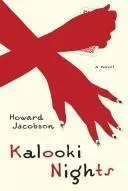
- Название:Kalooki Nights
- Автор:
- Издательство:Simon & Schuster
- Жанр:
- Год:2007
- ISBN:нет данных
- Рейтинг книги:5 / 5. Голосов: 1
-
Избранное:Добавить в избранное
- Отзывы:
-
Ваша оценка:
Kalooki Nights: краткое содержание, описание и аннотация
Предлагаем к чтению аннотацию, описание, краткое содержание или предисловие (зависит от того, что написал сам автор книги «Kalooki Nights»). Если вы не нашли необходимую информацию о книге — напишите в комментариях, мы постараемся отыскать её.
Spanning the decades between World War II and the present day, acclaimed author Howard Jacobson seamlessly weaves together a breath-takingly complex narrative of love, tragedy, redemption, and above all, remarkable humor. Deeply empathetic and audaciously funny, "Kalooki Nights" is a luminous story torn violently between the hope of restoring and rebuilding Jewish life, and the painful burden of memory and loss.
Kalooki Nights — читать онлайн бесплатно полную книгу (весь текст) целиком
Ниже представлен текст книги, разбитый по страницам. Система сохранения места последней прочитанной страницы, позволяет с удобством читать онлайн бесплатно книгу «Kalooki Nights», без необходимости каждый раз заново искать на чём Вы остановились. Поставьте закладку, и сможете в любой момент перейти на страницу, на которой закончили чтение.
Интервал:
Закладка:
The fucked-over Jew — who was he? We don’t remember any such animal. And anyone who does won’t want to see him commemorated in a comic.
We’re a country, we’re a nation again. We don’t do funny and we don’t do fucked.
As for those who didn’t care for Zionism rampant, whose world collapsed if the Jews weren’t at the bottom of it, well, they too were having trouble remembering any fucked-over Jews. A fortnight of ascendancy and the Jews were back at the top of the pile, once again pulling all the strings that mattered.
Embitterment was out of style. No one wanted to know. Not even the Jewish Chronicle liked it. Nor, judging from the silence, did my own mother.
I did, though, receive a card from Tsedraiter Ike, addressing me as ‘My Dear Nephew Mendel’, and accusing me of nestbeschmutzing — not just doing my dirty washing in public, but befouling the nest in which I’d been raised. ‘I simply ask you to consider,’ it went on in letters only a spider which had fallen in an inkwell could have formed, ‘who this is likely to help. Us, or them?’
Well, what else should I have expected? Adorno famously said that, after the Holocaust, poetry wasn’t a good idea. He never thought there was need to include cartoons in that proscription.
Now, of course, there is no sooner a catastrophe than there’s a comic strip to tell of it. Everything allowable so long as it’s tremulous. Cartoon? Fine, just keep the cartoonery out. Just keep it sweet, and substitute a watercolour wash for any angry lines of satire. Wan is how they like it today, pastel-genteel, or comical in the cute sense, faux naif — look, I can barely draw at all! — with an eye to the children’s market, which is where the bulk of the buyers are.
Having watercoloured to order myself in recent years, I know whereof I speak. Kosovo, Afghanistan, Rwanda — when their hour came I did them all. Under an assumed name, of course. In fact under two. Alice and Thomas Christiansen, Alice being an anglicisation of. . but I’ll come to Alice when the time is right, and Christiansen being what it sounded. The nearest I have known to what the verdant call a partnership, Alice looking after the story, I the watercolour wash, or the heart-on-sleeve, don’t disturb-the-horses draughtsmanship. I am not entirely ashamed of what we produced. They go on selling by virtue of being pretty and unthreatening, but not so pretty as to hurt my own heart or misdirect the hearts of others. There’s even a sense (I’m quoting Alice now) in which they more honestly reflected the melancholy of my nature, the artist I might have been had this or that turned out differently. Had I been born to goyim, for example. But it’s hard to abjure your first ambitions, whatever knocks they take. I have gone on polishing Five Thousand Years of Bitterness for my own satisfaction, the new fifty-first chapter of which, ‘The Jew Royally Fucked’, I like to think contains some of the best of my mature work, highly personal much of it, highly symbolical, and, technically, highly sophisticated, as for example, to speak merely of adroitness with the pencil, my sketch of Errol Tobias’s devil fingers, and the damage they wrought to poor Manny’s self-esteem. A far cry in subject matter from Tom of Finland, but indicative of the mastery I have achieved at last, I fancy, of that explosive tension between the glans penis and everything the rabbis teach of chastity.
In the next panel a beautiful woman of Aryan complexion, with meteors crashing in her eyes.
6
In through the gate, and out through the chimney.
Buchenwald saying
‘Frau Koch. .?’
She shook her head. ‘Gnädige Frau, to you.’
‘Gnädige Frau. .?’
He had been brought to her. He did not know why. Perhaps she had heard he was an illustrator and wanted murals after all.
‘Who told you,’ she said, ‘that you could look at me?’
He had not dared to lift his head since they came for him. ‘I am not looking at you, Gnädige Frau.’
‘Not now. Before. When I was on my horse.’
Should he tell her? Should he chance everything and tell her that her beauty was more than he could bear and that like Lot’s wife on pain of petrification or worse, he had no choice but to turn and look, and let the fireballs in her eyes destroy him. Or should he deny he had ever raised his face to her? Which was the greater rudeness? To know that, he needed to know her. Otherwise it was all on the roll of the dice. And it might have been decided anyway. Look at her, not look at her, what difference if she already meant to skin him where he stood?
She takes his silence for a confession, and laughs a little laugh. ‘So tell me about yourself. .’
What will he tell her? That he is an artist from Prague or Vienna. That his mother is/was a free-thinking, rationalistic, bohemian Jew from Kovna or Odessa, his father is/was a God-fearing Kabbalistic solicitor from a village outside Warsaw or Budapest. She will be interested in the subtle differences, Frau Koch, will she not? ‘Tell me what it means to be Kabbalistic, Mendel. My husband the Commandant and I have always been so curious about your holy books and your little Jewish ways.’
So does he only want her to mother him, after all? He is disappointed in himself. Still without raising his face to hers, he drops to his knees and seizes her hand, putting it fervently to his lips.
That’s when he feels the kiss of the whip she carries. The scourge.
‘A Jew cannot touch the flesh of a member of the master race,’ she tells him.
‘No, Gnädige Frau.’
Again she strikes him.
Mendel’s heart soars. I am her equal, he thinks. We are in this together.
She orders him to undress.
‘Yes, Gnädige Frau.’
She is wearing a glove now, and with her glove she reaches down and takes contemptuous hold of him. He understands what this means. Just as he cannot touch the flesh of a member of the master race, so the flesh of the master race cannot touch the member of a Jew.
Disdained, it rises.
And that is that, for one day.
Back on their bunk, Pinchas wonders what has happened. ‘I am her little Yid,’ Mendel says.
‘For how long?’
‘What does it matter? For as long as the hobby amuses her.’
‘And when it doesn’t, what will she do with you?’
Mendel shrugged. ‘Crush me between her teeth,’ he said. ‘If I am lucky.’
‘So you are an artist,’ she says the next day, for yes, there is a next day.
Naked, pale in his nakedness, he nods.
‘And what sort of artist are you?’
He draws, he tells her, to reconcile his two backgrounds, his rationalist mother and his God-smitten father. Drawing is itself, he explains, a godlike act — making something out of nothing, dispelling the darkness of the original void, letting there be light, and in that sense, yes, can be said to usurp God’s function. But the mother in him scorns such nonsense, so he draws satirically, to spite himself. But as a satiric artist is a contradiction — at one and the same time making something of nothing and nothing of something — you could say it perpetuates the ambiguity of his situation.
He hopes she will love him for these paradoxes, but also beat him for them — another contradiction.
It is wonderful standing without his clothes, discussing art with Ilse Koch.
‘I have brought you pencils,’ she says, the day following, ‘so that you may draw me.’
‘Gnädige Frau, if I am to draw you I will have to look at you.’
‘I will remove a garment a day,’ she said. ‘You will look only at the part I have exposed. Some days I will put a garment back on. You will never know whether I am going to take a garment off or put one on. Nor will you ever see all of me naked altogether, as I now see you. If you try to assemble me naked in your imagination I will know of it because this will rise. And every time it rises I will beat it, Jew. Do you understand?’
Читать дальшеИнтервал:
Закладка:
Похожие книги на «Kalooki Nights»
Представляем Вашему вниманию похожие книги на «Kalooki Nights» списком для выбора. Мы отобрали схожую по названию и смыслу литературу в надежде предоставить читателям больше вариантов отыскать новые, интересные, ещё непрочитанные произведения.




Обсуждение, отзывы о книге «Kalooki Nights» и просто собственные мнения читателей. Оставьте ваши комментарии, напишите, что Вы думаете о произведении, его смысле или главных героях. Укажите что конкретно понравилось, а что нет, и почему Вы так считаете.