Howard Jacobson - Kalooki Nights
Здесь есть возможность читать онлайн «Howard Jacobson - Kalooki Nights» весь текст электронной книги совершенно бесплатно (целиком полную версию без сокращений). В некоторых случаях можно слушать аудио, скачать через торрент в формате fb2 и присутствует краткое содержание. Год выпуска: 2007, Издательство: Simon & Schuster, Жанр: Современная проза, на английском языке. Описание произведения, (предисловие) а так же отзывы посетителей доступны на портале библиотеки ЛибКат.
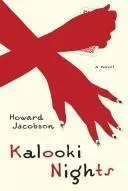
- Название:Kalooki Nights
- Автор:
- Издательство:Simon & Schuster
- Жанр:
- Год:2007
- ISBN:нет данных
- Рейтинг книги:5 / 5. Голосов: 1
-
Избранное:Добавить в избранное
- Отзывы:
-
Ваша оценка:
Kalooki Nights: краткое содержание, описание и аннотация
Предлагаем к чтению аннотацию, описание, краткое содержание или предисловие (зависит от того, что написал сам автор книги «Kalooki Nights»). Если вы не нашли необходимую информацию о книге — напишите в комментариях, мы постараемся отыскать её.
Spanning the decades between World War II and the present day, acclaimed author Howard Jacobson seamlessly weaves together a breath-takingly complex narrative of love, tragedy, redemption, and above all, remarkable humor. Deeply empathetic and audaciously funny, "Kalooki Nights" is a luminous story torn violently between the hope of restoring and rebuilding Jewish life, and the painful burden of memory and loss.
Kalooki Nights — читать онлайн бесплатно полную книгу (весь текст) целиком
Ниже представлен текст книги, разбитый по страницам. Система сохранения места последней прочитанной страницы, позволяет с удобством читать онлайн бесплатно книгу «Kalooki Nights», без необходимости каждый раз заново искать на чём Вы остановились. Поставьте закладку, и сможете в любой момент перейти на страницу, на которой закончили чтение.
Интервал:
Закладка:
But then he was a dying man.
3
Was it to upset me that Chloë kept nagging for a Mercedes? I don’t mean for herself. I mean for us. She, me, her mother — if not exactly in that order. A family car.
I was in my middle twenties at the time, barely out of art school. Not only was I not making enough money from my cartoons at the time, I didn’t think a Mercedes was seemly for someone my age.
‘Too flash,’ I told her.
‘You mean too foreign.’
‘No, I don’t. I mean too bourgeois.’
‘There you are, you’ve agreed with me. Too foreign. Too bürgerlich .’
‘Nothing to do with foreign. We could have a Renault.’
‘So we can have French but not German.’
‘What’s Germany got to do with it, Chloë?’
‘With “it”, nothing. With you, everything. Why can’t you let the subject drop, Maxie?’
‘Let the subject drop? I never mention the subject.’
‘Five Thousand Years of Bitterness, Five Thousand Years of Bitterness. .’
‘That’s not exclusively Germany.’
‘No, just the last five hundred years of it.’
So to prove Germany wasn’t a problem I relented, or she relented, and we bought a Volkswagen Beetle.
Had a Mercedes been a problem for me on German grounds, then a Volkswagen would surely have been a greater one. Linguistics, partly. But also something Errol Tobias had told me once when we were having to lower the tennis net across the street to allow a Volkswagen to pass. ‘If you look at the hubcaps on a Volkswagen,’ he whispered from the side of his face, ‘you’ll see that the VW makes a swastika.’ Since we had a Volkswagen there, waiting for the net to go down, I was well positioned to check.
‘No it doesn’t,’ I said. All I could see was VW.
‘It’s got to be travelling, shmuck.’
So I waited for it to move off. Nothing. Just VW.
‘No, it’s got to be travelling at exactly fifteen miles per hour. Fourteen miles per hour, you won’t see it. Sixteen miles per hour, you won’t see it. It’s got to be fifteen. German efficiency for you.’
I believed him. But it wasn’t easy finding a Volkswagen travelling at exactly fifteen miles per hour. Fifteen miles per hour was a damnably smart speed to pick. Too slow for the main road, too fast for our street. Those Nazis! You have to hand it to them.
But I have managed to find a Volkswagen doing fifteen miles per hour. Once. In Berlin. And the V and the W did embrace into a swastika. I think.
When I made the mistake of mentioning this phenomenon to Chloë she said, ‘Right, we’re having one.’
As I understood it, the Volk in Volkswagen didn’t carry an umlaut. Völkchen and Völkerschaft , yes. Volkswagen, no. But Chloë inserted one regardless. To be precise about it, she inserted two, yodelling the spaces between the v and the l , and then the l and the k for good measure, as though a double valley of umlauting divided them. On occasions she even threw one over the a in wagen, which made three umlauts in all.
Because she knew it annoyed me, we carted her mother around in the Beetle whenever we were up with her or she was down with us; and because she knew it annoyed me, her mother sang cod-German songs in the back seat. No sooner did I put us into top gear than Chloë would wind open the little aperture in the roof, which was the signal for her mother to begin. ‘I Love to Go a Wandering’ was her favourite, especially the line about ‘a knapsack on my back’ which she interpreted as ‘ein k-näpsäck ön mein bërk’. Carols, too, she liked, in particular ‘ O Tannenbaum ’ and ‘ Stille Nacht ’, employing German noises, nothing more than gargles, where she didn’t know or couldn’t remember the words.
‘Christ the what-is-it again, darling?’ I remember her asking Chloë one clammy afternoon as we powered through the Cheshire dales.
‘ Der Retter , Mother.’
‘ Retter meaning?’
‘Saviour, Mother.’
‘Shh — not in front of Maxie, darling’ — this in a stage whisper— ‘it might upset his sensibilities. . Christ, the saviour was bororn, Chri-ist the saviour was born . . Do you people accept the idea of a saviour, Max, or are you above saving?’
‘Beyond saving, more like,’ I told her.
‘Ah, well, ho-hum, what you can’t save you can’t have, as the actress said to the archbishop.’
‘Mother, don’t be vulgar!’
‘What — what have I done?’
‘Actresses and archbishops! Act your age!’
‘All right, as the Jewess said to the chief rabbi, then.’
While all along I sat with the dinky volksie steering wheel clamped in my white clenched fists, racking my brain for some county that had the word mutilation or perdition in it, up or down the little wooden hill to which etc. Then it was home, James, and don’t spare the horsepower, followed by ‘I’ll be saying auf Wiedersehen to you now — auf Wiedersehen !’
To show there were no hard feelings, Chloë’s mother bought me a toy rabbi to hang in the rear window of my Völökswägen. What she thought I’d like about it was the way it nodded its head when the car was in motion, just like ‘one of those Hassocks you sometimes see mumbling to Mecca on a train’.
‘I think you mean Hassids,’ I told her. ‘A hassock’s a hairy cushion.’
‘Same difference, darling.
‘And they’re not looking towards Mecca.’
She rolled her eyes at her daughter. ‘So touchy your husband’s people, Chlo. You can’t even buy them a present without their getting aerated.’
I don’t know where she bought the rabbi. She travelled a bit when she could tear herself away from my company, so it was possible she had picked it up in some colony of ex-Nazis hanging out in Argentina. Or a friend could have found it for her, thinking of me, the sheeny son-in-law, in a corner shop in one of the more Orthodox suburbs of Jerusalem. Meer-sh’arim maybe. You can never tell with tat; bad taste narrows the gap between the sentimental way you see yourself, and the scorn with which others see you. Half of what’s for sale in Israel you’d consider anti-Semitic if you saw it anywhere else.
The one thing I knew for sure was that neither she nor her daughter had made it. They lacked both the patience and the aptitude for handicrafts. It’s also very unlikely, wherever Chloë’s mother came by the nodding rabbi, that she’d have shelled out much for it. ‘I’m as tight as you people are,’ she winked at me one day. ‘Only I’m a tightey-whitey, whereas you’re. .’
She couldn’t think of anything.
‘A meany-sheeny,’ I came back, quick as a flash.
How did she do that? How was she able to lure me into being rude about myself? It was an astonishing gift. She could make you say the vilest things in the hope of saying them before she did.
But as far as the rabbi goes, wherever she got it and however much it cost was finally irrelevant. It was the thought that counted.
4
And among the thoughts it occasioned was this one: it looked like Manny.
A cruel thing to say, as it was a cruel thought to have, but that was the truth of it — the toy rabbi reminded me of Manny, rocking and rolling to Elohim in my Völökswägen’s rear-view mirror.
I wasn’t, you see, much better than my mother-in-law when it came to respect for the holy.
That was my only reminder of Manny in those day — the days before he broke all the Ten Commandments in the act of breaking one — the only reason I ever had to think of him. What had become of him I didn’t know. Not something I enquired about on my occasional visits to Crumpsall Park — whether he’d left home, whether he was still studying at the yeshiva, whether he had indeed become a rabbi, or whether he was tramping the watery pavements like the man with paper in his shoes who popped up all over Manchester, muttering and looking skywards — at one time a famous rabbi himself, people said. Had I seen him in the street I would have stopped to talk to him, of course. Had I bumped into either of his parents on my visits home, or even Asher — though Asher had become a sort of ghost in my imagination by this time — I’d have asked after him and sent him my best wishes. But they didn’t leave the house much, Asher never materialised, and I didn’t go looking.
Читать дальшеИнтервал:
Закладка:
Похожие книги на «Kalooki Nights»
Представляем Вашему вниманию похожие книги на «Kalooki Nights» списком для выбора. Мы отобрали схожую по названию и смыслу литературу в надежде предоставить читателям больше вариантов отыскать новые, интересные, ещё непрочитанные произведения.






Обсуждение, отзывы о книге «Kalooki Nights» и просто собственные мнения читателей. Оставьте ваши комментарии, напишите, что Вы думаете о произведении, его смысле или главных героях. Укажите что конкретно понравилось, а что нет, и почему Вы так считаете.