Howard Jacobson - Kalooki Nights
Здесь есть возможность читать онлайн «Howard Jacobson - Kalooki Nights» весь текст электронной книги совершенно бесплатно (целиком полную версию без сокращений). В некоторых случаях можно слушать аудио, скачать через торрент в формате fb2 и присутствует краткое содержание. Год выпуска: 2007, Издательство: Simon & Schuster, Жанр: Современная проза, на английском языке. Описание произведения, (предисловие) а так же отзывы посетителей доступны на портале библиотеки ЛибКат.
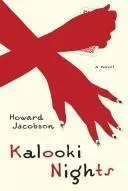
- Название:Kalooki Nights
- Автор:
- Издательство:Simon & Schuster
- Жанр:
- Год:2007
- ISBN:нет данных
- Рейтинг книги:5 / 5. Голосов: 1
-
Избранное:Добавить в избранное
- Отзывы:
-
Ваша оценка:
Kalooki Nights: краткое содержание, описание и аннотация
Предлагаем к чтению аннотацию, описание, краткое содержание или предисловие (зависит от того, что написал сам автор книги «Kalooki Nights»). Если вы не нашли необходимую информацию о книге — напишите в комментариях, мы постараемся отыскать её.
Spanning the decades between World War II and the present day, acclaimed author Howard Jacobson seamlessly weaves together a breath-takingly complex narrative of love, tragedy, redemption, and above all, remarkable humor. Deeply empathetic and audaciously funny, "Kalooki Nights" is a luminous story torn violently between the hope of restoring and rebuilding Jewish life, and the painful burden of memory and loss.
Kalooki Nights — читать онлайн бесплатно полную книгу (весь текст) целиком
Ниже представлен текст книги, разбитый по страницам. Система сохранения места последней прочитанной страницы, позволяет с удобством читать онлайн бесплатно книгу «Kalooki Nights», без необходимости каждый раз заново искать на чём Вы остановились. Поставьте закладку, и сможете в любой момент перейти на страницу, на которой закончили чтение.
Интервал:
Закладка:
And people notice you when you look like that. Especially people from cold countries.
Home was where she was taking him, but not to meet her mother. It had been decided by the interested parties, at least those of them who were in the know, that for Asher to meet her mother was, for the time being at any rate, inappropriate on account of her mother being the person who cleaned out Asher’s mother’s grate, in which capacity he had already met her. So the daughter was taking him home to meet the father. And since the easiest time to arrange meeting the father but not the mother was Shabbes morning, when Dorothy knew the father would be in and the mother would be out, they set a Shabbes morning for it. Odd for them both, odd for the father too, sitting around the fire in Higher Blackley making small talk, while all along their minds must have been on that other fire in Crumpsall Park, tended by one to whom there was no good reason not to allude, yet to whom nobody felt they could.
That Asher’s mind would also have been on Elohim, at this moment receiving prayers in Asher’s shul, goes without saying.
‘Asher will be missing synagogue in order to meet you,’ Dorothy had explained to her father in advance.
‘And your father, will he be missing the pub to meet me?’ Asher knew better than to ask. But the question would certainly have occurred to him, alcohol being almost as big a stumbling block between Jews and Gentiles as the resurrection.
(‘Put the glasses away, he doesn’t drink,’ I remember Chloë hissing to her mother.
‘What, not ever?’
‘Not ever, Mother. None of them do.’
‘Afraid that they’ll forget which pocket they keep their wallet in, is that it?’
‘Shush, Mother! Promise me you’ll shush.’ But laughing as she said it.
‘Crack you a bottle of something, or will I be having fun on my ownio?’ was how Chloë’s mother greeted me, notwithstanding her daughter’s pantomime objurations.
So I asked if she had a Château Latour 1949 already open — which started our relationship off on the wrong foot. Unless what started our relationship off on the wrong foot was my adding that if she didn’t have a Château Latour, a bottle of communion wine would do as well — any vintage that took her fancy, as long as it was genuinely the blood of You Know Who.)
It was a Saturday morning, of course, for Asher, whereas my introduction into Chloë’s poisonous little family occurred on an evening in the week, but even so Asher was always going to receive a more sensitive welcome into Dorothy’s family. They were charming people. They deferred to what was unfamiliar. On the table tea and toast and little coconut cakes, with no cream or butter in sight, Dorothy and her father having heard that Jews had to be careful when and where and with what and with whom they ate dairy.
Among the many domestic details that struck Asher as alien and not at all what he had expected was the wallpaper, which was in a better condition than his parents’ wallpaper, and the carpets, which were far less threadbare than his parents’ carpets, and the bookcases, which contained far more books of a non-religious nature than his parents possessed, and the record collection which was more substantial in the Brahms and Beethoven department than his parents’ collection, which wouldn’t have been difficult as his parents didn’t have any Brahms or Beethoven, only Mantovani and Sophie Tucker; but above all he was struck by the atmosphere of cheerful sufficiency in shortage, of which there was not a semblance where he lived, a consciousness of material deficiency seeping through his parents’ house like damp.
Dorothy held on to him, not knowing what he thought. Was he missing sanctity? Did he think her family morally trivial for keeping a clean house? Did he judge them as wanting in spiritual values?
She could never have guessed that Asher would be confused by the discovery that the woman who made the fires for his parents on a Shabbes kept a cleaner and pleasanter home than they did. What else, when all was said and done, would he have expected? Wasn’t that precisely why her mother was employed — to do for the Washinskys a little of what she did for her own family? That the quid pro quo of fire-yekelte-ing entailed a deeper hierarchical gulf between the chosen and the not, would no more have occurred to her than it did to Elvis Presley, compliantly skivvying for the Fruchters in Memphis.
(And perhaps would not have occurred to me were I not the son of a father who held fire-yekelte-ing to be a species of social condescension, akin to slavery, of which every Jew should be ashamed.)
Dorothy saw Asher heat up the moment her father addressed him. A shy boy. She loved him for that. Well mannered. He bowed slightly when her father offered him his hand. And she thought she saw a movement suggestive of his wanting to cover his head. Respect. She loved him for that too.
As for Asher, he was surprised and even a little daunted by the fastidious manners of Dorothy’s father, the precise way he greeted him, the elaborately courteous, not to say old-fashioned gestures with which he ushered Asher into a chair and made a ceremony — no, more than a ceremony, a demonstration, as though it was a skill he had only recently acquired — of tea.
But what struck him even more forcibly than this was the fact that Dorothy’s father was foreign. To be more precise, German.
End of the Washinskys’ world.
SIX
Doctor: How’s the world of funny books?
Cartoonist/patient: They’re actually not funny anymore.
People who read comics now want drama and adventure more than laughs.
Steven T. Seagle & Teddy Christiansen, It’s a Bird1
At the time I would not have seen the relevance of the enquiry, but it must have been hereabouts in our Jewed-over adolescence that Manny, the young Manny, asked me, ‘When you see German script, what do you feel?’
The question came without any context or preparation. But that itself was not unusual. Most of what Manny said he said out of the blue.
‘Queasy,’ I told him. ‘The same way I feel about the Katzenjammer Kids. Queasy and depressed. And the paper it’s always printed on makes me feel queasy and depressed as well. And the covers remind me of coffins. When I see a German book I see death. Next question.’
‘No, you haven’t properly answered this one yet. I wasn’t asking you about German books. I asked how you feel when you see German writing in a letter. Not the Gothic script, just the handwriting, just the words.’
I thought about it. ‘I’ve never seen German writing in a letter,’ I answered. ‘I don’t correspond with Germans. I don’t have German pen pals. Why are you asking?’
He was in his swimming phase. His arms thrashing as we walked along the street, his cheeks puffed. Turning his head from side to side. And practising holding his breath under water. I’d never met anybody so interested in seeing if he could live without breathing. So I had to hang on for a reply until he came back up. ‘No reason,’ he said at last. Which seemed to me not worth the wait.
‘Course there’s a reason. You wouldn’t have asked otherwise. Are you getting letters from a German? Who?’
Who’s the girl, I would have asked anybody else. Who’s the lucky Fräulein? But you didn’t make those jokes with Manny. Besides, what chance was there of him of all people corresponding with a German of either sex. All schoolkids had pen pals then. Something your French or Spanish teacher organised. I had a Manuel in Barcelona and a Julie in Aix-les-Bains whose letters arrived liked gifts of the heart in envelopes lined with susurrating tissue paper. But Manny was at a school for Jews. I couldn’t see his teachers opening up lines of communication with Hildegarde in Baden-Baden.
Читать дальшеИнтервал:
Закладка:
Похожие книги на «Kalooki Nights»
Представляем Вашему вниманию похожие книги на «Kalooki Nights» списком для выбора. Мы отобрали схожую по названию и смыслу литературу в надежде предоставить читателям больше вариантов отыскать новые, интересные, ещё непрочитанные произведения.









Обсуждение, отзывы о книге «Kalooki Nights» и просто собственные мнения читателей. Оставьте ваши комментарии, напишите, что Вы думаете о произведении, его смысле или главных героях. Укажите что конкретно понравилось, а что нет, и почему Вы так считаете.