Howard Jacobson - Kalooki Nights
Здесь есть возможность читать онлайн «Howard Jacobson - Kalooki Nights» весь текст электронной книги совершенно бесплатно (целиком полную версию без сокращений). В некоторых случаях можно слушать аудио, скачать через торрент в формате fb2 и присутствует краткое содержание. Год выпуска: 2007, Издательство: Simon & Schuster, Жанр: Современная проза, на английском языке. Описание произведения, (предисловие) а так же отзывы посетителей доступны на портале библиотеки ЛибКат.
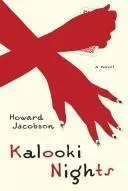
- Название:Kalooki Nights
- Автор:
- Издательство:Simon & Schuster
- Жанр:
- Год:2007
- ISBN:нет данных
- Рейтинг книги:5 / 5. Голосов: 1
-
Избранное:Добавить в избранное
- Отзывы:
-
Ваша оценка:
Kalooki Nights: краткое содержание, описание и аннотация
Предлагаем к чтению аннотацию, описание, краткое содержание или предисловие (зависит от того, что написал сам автор книги «Kalooki Nights»). Если вы не нашли необходимую информацию о книге — напишите в комментариях, мы постараемся отыскать её.
Spanning the decades between World War II and the present day, acclaimed author Howard Jacobson seamlessly weaves together a breath-takingly complex narrative of love, tragedy, redemption, and above all, remarkable humor. Deeply empathetic and audaciously funny, "Kalooki Nights" is a luminous story torn violently between the hope of restoring and rebuilding Jewish life, and the painful burden of memory and loss.
Kalooki Nights — читать онлайн бесплатно полную книгу (весь текст) целиком
Ниже представлен текст книги, разбитый по страницам. Система сохранения места последней прочитанной страницы, позволяет с удобством читать онлайн бесплатно книгу «Kalooki Nights», без необходимости каждый раз заново искать на чём Вы остановились. Поставьте закладку, и сможете в любой момент перейти на страницу, на которой закончили чтение.
Интервал:
Закладка:
‘Just in case he cared.’
‘Without telling me?’
‘If I’d told you, you’d have stopped me.’
‘So you went behind my back?’
‘Jack, you were out.’
‘You don’t think I’d have stayed in had I known?’
‘In the circumstances, no, I don’t think you would have.’
‘The circumstances being the arming of Israelis?’
‘Jack, what we raised wouldn’t have bought a bullet.’
‘Even half a bullet can kill,’ he said, which made so little sense that I wanted to come running down the stairs and tell him so.
The next day he asked me if I was all right. He wanted to be certain that I understood he’d done it — that’s to say not done it — for my benefit. I would thank him when I was older. He knew people who were still ashamed of themselves, thirty, forty years after the event, for having acceded to a worn-out ritual in which they had never for a moment believed. When he’d asked them why they’d allowed themselves to be bar mitzvah’d, they all answered the same way — to please their parents. He didn’t want to place that burden on my shoulders. ‘You know how you’ll please me best, Maxie? By thinking for yourself.’
After which I could hardly say, could I, that for myself I was thinking I’d have liked a bar mitzvah.
He had his own doubts, anyway. Over the years I discovered that the family had put pressure on him to change his mind, both Big and Little Ike making separate attempts to shake his resolution, and even one or two of the comrades saying that he was giving religion more importance in the breach than it would ever have enjoyed in the observance. Isn’t that the great thing about Jews, Jack — that they can make room to accommodate religion without really meaning it?
Though my mother knew better than to pressure him, the gala kalooki night was a bitter reproach. ‘He’s eaten up by it,’ my mother called to me one evening from her room. She was doing her hair for cards, I was sitting on my bed, doodling Jews in a sketchbook.
‘Eaten up because you didn’t tell him?’
‘No, not eaten up by that, eaten up by you. In case he’s done the wrong thing.’
I understood why she was telling me this. She wanted me to make it right with him. Show him I didn’t mind. Show him I was undamaged.
So I did. I skipped about the house whenever I thought there was a chance he might see me, like a child out of Wordsworth, oblivious to care and wearing an inane grin of what I took to be unrepining heathenishness. The boy who was happy to be un-bar mitzvah’d.
Hard to believe it worked. If anything I probably made things worse. By not giving me a bar mitzvah he must have thought he’d robbed me of my senses.
But it was the best I could do. Greater intimacy was beyond us. And had we achieved it I probably would have dissolved into tears. As it was, the idea that he was eaten up by what he’d done — his own deed become a devouring creature, like something out of the Inferno — distressed me unutterably.
I was sorry to my soul for him. Jew, Jew, Jew — he was sick and tired of the whole business. It was like an illness which he thought he’d beaten suddenly eating at his bones again. And he didn’t, to my eyes, look man enough for another fight.
As for me, it was as I’d feared: I became an oddity. The un-bar mitzvah boy. It was unheard of. Everyone had had, or was expected to have, a bar mitzvah, including Errol Tobias, though in his case the party had not been the black-tie affair that even the poorest families favoured, but was held at his home, among the washbasins and hairdryers, and without the services of an outside kosher caterer. What is more — though every Jewish boy knows this is the one thing above all others you must eschew on your bar mitzvah — he invited the inner circle of his onanist association up to his room for their own gala event long before the other guests had left. For which I then expected him, and frankly expect him still, to burn in hell.
A funny thing about Errol, though. For all that his mind was a sewer, he was highly principled, and highly educated in matters of principle, where you would least have expected principle from him. No Jew could change his name or faith, for example, without Errol knowing about it and — in so far as schoolyard chit-chat could be called exposure — exposing him. I don’t just mean the Jew at the bottom of our street who went from Friedlander to Flanders overnight; or Montague Burton, tailor to shlemiels, who began his life as Meshe Osinsky; or even the Hollywood Jews whose original monikers everybody knew — Bernie Schwartz become Tony Curtis, Shirley Schrift preferring to be Shelley Winters, Isadore Demsky transmogrified, with the help of a goyisher cleft in his chin, into Kirk Douglas; not to mention Lilian Marks who, by that Diaghilevian changement de pieds for which she was renowned, became Alicia Markova — no, Errol had things to say about Heinrich Heine’s defections as well, and Gustav Mahler’s, and Bernard Berenson’s. When the school awarded me the third-form art prize in the shape of a leather-bound Palgrave’s Golden Treasury languidly illustrated by Robert Anning Bell, Errol put pressure on me to give it back. ‘They mean it as an insult, Max,’ he told me.
‘I grant you the drawings are a bit soppy,’ I said, ‘but an insult !’
‘I’m not talking about the illustrations, you putz. I’m talking about Palgrave. Did you know his father was a Jew? Francis Ephraim Cohen. Met a woman called Palgrave, got baptised into the Church of England, married her, and changed his name to hers. Ten years later he’s Sir Francis Palgrave. Play your cards right, Maxie, and it could happen to you. You’re already halfway there.’
‘By accepting this prize? Don’t be a meshuggener. Anyway, you can’t blame this Palgrave for what his father did. It’s not his fault he was born a Palgrave.’
‘Yes it is, he could have changed his name back.’
‘Wouldn’t have sounded any good, though, would it — Ephraim Cohen’s Golden Treasury of the Best Songs and Lyrical Poems in the English Language ?’
‘That’s because they’ve brainwashed you into believing a man called Ephraim Cohen can’t be a reliable authority on the English lyric.’
A fair point, I thought. But, ‘I’m still keeping it,’ I said.
Which, I later discovered, Errol was going around saying was only to be expected from someone whose father wouldn’t let him have a bar mitzvah.
As for Manny, his bar mitzvah was still to come — some dark Byzantine event in an underground synagogue I’d never heard of, was how I imagined it would be, Manny folded in shawls, invisible among the beards of holy men, and no dancing afterwards, or that ghastly men-only Hassidic jigging behind screens erected to stop the women seeing what would arouse them into sexual hysteria if they did — a whirling blur of humpbacked scholars in their long black coats making old-country Jew Jew Hari Krishna circles around the bar mitzvah boy.
Manny said nothing to me about the fact that my thirteenth birthday had been and gone unheralded. Tact? Or disgust beyond expression? As it turned out, neither. While we were being gossiped about all over town and I was having to make do with an unwanted pair of boxing gloves and a clandestine tallis as my only presents, the Washinskys were having troubles of their own. Asher. Asher and the fire-yekelte.
4
Zoë, my Gentile second wife, a woman who was nothing if not humorous, once told me a joke just after lovemaking.
‘How many Jews can you get into a Volkswagen Beetle?’ she asked.
‘None,’ I said. ‘No Jew would get into a Volkswagen Beetle.’
I was lying. I had even owned a Volkswagen Beetle myself once, at the behest of Chloë. But now didn’t seem the time to mention that.
Читать дальшеИнтервал:
Закладка:
Похожие книги на «Kalooki Nights»
Представляем Вашему вниманию похожие книги на «Kalooki Nights» списком для выбора. Мы отобрали схожую по названию и смыслу литературу в надежде предоставить читателям больше вариантов отыскать новые, интересные, ещё непрочитанные произведения.





Обсуждение, отзывы о книге «Kalooki Nights» и просто собственные мнения читателей. Оставьте ваши комментарии, напишите, что Вы думаете о произведении, его смысле или главных героях. Укажите что конкретно понравилось, а что нет, и почему Вы так считаете.