Howard Jacobson - Kalooki Nights
Здесь есть возможность читать онлайн «Howard Jacobson - Kalooki Nights» весь текст электронной книги совершенно бесплатно (целиком полную версию без сокращений). В некоторых случаях можно слушать аудио, скачать через торрент в формате fb2 и присутствует краткое содержание. Год выпуска: 2007, Издательство: Simon & Schuster, Жанр: Современная проза, на английском языке. Описание произведения, (предисловие) а так же отзывы посетителей доступны на портале библиотеки ЛибКат.
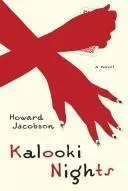
- Название:Kalooki Nights
- Автор:
- Издательство:Simon & Schuster
- Жанр:
- Год:2007
- ISBN:нет данных
- Рейтинг книги:5 / 5. Голосов: 1
-
Избранное:Добавить в избранное
- Отзывы:
-
Ваша оценка:
Kalooki Nights: краткое содержание, описание и аннотация
Предлагаем к чтению аннотацию, описание, краткое содержание или предисловие (зависит от того, что написал сам автор книги «Kalooki Nights»). Если вы не нашли необходимую информацию о книге — напишите в комментариях, мы постараемся отыскать её.
Spanning the decades between World War II and the present day, acclaimed author Howard Jacobson seamlessly weaves together a breath-takingly complex narrative of love, tragedy, redemption, and above all, remarkable humor. Deeply empathetic and audaciously funny, "Kalooki Nights" is a luminous story torn violently between the hope of restoring and rebuilding Jewish life, and the painful burden of memory and loss.
Kalooki Nights — читать онлайн бесплатно полную книгу (весь текст) целиком
Ниже представлен текст книги, разбитый по страницам. Система сохранения места последней прочитанной страницы, позволяет с удобством читать онлайн бесплатно книгу «Kalooki Nights», без необходимости каждый раз заново искать на чём Вы остановились. Поставьте закладку, и сможете в любой момент перейти на страницу, на которой закончили чтение.
Интервал:
Закладка:
And that’s not all that’s intriguing about them. In order to give credence to their denials and demonstrate mastery of the culture of the Jews whose lies they must refute, many of them become scholars not just of Jewish history but of the Jewish religion, making fine distinctions between the authority of Torah Judaism and Rabbinic Judaism, becoming learned in Mishnah, which constitute the oral law, and Gemara, which are commentaries on Mishnah, not to be confused with the Agadah, which are the parables and homilies derived from or illustrative of both; in short devoting their lives to study of the people they cannot abide.
Thus the Tenth Circle of Hell, where the Revisionists and Deniers and Libellers are to be found, not wailing or gnashing their teeth, not trapped for ever in rivers of boiling blood or buried face down in the mud, their torn parts exposed to the never-to-be-satisfied gluttony of Cerberus, but soberly dressed at library desks, surrounded by Babel Towers of Hebrew texts which grow whenever a volume is removed, not a single word of a single page of which must they except from meticulous study, lest that is the very word which will prove the falseness of the Jewish people and their prophets at last.
Consigned in their Jew-hating to an eternity of Jew.
FIVE
You get tragedy where the tree, instead of bending, breaks. Tragedy is something un-Jewish.
Ludwig Wittgenstein1
I was never bar mitzvah’d. My father wouldn’t hear of it. ‘You become a man when you’ve performed a manly action,’ was the beginning and the end of the subject for him.
‘What, like punching someone in the face?’ my mother said.
Taking her at her word, my father bought me boxing gloves for my thirteenth birthday and sparred with me in the garden.
‘Hit him!’ my sister urged from her bedroom window. Unusual for her to open her window and look out upon the world. Even more unusual for her to come down into the actual garden, a place which would only have had existential meaning for her had she been able to grow shoes in it. Because she couldn’t find a single item to wear that suited her, she was wrapped in a sheet. Nothing on her feet. Nothing that would fit or become her feet. ‘Go on,’ she said, holding the sheet in at her middle, ‘hit him!’
In the heat of battle, neither my father nor I bothered to enquire who she was cheering on. Anybody hitting anybody would have done her.
Seeing her sitting there in her bedclothes, calling for blood, my mother came out with four or five decks of cards and a duster. ‘Here,’ she said, ‘while you’re watching, shine these.’
She never had enough to do, my sister. My mother likewise. It wasn’t that they were lazy, they were simply never pointed at any activity beyond kalooki. My father’s fault, partly. Though a modern man as far as belief systems went, he retained something of the temperament of Abraham in his tabernacle. He liked the idle prettiness of women about him.
I’ve told this story a hundred times, of me boxing with my father on what should have been my bar mitzvah, always changing it according to the expectations of my audience, now having my father knock me out, now having me KO him, now having my mother piling in to separate us, now having my sister putting on the gloves and flattening us both. But always, of course, in the spirit of comic-book exaggeration. KERPOW! BAM! YEEEEKS! YI–IIII!
In fact I remember it as one of the saddest afternoons of my life. A son doesn’t hit his father, not even when it’s sport. And though my father had often lashed out at me in temper, actually landing a punch with one of those big stinging leather gloves was out of the question for him too. So we went into a bear hug and lumbered around the garden like that, sideways, with our arms around each other’s backs and our heads on each other’s chests. What he was thinking I had no idea, but I couldn’t get past the sensation of unfamiliarity — how little I knew him, how alien and even off-putting the smell of him was, how uncomfortable I felt being this close to him, as though even a clinch was an infringment of the laws of family. I was upset, partly, on my own account, that my father was a stranger to me; and upset on his account as well, that he had a son who was unable to relax and enjoy a bit of man-to-man knockabout in his company; but I was also sad because I could tell he wasn’t well. Nothing he said. Nothing in his breathing or in the way he held himself, or in the way he held me for that matter. Just something he gave off, something you see in old dogs sometimes, a weariness to the bone, a disappointment beyond melancholy, as though you accept now that you will never live the life you always hoped you’d live — a lack of interest, finally, in your surroundings, in the company you keep, and in yourself.
And who knows? Maybe he suspected I would have liked a bar mitzvah.
2
It was considered scandalous, where we lived, my not having a bar mitzvah. It was only one up from marrying out.
People invented the most far-fetched explanations for it. My mother wasn’t really Jewish and therefore I wasn’t really Jewish either. My father had killed someone in a fight years before and no rabbi would bar mitzvah the son of a murderer. My sister was pregnant and the family feared that the excitement of my bar mitzvah would either terminate or bring on the pregnancy. My father was so desperately poor, thanks to the money my sister lavished on a wardrobe she never wore and the huge amounts my mother was known to spend hosting and having her hair done for her kalooki evenings, that he simply could not afford to give me a bar mitzvah.
Not far wide of the mark, that last explanation. Brought up to be a free spirit, with a hearty contempt for the usual Jewish professions of medicine, banking and the law, my father had drifted into local politics, serving as a Labour councillor for the ward of Red Bank for a short time, in the course of which he’d campaigned without much success to turn places of religious worship into gyms and snooker halls, and then drifting out again when he was suspected of promoting, or at least assisting in the promotion of, an illegal bare-knuckle contest between the Irish prizefighting lightweight Colin McReady and the Jewish kick-boxer Shlomo Grynn in a disused warehouse plumb in the middle of his constituency. ‘That sound like me?’ was how he dealt with the accusation, and he was never prosecuted for it. Otherwise he scraped a living teaching above-board boxing at various Jewish boys’ clubs — strictly speaking a charitable activity — supplemented by a little public speaking at sporting dinners — they liked hearing about Maxie ‘Slapsie’ Rosenbloom the back-pedaller, and the time Ted ‘Kid’ Lewis, born Gershon Mendeloff, landed a humdinger on that mamzer Mosley’s jaw, and for all I know the beating Shlomo Grynn handed out to Colin McReady — further supplemented by occasional work as a driver, dogsbody and odd-job man, even finding employment briefly at the Ritz, where he stood in as a bouncer until they discovered his susceptibility to nosebleeds.
So it’s a question, had he wanted to give me a bar mitzvah, where he would have found the money for it.
You didn’t have to be rich to be bar mitzvah’d. Not then, anyway. A new suit, preferably with long trousers, for the man-to-be; some fortifying whisky and hard biscuits for the celebrants before they left the synagogue to walk home; and that, not forgetting the cost of tefillin, concluded the affair. Concluded it religiously, at any rate. But a bar mitzvah wasn’t just about religion. It was also about giving the family a party. And the party, assuming it to be black tie, was where it started to get expensive. I wouldn’t have minded a party. I liked the way, as soon as you became a man, your uncles felt they could slide a cheque from the inside pockets of their dinner suits to the inside pockets of yours. You turned thirteen and all at once you’d become a hoodlum. You’d return that night to the little cot in which you’d been a boy and one by one slit open the envelopes. Hooch money. Numbers-racket stash. You felt — my friends who were bar mitzvah’d told me — like Bugsy Siegel.
Читать дальшеИнтервал:
Закладка:
Похожие книги на «Kalooki Nights»
Представляем Вашему вниманию похожие книги на «Kalooki Nights» списком для выбора. Мы отобрали схожую по названию и смыслу литературу в надежде предоставить читателям больше вариантов отыскать новые, интересные, ещё непрочитанные произведения.






Обсуждение, отзывы о книге «Kalooki Nights» и просто собственные мнения читателей. Оставьте ваши комментарии, напишите, что Вы думаете о произведении, его смысле или главных героях. Укажите что конкретно понравилось, а что нет, и почему Вы так считаете.