Howard Jacobson - Kalooki Nights
Здесь есть возможность читать онлайн «Howard Jacobson - Kalooki Nights» весь текст электронной книги совершенно бесплатно (целиком полную версию без сокращений). В некоторых случаях можно слушать аудио, скачать через торрент в формате fb2 и присутствует краткое содержание. Год выпуска: 2007, Издательство: Simon & Schuster, Жанр: Современная проза, на английском языке. Описание произведения, (предисловие) а так же отзывы посетителей доступны на портале библиотеки ЛибКат.
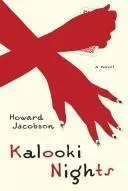
- Название:Kalooki Nights
- Автор:
- Издательство:Simon & Schuster
- Жанр:
- Год:2007
- ISBN:нет данных
- Рейтинг книги:5 / 5. Голосов: 1
-
Избранное:Добавить в избранное
- Отзывы:
-
Ваша оценка:
Kalooki Nights: краткое содержание, описание и аннотация
Предлагаем к чтению аннотацию, описание, краткое содержание или предисловие (зависит от того, что написал сам автор книги «Kalooki Nights»). Если вы не нашли необходимую информацию о книге — напишите в комментариях, мы постараемся отыскать её.
Spanning the decades between World War II and the present day, acclaimed author Howard Jacobson seamlessly weaves together a breath-takingly complex narrative of love, tragedy, redemption, and above all, remarkable humor. Deeply empathetic and audaciously funny, "Kalooki Nights" is a luminous story torn violently between the hope of restoring and rebuilding Jewish life, and the painful burden of memory and loss.
Kalooki Nights — читать онлайн бесплатно полную книгу (весь текст) целиком
Ниже представлен текст книги, разбитый по страницам. Система сохранения места последней прочитанной страницы, позволяет с удобством читать онлайн бесплатно книгу «Kalooki Nights», без необходимости каждый раз заново искать на чём Вы остановились. Поставьте закладку, и сможете в любой момент перейти на страницу, на которой закончили чтение.
Интервал:
Закладка:
It was to her I went, anyway. Visiting her, not in reverie or fantasy — I have never been a great fantasiser (no need of it) — and not even in those unprotected moments between waking and dream, but as one might visit a sick person in hospital, not always certain which is the reality — the world of the healthy, or the world of the dying.
3Ilse Koch. The Bitch of Buchenwald. My Ilse!All our Ilses.Was it a camp injunction, on pain of a beating or a bullet, never to look, never to see her, never to notice the shadow she cast, high in the saddle of her subjugated horse? Or was the prohibition biblical, all in Mendel’s head? It didn’t matter. He who looked was lost, and Mendel looked.Through his closed eyes he could see her. Smell her through the smell of the horse she rode. Did it denote fear or love, that dungy smell? How would Mendel know? But her touch was lighter in fact than he would always imagine it later, lying on his bed, his knees drawn up to his chest. The faintest inflection of her heels, that was all it took, and the horse would understand what was required of him. Love. After the fear, the love. You became the perfect instrument of her will, for which you loved her.She knew he was looking. They all looked, contrived to see without being seen to see, frightened, fascinated. The Camp Commandant’s wife, out for her first ride of the day, her cherry-red hair aureoled about her, the thin dress Mendel conjured her to wear, even on the coldest mornings, folding back upon her, into her, like the wrapping on a sticky sweet. And the beaten stallion steaming.Mendel shuffled in line across the yard and kept his shaven head down. She was on the other side of the fence, alone today. Some mornings she rode in company, with three or four of the wives of officers, openly staring at the prisoners. On his first day, Mendel had crossed the yard naked, to be deloused and disinfected — filthy Jew — shaven of every hair on his body, and they had seen him then. He heard their laughter and decided it was appreciative. His long penis. An animal in a cage, yes, but a fierce, refined, procreative animal. They could laugh all they liked at his unprotectedness: he knew appreciation when he heard it. But that was months ago. Today there was less of him to appreciate. Less flesh, less sway, less confidence. He was hers for the taking now. Which was why, he believed, she rode past alone more often than she used to.Through his lowered head he saw her. The lozenge pattern on her dress, like involuted diamonds, similar to one his mother used to wear, for casual but smart, a shopping, striding dress. Filmy for a mother, Mendel had always thought. It was a source of awkwardness for him, the little pained mother-loving Jew-boy with a long refined penis, seeing her coming towards him, or being out with her by her side, her dress fluttering away from her legs then closing in on them again, clinging and then peeling loose. He remembers the sound it made when she increased her pace, a soft sucking, like a kiss in reverse, lips coming away from skin. On Frau Koch it falls differently; because her hips are wider, her thighs thicker and coarser, it pleats less ambiguously around her. It is of course impossible that she would ride in this dress. But Mendel has seen her in it, striding on the arm of the Commandant, and this is how he prefers to picture her astride her horse.She must know its effect on men of education and conscience. Later she will wear the same dress before her prosecutors at the American Military Tribunals in Dachau. Not that Mendel will ever know anything about that.She is a version of his mother in other ways. On both the skin hangs heavy, their mouths turned down, a pendulousness in both their jaws, as though oppressed. For his mother, wherever she is now, this gravity made him weep; he would have saved her from its cause, had he known it. Strange, then, that in the Commandant’s wife the same downward cast of feature arouses him only to a consciousness of his own oppression, and to his desire for it to be increased. Whatever it is that troubles her, let her take it out on him. For some men there has to be sadness in voluptuousness, and Mendel is one such man.There has been talk among the inmates for weeks that the Commandant is planning an arena for his wife to ride in, outside the camp, and will be looking for prisoners to help build it. The thought that she will soon no longer ride where he can see or fancy that he sees her upsets Mendel disproportionately. It is because I have concentrated all my thoughts on her, he decides, rather than on my situation. If I lose her, I return to being nothing but a prisoner, and I will act like everybody else, mundanely imagining food, weighing out potatoes before I go to sleep, fantasising about freedom, and then dreading my death by diarrhoea or a beating. To stay alive I must empty everything from my mind except Ilse. To stay my own man I must become — or at least communicate to her that I am willing to become — hers. In my annihilation is my salvation.His one hope is that he might be employed in the building of the arena. He does not know as what. He has no building skills. He can draw, that’s all. He could do equestrian murals for her if she would like them, but she does not look to him like a woman who much appreciates murals. And he isn’t sure, anyway, he can draw a horse. Humans are Mendel’s only subject. Human desire and disappointment, human perversity, human contradiction. He draws abstractions in the grotesque manner.On the other side of the fence, riding alone, she surveys him. Don’t ask him how he knows, just leave it that he knows. She is thinking about him. As a muralist for her arena? He doubts that. As what then?Or has she come one last time because she cannot use him, in any capacity, after all?Is she capable of the poetry of regret?Goodbye my little long-nosed Yid,
I could have torn your skin off
with my teeth
and you not raise a finger to stop me.
But it is not to be.Does she have such lyricism in her soul?He confides his fears to the only friend he has made in the hut. He would get a better hearing, he knows, from any of the communists he has seen being led out of the camp to work in the quarry. Communists understand the ways in which what respectable society calls deviancy liberates the mind. But the Jews and the communists, though they are held to be the great twin threat to the Reich, are not permitted to mix. The guards prefer to have some grasp, moment by moment, of which degeneracy they are dealing with, and Mendel is not such a fool as to protest that you can be a Jew and a communist, which would only end in his being kicked twice. So he has no other recourse but Pinchas, the moon-faced rabbi-to-be — that’s if anything is any longer to be — with whom he shares a bunk. Little point, when you are Mendel’s age, trying to keep a secret from someone with whom you share a bunk. Besides, you need a friend. That’s the one thing every prisoner knows — you cannot get through on your own. You have to pair off, make a marriage. In fact there is a third person in Mendel’s bunk, an old Jew from Dhalem, one of the camp’s very first inmates, brought here the morning after Kristallnacht , but he won’t speak. No one expects him to last very long. Don’t speak, don’t live. But he has outlasted many. The bunk is a whole foot shorter than Mendel and Pinchas, who are not tall men. To sleep you must lie foetally pressed into the back of the other person; to talk, with your faces almost joined together and your knees drawn up and touching, like children, or like lovers. How the old Jew from Dhalem has been able to construct a silent, inviolable universe for himself in one third of this nursery bunk, Mendel is unable to comprehend. By being old, perhaps. Mendel, though, is young, and has to get the verdant concupiscence of youth off his chest. ‘If I stop thinking about her I will die,’ he whispers to Pinchas in the dark.‘Unless you stop thinking about her, you deserve to die.’‘Are you telling me you don’t think about her?’‘The difference between us is that I try not to.’‘And you think that’s a significant difference? The difference between a good man and a bad? Trying ?’‘That’s a distinction for you to draw if you wish to.’‘And during those moments when you fail to stop yourself thinking of her, do you too deserve to die?’‘We will all die anyway. It makes no difference.’‘Then it makes no difference whether or not I go on thinking about her.’‘Mendel, she is a foul, evil creature. That riding whip she carries, she uses. And not only on her horse.’‘I know that.’‘There are men here, Mendel, who have been ordered to parade naked before her.’‘I know that.’‘Jewish men.’Mendel guffaws. ‘Does the Jewishness make a difference? Are you telling me that a Jew is more vulnerable in his nakedness than anyone else? Am I the more shamed because they see my genitals than is Branko the gypsy?’‘What you feel, you feel.’‘And shame is shame, Pinchas.’‘You have been taught the story of the uncovering of Noah’s nakedness and the cursing of Canaan. You are a Jew. I don’t have to tell you. Adam hid himself from the Almighty, saying “I was afraid, because I was naked.”’‘Adam wasn’t Jewish, Pinchas. There were no Jews in Adam’s garden. Jews hadn’t been invented yet. We do ourselves no favours by insisting that we feel the humiliations of the flesh more keenly than others.’‘So you agree it is humiliation?’‘Of course I do.’‘Explain to me then why others do not in fact feel it as that. You mentioned Branko the gypsy. I have seen him naked a hundred times. He does not care who sees him. Ask him how often he has seen me naked? Just once, Mendel. And that was not my doing. Branko prances in his nakedness, while I hide myself, afraid. Tell me why that is.’‘I will prance in my nakedness if she demands it.’‘And be beaten?’‘If it’s her wish.’‘You know how she will beat you? You know where she will beat you?’‘A beating’s a beating. What’s one more?’‘She will beat you where you are a man, Mendel.’‘Where I am a man! What does that mean? Why are you talking to me as though you are one of the Five Books of Moses?’‘If you get an erection while she looks at you — God forgive me — she will beat you there. It has happened. Ask Uri.’‘Uri the gardener from Ostrava? Uri the simpleton? He has an erection every second of the day. Having someone beat it down will have been good for him. It’s just a pity it didn’t work.’‘I don’t believe in your flippancy.’‘Who is being flippant? This is life and death, I know it. If I have to stop thinking about her I will die. Whereas if she strikes me — to borrow your quaint locution — where I am a man , I will live. You’re a scholar versed in the subtle paradoxes of the Talmud: that shouldn’t be too difficult for you to understand.’‘You’re mad.’‘You mean I’m filthy.’‘Mad and filthy. You want that loathsome pig of a woman — she is even the colour of pig, Mendel, she even smells like a pig — to raise her whip to you there, the site of every Jewish man’s covenant with God. Don’t you understand how loathsome that makes you? You should keep your voice down. There are men here old enough to be your grandfather who would raise their hand to kill you if they heard you. You are a degraded Jew.’‘We are all degraded Jews.’‘You want it to be worse.’‘Pinchas, there is no worse. And I have no covenant with God. He broke it.’‘That’s a blasphemy.’‘And what? I will die from it?’‘There are worse things than death.’‘Ah yes, I know. Ignominy. Well, maybe it is ignominious, Pinchas, to lie to yourself about your desires.’‘There are worse things than death, ignominy apart. You have heard it rumoured, Mendel, just as I have, that of those she orders to parade unclothed before her she selects some who have unusual markings on their bodies, disfigurements of the skin or tattoos, to do abominations with.’’Not abominations — lampshades. I have, as you say, “heard it rumoured”. I have also heard it rumoured that she shrinks heads. And that she can take a hundred lovers in a day like Messalina. And that she couples with her horse. There is nothing I have not heard rumoured in this camp.’‘Then expose yourself to the object of these rumours, Mendel, and find out for yourself.’‘I have no unusual markings on my skin. Nor do I have tattoos. She won’t be interested. More’s the pity.’‘But you will have an erection at least.’‘I can’t even promise that, but by God I will try.’‘Don’t bring God’s name into this. It’s a sacrilege.’‘Sacrilege? Here? Don’t make me laugh, Pinchas. There is nothing left to defile here.’That night, Mendel was sure, Pinchas dreamed of Ilse Koch. For which, in silence, Mendel begged his friend’s pardon.
Читать дальшеИнтервал:
Закладка:
Похожие книги на «Kalooki Nights»
Представляем Вашему вниманию похожие книги на «Kalooki Nights» списком для выбора. Мы отобрали схожую по названию и смыслу литературу в надежде предоставить читателям больше вариантов отыскать новые, интересные, ещё непрочитанные произведения.











Обсуждение, отзывы о книге «Kalooki Nights» и просто собственные мнения читателей. Оставьте ваши комментарии, напишите, что Вы думаете о произведении, его смысле или главных героях. Укажите что конкретно понравилось, а что нет, и почему Вы так считаете.