Howard Jacobson - Kalooki Nights
Здесь есть возможность читать онлайн «Howard Jacobson - Kalooki Nights» весь текст электронной книги совершенно бесплатно (целиком полную версию без сокращений). В некоторых случаях можно слушать аудио, скачать через торрент в формате fb2 и присутствует краткое содержание. Год выпуска: 2007, Издательство: Simon & Schuster, Жанр: Современная проза, на английском языке. Описание произведения, (предисловие) а так же отзывы посетителей доступны на портале библиотеки ЛибКат.
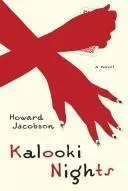
- Название:Kalooki Nights
- Автор:
- Издательство:Simon & Schuster
- Жанр:
- Год:2007
- ISBN:нет данных
- Рейтинг книги:5 / 5. Голосов: 1
-
Избранное:Добавить в избранное
- Отзывы:
-
Ваша оценка:
Kalooki Nights: краткое содержание, описание и аннотация
Предлагаем к чтению аннотацию, описание, краткое содержание или предисловие (зависит от того, что написал сам автор книги «Kalooki Nights»). Если вы не нашли необходимую информацию о книге — напишите в комментариях, мы постараемся отыскать её.
Spanning the decades between World War II and the present day, acclaimed author Howard Jacobson seamlessly weaves together a breath-takingly complex narrative of love, tragedy, redemption, and above all, remarkable humor. Deeply empathetic and audaciously funny, "Kalooki Nights" is a luminous story torn violently between the hope of restoring and rebuilding Jewish life, and the painful burden of memory and loss.
Kalooki Nights — читать онлайн бесплатно полную книгу (весь текст) целиком
Ниже представлен текст книги, разбитый по страницам. Система сохранения места последней прочитанной страницы, позволяет с удобством читать онлайн бесплатно книгу «Kalooki Nights», без необходимости каждый раз заново искать на чём Вы остановились. Поставьте закладку, и сможете в любой момент перейти на страницу, на которой закончили чтение.
Интервал:
Закладка:
4
‘Hard to accept a woman being hanged,’ my father said the night before Ruth Ellis was executed in 1955.
‘Hard to believe a woman could have done what she is being hanged for having done,’ my mother replied.
My father nodded without conviction. Was it hard to believe Ruth Ellis could have done what she was charged with doing? Hanging was hard — that much he did know. As to her innocence or guilt, I’m not sure he had a view. He was simply against the death penalty in all instances. That he wasn’t standing outside Holloway Prison holding a placard right that minute takes some explaining. He had been at the forefront of the agitation, organising demonstrations, getting up petitions, lobbying MPs. Though London was further from Manchester in those days than it is now, he seemed to be going there every other weekend on missions of mercy, at least once that I knew of to an anti-capital-punishment meeting chaired by Sydney Silverman, at which such notable champions of conscience as Victor Gollancz and Arthur Koestler spoke, and at which I have a feeling that my father, as a Manchester delegate — observer, stirrer? — spoke himself. ‘Ha! All Jews I notice,’ I recall Tsedraiter Ike saying when he read about this colloquium in a Jewish Chronicle he’d secreted into the house. ‘Doesn’t anybody else care?’ ‘Nothing to do with it,’ my father said. ‘It’s not a Jewish issue, it’s a human issue.’ By which he was bound to have meant that Ruth Ellis wasn’t a Jewish issue and that hanging in general wasn’t a Jewish issue either. But I had a feeling that Tsedraiter Ike harboured a specific Ruth Ellis-centred grudge. He was proud in a general way that Jews stood up for her, because that reflected well on our sense of social responsibility (whatever Beatrice Potter and my grandmother’s silks had said to the contrary), but he seemed to think my father had overinterested himself in the case, Ruth Ellis being the sort of woman, when all was said and done, you didn’t want Jewish men running after. ‘Hm, Ruth Ellis,’ he said to me once, ‘not the girl for you, eh, my old palomino? Watch those. Peroxide blondes. Crooked seams in their stockings. Red mouths. Always be careful to watch those, hm.’
Which of course — for all that peroxide ever afterwards put me in mind of the single rotten tooth Tsedraiter Ike couldn’t get the word around — I haven’t been.
After all the work he’d put in, not to be outside Holloway Prison upset my father deeply. He believed in expressing solidarity. A Jew should always show his face where Jewish issues were not. Which didn’t mean he was against showing his face where Jewish issues were as well. Let Oswald Mosley dare show his face in Manchester and my father was the first on the scene,blowing hard, as I imagine him, shadow-boxing in the early dawn, looking to land a left. A feat which he had famously performed during Mosley’s 1939 visit to Belle Vue. I knew the story as well as if I’d been there. Expecting trouble, Mosley had erected wooden fences for his protection, this as well as a line of police and several phalanxes of black-shirted bodyguards. Between him and the gallery from which he intended to address his supporters there was also an open-air dance floor and a lake. Which meant, as my father put it, that to get to him you had to swim, foxtrot and body-tackle half of Manchester City’s police force. But if he couldn’t be reached at least he could be shouted down. And he was spectacularly shouted down. ‘You should have heard it,’ my father used to tell me, grinning like a schoolboy — but then he couldn’t have been much more than a schoolboy himself at the time of the events he was describing — ‘there were hundreds of us — that’s those of us who got inside Belle Vue, I’m not counting the thousands demonstrating outside — all chanting, “Down with fascism!” and, “One, two, three, four, five, we want Mosley dead or alive!” And then the best bit — listen to this, Maxie — we began to sing, I don’t even know who started it, “Pack up all your cares and woe, here we go, singing low, byebye blackshirt!”’ At which point in the story I was always required to say, ‘So you won that one, Dad, you silenced him, you waved him on his way,’ whereupon my father would put a finger to my lips and say, ‘Not yet, I haven’t finished,’ and then tell me how he alone, as the meeting was breaking up, swam, foxtrotted, got past the police, and then the blackshirts, leapt over the barrier, shinned up to the balcony, dodged the personal bodyguards, looked Mosley point-blank in the eye, saw his lip tremble, and landed a humdinger on the point of his jaw. ‘Crack! And down the mamzer went!’ My only trouble with this anecdote being that it bore a worrying resemblance to another my father had often told me relating to Ted ‘Kid’ Lewis. Not realising his politics — ‘What would a boxer know?’ — Lewis had worked for Mosley in the early 1930s, and had even recruited a band of toughs from the East End for him — ‘Biff Boys’ they were called — but once he twigged what was going on he confronted Mosley in his office, told him he was an anti-Semitic bastard, told him he (Ted ‘Kid’ Lewis) was through running his dirty errands, and landed a humdinger on the point of the mamzer’s jaw. But then I’m the hyperbolist in the family and had there been exaggeration in my father’s account of his own humdinger, or even plagiarism, he would surely not have told me the original? Maybe there were just a hell of a lot of pugilistic Jews out there in the great years of secular and muscularist Judaism, queuing up to take a swing at Mosley.
The fact remains, anyway, that the next time my father tried to bop a fascist, they were prepared for him and got the bop in first, the news of it only reaching us when a hospital in Notting Hill Gate called — in the middle of one of my mother’s kalooki nights, of course — wondering whether we would like to collect a Mr Glickman, residing at our address, who had been ambulanced into their care with a bloody nose and in a condition they could only describe as ‘confused’.
‘Look at your shirt!’ were my mother’s first words when she saw him the following afternoon. ‘I’m not surprised you’re confused. What the hell are you doing in Notting Hill Gate?’ were the second.
Had my father been given a nosebleed in the course of trying to disrupt a Mosley rally, my mother might have looked more tolerantly on him, even if it would still have meant her having to go all the way to Kensington to clean him up. But Mosley was living quietly in Paris at the time. Nursing the humiliation of the time he’d been socked in Manchester, we liked to think. So what had my father been up to? Well — he scratched his head. What had he been up to? Oh yes, he’d been to an anti-capital-punishment meeting chaired by Sydney Silverman and attended by Victor Gollancz and Arthur Koestler, for one thing. ‘ For one thing ! And what, pray, was the other?’ Well — he scratched his head again. Later, we would date the deterioration in his health from this incident. But at the time my mother thought he was merely prevaricating, a bit ashamed of himself for getting into a fight at his age, and for putting her to all this trouble.
What she was able to piece together, finally, was that he’d taken the opportunity while he was down there to join a few of his old communist friends in breaking up the headquarters of a Nazi organisation which had recently opened for business in Notting Hill. Jews weren’t the problem at the time, blacks were. But a Nazi is a Nazi is a Nazi.
My mother knew that. A Nazi is a Nazi is a Nazi — yes, Jack. But what about his old communist friends — did they too have bloody noses? What about ‘Long John’ Silverman and Elmore Finkel? Were their womenfolk catching trains from every corner of the country and having to miss kalooki?
Читать дальшеИнтервал:
Закладка:
Похожие книги на «Kalooki Nights»
Представляем Вашему вниманию похожие книги на «Kalooki Nights» списком для выбора. Мы отобрали схожую по названию и смыслу литературу в надежде предоставить читателям больше вариантов отыскать новые, интересные, ещё непрочитанные произведения.






Обсуждение, отзывы о книге «Kalooki Nights» и просто собственные мнения читателей. Оставьте ваши комментарии, напишите, что Вы думаете о произведении, его смысле или главных героях. Укажите что конкретно понравилось, а что нет, и почему Вы так считаете.