Howard Jacobson - Kalooki Nights
Здесь есть возможность читать онлайн «Howard Jacobson - Kalooki Nights» весь текст электронной книги совершенно бесплатно (целиком полную версию без сокращений). В некоторых случаях можно слушать аудио, скачать через торрент в формате fb2 и присутствует краткое содержание. Год выпуска: 2007, Издательство: Simon & Schuster, Жанр: Современная проза, на английском языке. Описание произведения, (предисловие) а так же отзывы посетителей доступны на портале библиотеки ЛибКат.
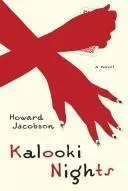
- Название:Kalooki Nights
- Автор:
- Издательство:Simon & Schuster
- Жанр:
- Год:2007
- ISBN:нет данных
- Рейтинг книги:5 / 5. Голосов: 1
-
Избранное:Добавить в избранное
- Отзывы:
-
Ваша оценка:
Kalooki Nights: краткое содержание, описание и аннотация
Предлагаем к чтению аннотацию, описание, краткое содержание или предисловие (зависит от того, что написал сам автор книги «Kalooki Nights»). Если вы не нашли необходимую информацию о книге — напишите в комментариях, мы постараемся отыскать её.
Spanning the decades between World War II and the present day, acclaimed author Howard Jacobson seamlessly weaves together a breath-takingly complex narrative of love, tragedy, redemption, and above all, remarkable humor. Deeply empathetic and audaciously funny, "Kalooki Nights" is a luminous story torn violently between the hope of restoring and rebuilding Jewish life, and the painful burden of memory and loss.
Kalooki Nights — читать онлайн бесплатно полную книгу (весь текст) целиком
Ниже представлен текст книги, разбитый по страницам. Система сохранения места последней прочитанной страницы, позволяет с удобством читать онлайн бесплатно книгу «Kalooki Nights», без необходимости каждый раз заново искать на чём Вы остановились. Поставьте закладку, и сможете в любой момент перейти на страницу, на которой закончили чтение.
Интервал:
Закладка:
As it happened, no, because when they were discovered climbing into the windows they ran for it, whereas my father, well, he didn’t get to London very often did he — be fair now, indulge him a little — and he felt like staying. If we thought he looked a mess, we should have seen the other guys. .
This undignified event had taken place only a week or so before Ruth Ellis was hanged and explains why my father wasn’t holding a candle outside Holloway Prison. London was out of bounds. He’d been grounded by my mother who didn’t want him in another fight, nursing another bloody nose, and maybe worse.
No surprise, then, that he was more than usually tetchy with Tsedraiter Ike who had been pacing the living-room floor for hours, humming to himself, and driving us all to distraction.
‘Do everybody a favour and sit down or go to bed, Ike,’ he said. ‘Anybody would think it was you who was going to the gallows.’
‘Yes, well, we all know you’d like that,’ Tsedraiter Ike said. ‘And you wouldn’t be in any hurry to sign petitions to get me off either.’
My father pointed to his chest, protesting his innocence of any desire to see Tsedraiter Ike swing. Although for a moment, I suspect, that was all any of us could picture and long for.
‘The thing is,’ Tsedraiter Ike went on, ‘women are not always what we think they are. They’re supposed to be the weaker sex, but they can surprise you.’
We all looked up. Had any woman surprised Tsedraiter Ike? Was it a woman who had driven him tsedrait in the first place?
‘Take that Ilse Koch,’ he said.
My parents exchanged glances. Ilse Koch? Did Tsedraiter Ike have a girlfriend called Ilse Koch all of the sudden?
‘I hope you aren’t talking about my friend Ilse Cohen,’ my mother said. ‘I hope she hasn’t been surprising you.’
I could see what Tsedraiter Ike could see — that my parents had never heard of Ilse Koch in their lives. They were of the inbetween generation: too old to want to know the gory details, not old enough to know they had to. What had happened in Germany made a lie of the Jewish modernity they’d been cultivating in Manchester and Liverpool; threw them back, if they attended too closely, to a world from which it was essential they could believe they had escaped, woke them to anxieties it was part of their very survival plan never again to acknowledge. Here they had been, the brash, very nearly Gentile inabitants of the middle of the twentieth century — dancing, hiking, sitting out in deckchairs in all weathers, debating, trade-unionising, speechifying, playing billiards, playing cards, swinging punches, buying televisions, having children you couldn’t tell apart from the goyim, giving them goyisher names and even persuading them to cohabit with goys — while all along, only a few hours across the Channel, it was still the Middle Ages.
Hardly surprising that Jews of their sort, positioned where they were and of their age, warmed to Holocaust literature only slowly. Ilse Koch? Who was Ilse Koch when she was at home?
I, on the other hand, was starting from scratch, with Manny as my tree of knowledge and Errol Tobias as the snake. Ilse Koch! I reddened and hoped to God they hadn’t noticed.
‘“The Witch of Buchenwald”,’ Ike said. Ike, of course, as a medieval man himself, was full of reading on the subject, though my father never permitted his books to spill out of his room into the twentieth century where the rest of us lived.
I knew Ilse Koch had two names, ‘The Witch of Buchenwald’ and ‘The Bitch of Buchenwald’, and I knew which I preferred. But I wasn’t letting on I knew of either.
‘Oh, is she the one who made the lampshades?’ my mother asked. It’s the obvious joke, but she made it sound like an interior design query. And even if she hadn’t, it’s my obligation as a cartoonist to make out that she had.
My father got up and began to pace the living-room floor in the opposite direction to Tsedraiter Ike. Anyone would have thought a decision had just unfairly gone against him. Another referee counting him out because of a few spots of blood on the canvas. ‘We’ve done all this,’ he said. ‘We’ve said all we have to say on this subject.’
Tsedraiter Ike began to make heavy breathing noises, like someone imagining a heart attack. ‘You don’t believe she made the lampshades? You don’t believe she lined up the Jews of Buchenwald to see who had the most unusual tattoos, because the most unusual tattoos made the most unusual lampshades? You don’t believe what the Americans found when they liberated the camp? All lies was it?’
‘It doesn’t matter what I believe. It’s history. Let it rest, Ike.’
‘Forget it ever happened, you mean?’
‘I didn’t say that. I said let it rest. It happened. But it happened to gypsies and homosexuals and communists as well.’
‘And that makes it better?’
‘Nothing makes it better. It happened, now leave it.’
‘Easy for you.’
There was an exchange of bitter looks, Tsedraiter Ike’s face shrunken to the size of a rat’s, the way Ilse Koch the head-shrinker would have liked it, my father’s pinched and pugilistic, as though he was about to land one on the referee. ‘Like it’s hard for you, Ike!’ he said, witheringly. ‘Like anything ’s hard for you! I don’t see you at anti-fascist demonstrations getting a bloody nose. You’re here, where you always are, hiding behind women’s skirts. Talk’s cheap, Ike, talk’s cheap.’
My uncle turned on his heels. For what was left of the evening we could hear him pacing up and down his room, singing ‘It’s only me from over the sea, said Barnacle Bill the sailor’. If you could call that singing.
Between my father and my mother (who was hurt on Ike’s behalf) a silence prevailed. Call it the ‘lampshade moment’. Every Jewish family had it when I was growing up. I am told they still do, and probably always will. Never again . But which is the true freedom — saying never again in the hope that never again, or never again saying never again?
I made a cartoon of it once. Two old Jews arguing. One with a bubble coming out of his mouth declaring ‘Never again’, the other with his fists in the air and an answering bubble, ‘If I have to hear you saying never again ever again. .’ But I was unable to place it. I gave it away in the end to the plastic surgeon who wouldn’t touch my nose. Hard to get people to laugh at the Holocaust.
Meanwhile revisionists make a startling point. Those lampshades Ilse Koch was reputed to have fashioned for her personal use, featuring outlandish Jewish tattoos — pause for a moment and tell us when you last saw a Jew with a tattoo. Proscribed, is it not? Leviticus 19:28 — ‘Ye shall not make any cutting in your flesh for the dead, nor print any marks upon you: I am the Lord.’ True, the proscription applied in the first instance to funeral rites, separating the Children of Israel from those who practised blood cults, those primitives who believed that flowing blood would keep the dead alive, as would bearing memorials to them cut into your flesh; but when was there a Jewish proscription that didn’t supersede its original application? No marks — that’s the ruling whose origins have been long forgotten — no marks upon the body. The prohibition become aesthetic finally, as though God knew in advance that tattoos and navel piercings wouldn’t suit the chosen people — a fastidiousness in the matter of adornment, however, which didn’t make Him think again about tzitzis, sidelocks, wigs, and shapeless dresses like Mrs Washinsky’s.
There is an intriguing contradiction in the position of those who question whether anything as terrible as Ilse Koch and her lampshades ever happened, in that they invariably let you know they wished it had.
Читать дальшеИнтервал:
Закладка:
Похожие книги на «Kalooki Nights»
Представляем Вашему вниманию похожие книги на «Kalooki Nights» списком для выбора. Мы отобрали схожую по названию и смыслу литературу в надежде предоставить читателям больше вариантов отыскать новые, интересные, ещё непрочитанные произведения.






Обсуждение, отзывы о книге «Kalooki Nights» и просто собственные мнения читателей. Оставьте ваши комментарии, напишите, что Вы думаете о произведении, его смысле или главных героях. Укажите что конкретно понравилось, а что нет, и почему Вы так считаете.