Howard Jacobson - Kalooki Nights
Здесь есть возможность читать онлайн «Howard Jacobson - Kalooki Nights» весь текст электронной книги совершенно бесплатно (целиком полную версию без сокращений). В некоторых случаях можно слушать аудио, скачать через торрент в формате fb2 и присутствует краткое содержание. Год выпуска: 2007, Издательство: Simon & Schuster, Жанр: Современная проза, на английском языке. Описание произведения, (предисловие) а так же отзывы посетителей доступны на портале библиотеки ЛибКат.
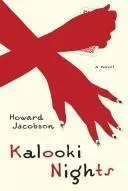
- Название:Kalooki Nights
- Автор:
- Издательство:Simon & Schuster
- Жанр:
- Год:2007
- ISBN:нет данных
- Рейтинг книги:5 / 5. Голосов: 1
-
Избранное:Добавить в избранное
- Отзывы:
-
Ваша оценка:
Kalooki Nights: краткое содержание, описание и аннотация
Предлагаем к чтению аннотацию, описание, краткое содержание или предисловие (зависит от того, что написал сам автор книги «Kalooki Nights»). Если вы не нашли необходимую информацию о книге — напишите в комментариях, мы постараемся отыскать её.
Spanning the decades between World War II and the present day, acclaimed author Howard Jacobson seamlessly weaves together a breath-takingly complex narrative of love, tragedy, redemption, and above all, remarkable humor. Deeply empathetic and audaciously funny, "Kalooki Nights" is a luminous story torn violently between the hope of restoring and rebuilding Jewish life, and the painful burden of memory and loss.
Kalooki Nights — читать онлайн бесплатно полную книгу (весь текст) целиком
Ниже представлен текст книги, разбитый по страницам. Система сохранения места последней прочитанной страницы, позволяет с удобством читать онлайн бесплатно книгу «Kalooki Nights», без необходимости каждый раз заново искать на чём Вы остановились. Поставьте закладку, и сможете в любой момент перейти на страницу, на которой закончили чтение.
Интервал:
Закладка:
Party aside, I had a vague sense I should have been put to a religious test as well. It wasn’t that I wanted to stand up in synagogue and read the portion of the law specific to the Saturday, measured by the Jewish calendar, on which my birthday fell — I could have lived cheerfully without the davening and the sententiousness, especially I could have lived without the moment when the rabbi pointed his weekly parable (always a parable for simpletons as far as I could tell) to make it somehow relevant to you: ‘Once, a group of Polish acrobats came to Mezhibezh to perform at the bar mitzvah of the son of a notorious unbeliever. .’ — but I feared that the not doing it would always leave me with a sense of unfinished business, cast me outside the clan, even identify me with those enemies of the Jewish people I spent so much time drawing and discussing. Not an excommunication exactly, but on the road to one.
Tsedraiter Ike felt the same. At first he said he would coach me in my portion of the law and throw a service à deux for me in his room. At least that way I would be doing my duty in the eyes of God. But over time he let this suggestion lapse, perhaps because he too noticed the decline in my father’s health. He did, though, on what should have been my big day, present me with a secret gift of a tallis in a red velvet bag. ‘Today,’ he said, enfolding me in his arms, ‘my old palomino becomes a man — mathlltuf!’
The other person who wanted me to have a bar mitzvah with the works was Shani. So great was her disappointment when she discovered there wasn’t going to be a party, she took to her room and threw shoes about for upwards of two hours. This could explain her hankering, the afternoon my father boxed me in the garden, to see someone get punched. She had been earmarking a dress for my bar mitzvah for years, and now where was she going to get a chance to wear it?
‘Show me,’ my mother said. And when she saw it she said, ‘Do you think I’d have let you go to my son’s bar mitzvah in that !’
Causing Shani to return to her room and pull her wardrobe off the wall.
Wonderful that when it came to clothes they were able to argue in the past-conditional mode, falling out over what it would have been appropriate to wear at an event had that event only taken place and had Shani worn what she had intended to wear which she hadn’t because it didn’t.
Not wanting me to miss out on everything, my mother offered to throw me a kalooki night.
I pulled a face. Big deal.
‘All right, a gala kalooki night.’
I still didn’t look excited.
‘You won’t have to play,’ she said. ‘You can be guest of honour.’
‘And what will that entail?’
‘Darling, I don’t know. Being made a fuss over and things.’
I thought about it. ‘All right then,’ I said, ‘but only on condition you invite Gittel Franks and Simone Kaye.’
My mother looked at me with feigned disapproval. ‘And sit you in the middle, I suppose?’
‘Yes, please,’ I said.
‘I’ll give the matter my consideration,’ she said.
Gittel Franks and Simone Kaye were our most glamorous relations, that’s if they really were relations, and though they had occasionally played kalooki at our house, they had never played on the same night. This could have been because they knew better than to dim each other’s radiance; or it could have been because my mother, as a beautiful woman herself, could not take on more than one of them at a time. Gittel was Dodgy Ike’s wife. I envied the proud, possessive way, whenever they came to call, he led her in, supporting her under her elbow, as though she too was another gift of doubtful propriety or provenance he meant to leave with us. But then if Gittel looked genaivisheh it was because she was. Ike had ganvied her from another man. As a divorcee — something barely heard of in the Jewish community in those days — Gittel Franks had a reputation if anything even dodgier than her second husband’s. I liked her because she wore her hair up in a style which I think was called ‘pompadour’, a vertiginous tower of rolls and pleats that forced her to carry her head in an imperious manner very much at odds with the rest of her demeanour to which the adjective most frequently applied was demonstrative. She laughed loudly, touched everyone she met, could not describe an event without knocking over a vase, and ever since I could remember had regarded me through the narrow slits of her amber eyes — a Persian cat was what her eyes reminded me of — as though to promise me (on condition I didn’t tell my mother) that she would be my present when I grew to be a man.
If Gittel Franks was demonstrative then Simone Kaye was cyclonic. ‘That woman!’ my father would say, hearing her from the other end of no matter how long a room, and clapping his hands to his ears. ‘She looks like a wedding,’ he once said to me in an aside. ‘Which part?’ I asked him. ‘All of it — the chuppa, the table decorations, the band, the dancing, the cake, everything.’ The secret of Simone Kaye, as I’d discovered, was to encounter her when she was not in the company of other women, to choose an hour in which you had nothing else to do, and to allow her to trap you in a corner for the whole of it. She was a woman who did everything up close. Tough, if you didn’t like the smell of wedding cake, but I did. Marzipan in particular. An extravagance of almonds and sugar and egg whites. Of all our ‘relations’, Simone Kaye was the one who took the greatest interest in my schooling. ‘And English? And history? I know I don’t need to ask you about art. And geography? Don’t talk to you about geography — why not, Maxie, tell me why not?’ With every question,her lovely, always somewhat startled face finding more and more fantastical contortions of vitality, her orange eyes seeming to start from their sockets, first one and then the other of her nearly Negroid nostrils flaring, her mouth so full and expressive that sometimes you would have sworn that in her need for volubility she had found an extra lip. When I was young enough to be petted with equanimity, Simone Kaye used to pull me to her in order to pinch my cheeks, and would keep me there by trapping me between her knees. Though her legs were not as long as Gittel Franks’s or anything like as elegant as my mother’s, Simone Kaye always wore stockings that were silkier than theirs, which meant that she whooshed like curtains when she walked. It was almost more than I could bear, as a boy in short trousers, the voluptuousness of this silkiness upon my skin.
And of course the yellow smell of marzipan on hers.
After giving the matter some consideration, my mother said, ‘I’ll only be able to get them if I make it a charity event.’
‘Me being the charity?’
‘I’m afraid not. It will have to be Israel.’
Shame. I wanted it to be just me. But I bowed to the greater cause. ‘Brave little Israel.’ No moral complications in 1956. You knew who the good guys were. Other than a few families of Satmars who thought any Jewish state was illegitimate until the coming of the Messiah, the only person in Jewish Manchester who wasn’t happy to donate a tree to Israel, whether or not a tree actually meant a gun, was my father. Logically, he should have been all for Israel, or Palestine as he insisted on calling it. A new start for the Jews. A Bundist in every kibbutz. Readings from Das Kapital instead of morning prayers. But he knew what was going to happen. He knew the rabbis were going to creep back in and start erecting shtetls all over again. ‘First the bombs, then the shtetls.’ He’d tap his forehead. ‘Shtetls of the mind. You mark my words.’
So I had my doubts about my mother throwing a charity gala kalooki night in my honour but nominally in support of the state of Israel in our front room. ‘What’s Dad going to say?’ I asked her.
Читать дальшеИнтервал:
Закладка:
Похожие книги на «Kalooki Nights»
Представляем Вашему вниманию похожие книги на «Kalooki Nights» списком для выбора. Мы отобрали схожую по названию и смыслу литературу в надежде предоставить читателям больше вариантов отыскать новые, интересные, ещё непрочитанные произведения.








Обсуждение, отзывы о книге «Kalooki Nights» и просто собственные мнения читателей. Оставьте ваши комментарии, напишите, что Вы думаете о произведении, его смысле или главных героях. Укажите что конкретно понравилось, а что нет, и почему Вы так считаете.