Howard Jacobson - Kalooki Nights
Здесь есть возможность читать онлайн «Howard Jacobson - Kalooki Nights» весь текст электронной книги совершенно бесплатно (целиком полную версию без сокращений). В некоторых случаях можно слушать аудио, скачать через торрент в формате fb2 и присутствует краткое содержание. Год выпуска: 2007, Издательство: Simon & Schuster, Жанр: Современная проза, на английском языке. Описание произведения, (предисловие) а так же отзывы посетителей доступны на портале библиотеки ЛибКат.
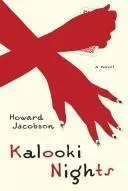
- Название:Kalooki Nights
- Автор:
- Издательство:Simon & Schuster
- Жанр:
- Год:2007
- ISBN:нет данных
- Рейтинг книги:5 / 5. Голосов: 1
-
Избранное:Добавить в избранное
- Отзывы:
-
Ваша оценка:
Kalooki Nights: краткое содержание, описание и аннотация
Предлагаем к чтению аннотацию, описание, краткое содержание или предисловие (зависит от того, что написал сам автор книги «Kalooki Nights»). Если вы не нашли необходимую информацию о книге — напишите в комментариях, мы постараемся отыскать её.
Spanning the decades between World War II and the present day, acclaimed author Howard Jacobson seamlessly weaves together a breath-takingly complex narrative of love, tragedy, redemption, and above all, remarkable humor. Deeply empathetic and audaciously funny, "Kalooki Nights" is a luminous story torn violently between the hope of restoring and rebuilding Jewish life, and the painful burden of memory and loss.
Kalooki Nights — читать онлайн бесплатно полную книгу (весь текст) целиком
Ниже представлен текст книги, разбитый по страницам. Система сохранения места последней прочитанной страницы, позволяет с удобством читать онлайн бесплатно книгу «Kalooki Nights», без необходимости каждый раз заново искать на чём Вы остановились. Поставьте закладку, и сможете в любой момент перейти на страницу, на которой закончили чтение.
Интервал:
Закладка:
Over the bedclothes she hit me. ‘Why do you always do that, Max? Why won’t you let anyone tell a joke?’
Did I always do that? I wasn’t aware I always did that. ‘Tell the joke,’ I said.
‘I can’t now.’
‘You can. Tell the joke.’
She sat up in bed, knowing that the sight of her perfectly equiponderant hand-grenade breasts would always quieten me. Pale gold, her breasts, like melted butter; her nipples very precise, no spillage in the aureole, thus far and no further. We could have come from different planets, Zoë and I, so unalike in body were we. My limbs and members intermingled freely, I flopped about, bled contour into contour, hue into hue; not Zoë — between one of Zoë’s parts and another no continuity was discernible. One at a time they must have come into the world, one at a time and alone.
She was the same with words and sentences. Nothing was assumed already spoken. She had to start again from the beginning.
‘How many Jews can you get into a Volkswagen Beetle?’ she asked.
Tempting for me to do the same. None. No Jew would get into a Volkswagen Beetle . But I was too good a sport to ruin a hilarious joke, and poor Zoë had, by her own account, suffered terribly at the hands of Jewish people already. ‘I don’t know,’ I said. ‘Tell me.’
‘One thousand and four. Two in the front, two in the back, and one thousand in the ashtray.’
5
Would that be funny to a Holocaust denier, I wonder, or would he see it — though emanating from a Jew-befuddled Gentile — as another example of Jewish overstatement? ‘We have done the research and can state categorically that it is impossible to get a thousand Jews, or even a quarter of that number of Jews, however passively disposed, into the ashtray of a Volkswagen.’
So we are an immoderate, overemphatic people, much given to exaggeration — so what? I call it giving value for money myself. You prick us so we bleed profusely. You put us to the torch and we burn well for you. Just don’t pretend that we invent the conflagrations that consume us.
If it felt like the end of the world to Mr and Mrs Washinsky when they discovered that their elder son was sleeping with the fire-yekelte, that is because it was the end of the world.
Not the sex: they could have dealt with the sex. But everything consequent on the sex: that sequence of events written at the start of creation in the book of Jewish time — the pregnancy, the betrothal, the village churchs bells tolling a wedding which is no less a funeral, the grandchildren baptised in an alien font (the dew of their baby-Jewishness washed clean away) — the depletion, the erasure, the annulment, the extinction in the arms of no matter how welcoming a Gentile future of their hard-won Jewish past. Not negligible, such concerns, when you consider how intrinsic to Christianity disparagement of Judaism has been. Marry a Christian and you marry into your own denial. In the eyes of Asher’s parents, he was sleeping with their negation. That it never bothered me, that I couldn’t wait to propose to every Gentile woman I met provided her name was suitably accented, does not mean it should not have bothered the Washinskys. I am the perversion here.
Just as Frances Ephraim Cohen, become Palgrave — whether or not I kept his son’s Golden Treasury — was the perversion before me.
It was the end of the Washinskys’ world, joke about it how you like. Yes, they would have said and felt the same had Asher been sleeping with the daughter of the Archbishop of Canterbury, and then found some saving grace in it. It is not a sin to be pragmatic in the matter of miscegenation. If your offspring must stray, better they stray wisely. Instances are not unknown, when all is said and done, of apostatic sexual union not only not diminishing Judaism but actually enhancing it. Esther, for example, married the King of Persia, from which position of influence she was able to save the Jews from annihilation. But who was Asher going to save by sleeping with the fire-yekelte, the sooty person who knelt in front of the Washinskys’ grate on a Shabbes morning, tied newspapers into knots, tossed matches into coals, and was thus, since they were poor themselves, the nochschlepper to nochschleppers?
Himself?
Well, to get to that interpretation you need a more Christian conception of saving than is available to your average Jew.
6
Although ‘Asher and the fire-yekelte’ was how it was originally rumoured, the woman with whom he was having the affair wasn’t, strictly speaking, the fire-yekelte at all. She was the fire-yekelte’s daughter. Yes, when her mother was unavailable or unwell, she did a little fire-yekelting for the Washinskys herself, but fire-yekelte qua fire-yekelte she was not. Which made a difference, or didn’t, according to where you stood on yekeltes in general. Remove the age discrepancy and you remove some of the transgression; remove the transgression and you remove much of the audacity. As a boy transfixed by the idea of the older Gentile woman, I would have been more in awe of Asher had he plumped for the mother. But it was certainly audacious enough of him, given his upbringing, to have let his feelings lead him where they did; less lubricious, less heroically unchaste, more conventionally sentimental, more Romeo than one of the Karamazov boys, but on that account, weighing this against that, still bold.
Don’t ask how I know what I know about this sorry business. ‘Don’t ask,’ as Tsedraiter Ike would say when anyone was fool enough to enquire about anything. His health, the state of Israel, the condition of the Jewish people — don’t ask . Let’s just say I picked up some of it at the time it was happening from Manny, though he was by no means a leaky vessel; some of it from Errol Tobias whose mother, as the local hairdresser, was privy to every whisper of impropriety; and more from my own mother later, most of it an extravagant act of backward deduction from the details of Manny’s arrest and subsequent trial as they appeared in the local newspapers; to say nothing of what any man will find if he consults his own heart. Nor do I think it too fantastical to claim intuitive knowledge of Asher Washinsky’s feelings from his countenance, that mask of ascetic dissolution which I studied with fascination on the few occasions I saw it, so much did I wish it had been mine. Those hollow gouges where other men had eyes — wonderful to draw because they were already made of charcoal in the flesh — told me everything about the intensity with which he loved a woman. Desperate, he must have been. Far gone, to do what was bound to cause anguish to his parents. And far gone indeed, to do it, to be able to bear to do it — for that was what was whispered — in their bed!
He had met her — Dorothy was her name, no saving diaeresis, but it could have been un-Jewishly worse, they could have called her Dot — coming out of his parents’ house with coal dust on her face. So that was the two of them black-eyed. He saw her and stopped. She saw him and stopped. Then he took out a handkerchief and handed it to her. ‘Here, wipe your face with this.’ She could easily have surrended to the same impulse in herself. He was the kind of man you wanted to mend. Picture them then, on the Washinsky path, dabbing at each other’s eyes.
I want to dab at mine, thinking of them. She was pretty. I caught a glimpse of her once or twice, briefly, before she became Asher’s girlfriend, standing in for her mother at the Washinskys’ grate. A blonde, as you’d expect. When the devil seeks to make trouble in a Jewish family he does it as a blonde. But not one of Tsedraiter Ike’s peroxide blondes. Golden, like a cornfield. With creamy skin, yellow-green eyes, and, as I understand it, despite her lowly origins, a good brain. Doing A levels. French, German, Latin. The spot of fire-yekelte-ing she had taken on was a favour to her mother and a way of putting away a few shillings for when she went to university. Not that the Washinskys actually ‘paid’ for the Shabbes services they received. Only lately have I learned that such a thing was infra dig. What you did was put money where it could be found and then you left it to the fire-yekelte to make the appropriate deduction. Ditto giving the fire-yekelte direct instructions. An Orthodox Jew is not allowed to derive benefit on the Sabbath from saying, ‘Put the lights on for me, there’s a dear,’ but must ‘hint’ at what needs doing, as in, ‘Oy, am I having trouble seeing anything today!’ Given how smart Dorothy was, it has to be assumed that she knew where to find the money and how to take a hint.
Читать дальшеИнтервал:
Закладка:
Похожие книги на «Kalooki Nights»
Представляем Вашему вниманию похожие книги на «Kalooki Nights» списком для выбора. Мы отобрали схожую по названию и смыслу литературу в надежде предоставить читателям больше вариантов отыскать новые, интересные, ещё непрочитанные произведения.









Обсуждение, отзывы о книге «Kalooki Nights» и просто собственные мнения читателей. Оставьте ваши комментарии, напишите, что Вы думаете о произведении, его смысле или главных героях. Укажите что конкретно понравилось, а что нет, и почему Вы так считаете.