Howard Jacobson - Kalooki Nights
Здесь есть возможность читать онлайн «Howard Jacobson - Kalooki Nights» весь текст электронной книги совершенно бесплатно (целиком полную версию без сокращений). В некоторых случаях можно слушать аудио, скачать через торрент в формате fb2 и присутствует краткое содержание. Год выпуска: 2007, Издательство: Simon & Schuster, Жанр: Современная проза, на английском языке. Описание произведения, (предисловие) а так же отзывы посетителей доступны на портале библиотеки ЛибКат.
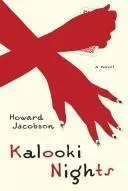
- Название:Kalooki Nights
- Автор:
- Издательство:Simon & Schuster
- Жанр:
- Год:2007
- ISBN:нет данных
- Рейтинг книги:5 / 5. Голосов: 1
-
Избранное:Добавить в избранное
- Отзывы:
-
Ваша оценка:
Kalooki Nights: краткое содержание, описание и аннотация
Предлагаем к чтению аннотацию, описание, краткое содержание или предисловие (зависит от того, что написал сам автор книги «Kalooki Nights»). Если вы не нашли необходимую информацию о книге — напишите в комментариях, мы постараемся отыскать её.
Spanning the decades between World War II and the present day, acclaimed author Howard Jacobson seamlessly weaves together a breath-takingly complex narrative of love, tragedy, redemption, and above all, remarkable humor. Deeply empathetic and audaciously funny, "Kalooki Nights" is a luminous story torn violently between the hope of restoring and rebuilding Jewish life, and the painful burden of memory and loss.
Kalooki Nights — читать онлайн бесплатно полную книгу (весь текст) целиком
Ниже представлен текст книги, разбитый по страницам. Система сохранения места последней прочитанной страницы, позволяет с удобством читать онлайн бесплатно книгу «Kalooki Nights», без необходимости каждый раз заново искать на чём Вы остановились. Поставьте закладку, и сможете в любой момент перейти на страницу, на которой закончили чтение.
Интервал:
Закладка:
He went under again, still in the yarmulke which since going to his new school he now wore at all times. I imagined him floating on the surface, his head down, the silken fringes of his tzitzis trailing behind him as though they had issued from his body, like spawn.
‘No one,’ he said, when he came back up a second time, his cheeks bulging.
‘You just mentioned the matter of German handwriting for no reason?’
He was red and panting. Looking away. Did he always look away? When I try to picture him as he was then I cannot see him ever looking at me. I cannot remember what his eyes looked like. What colour or how big they were.
‘I found a letter,’ he said, ‘that’s all.’
‘What do you mean you “found a letter”? Where did you find a letter?’
‘In the street.’
He was lying. You don’t find letters written in German on the streets of Manchester. Or you didn’t then. Not in Crumpsall Park. But something always told me to lay off him. So far with Manny, and no further. Not because I was afraid of what he would say or do to me — though there was always his rabid bite to be on the lookout for — but because I was afraid of what I could do to him.
‘And what did this letter make you feel when you found it?’
‘Upset,’ he said.
Which it’s possible I was meant to follow up on. Be supportive, be a friend. Possible that there was something serious he needed to get off his chest. But I was frightened and a little bit ashamed of intimacy with him. We were going to change the world with our illustrated history of Jewish bitterness, and we spoke of the horrors of the Holocaust together, but when he said he was upset I shied away.
‘Know what you mean,’ I said.
2
Upset. The very word my father had used on his return from a trip to Cologne with the Maccabeans boxing team, the first leg of what was intended to be a sequence of exchange visits. Much publicised in the local Jewish press, and much inveighed against by many leading members of the Manchester Jewish community who believed it was too early, the boxing trip had originally been envisaged, by my father and Bunny Silverman who were its originators, as a goodwill gesture. It was time to forget the iniquities of the past. It was time to mend some fences. It was time to go and punch the Nazi bastards’ faces in.
But there wasn’t much goodwill coming off him when we met him in the hall.
‘Well, I won’t be doing that again,’ he told us, no sooner than he’d put his cases down.
He was puffing, fragile-looking, not himself. He could see what we were thinking. ‘No,’ he said, ‘I didn’t get into the ring. I’m just upset.’
He didn’t look himself and didn’t sound himself either. Upset? My father?
‘Did you lose?’ my mother asked.
‘We drew. We should have won, but we drew. But that’s not what upset me.’
Of course it wasn’t. I knew what had upset him. Germans had upset him. I’m not saying I shared the views of those who’d written to the papers arguing that the boxing friendly desecrated the memory of the dead, but I was surprised that he had gone. I was surprised, even knowing what I knew about him, that he could face it. Germans weren’t for seeing yet. Not for another five thousand years.
‘Was it seeing the old ones and wondering?’ I wondered.
Myself I blamed the young ones as well. Sins of the fathers and all that. From an early age I took responsibility for what my forebears had done, and burned with shame still for some of the crimes recounted of my people in Deuteronomy. So there was no innocent generation in Germany to my mind. But seeing the old ones would obviously be worse. Scrutinising every face. And where were you and where were you . .?
‘No.’ He shook his head. He wasn’t having any of that ‘and how many Jews did you gas?’ business. ‘Nothing to do with the people. The people are just people. They’re like us.’
My sister snorted. Hard now to remember what she was doing out of her room. Did she hope to hear about the boxing? Who had flattened whom? Or was it because she had missed my father and knew in her bones she wasn’t going to see much more of him?
‘People are the same the world over,’ he said. He looked tired. ‘How many times have I told you that? It’s what’s done to the people.’
’So what upset you, then?’ she asked. Angry. Always angry. Everything an affront. Always in a party dress or a sheet and always angry. ‘The fact that they drive on the wrong side of the road?’
She had already refused to show gratitude for the present he’d made a ceremony (too courtly a ceremony?) of handing her — cologne from Cologne, prettily wrapped and ribboned. ‘Yours will probably be Belsen Water,’ she hissed to me out of the corner of her mouth.
Always angry, always sarcastic, and always made up for a ball. Maybe had they just let her go to a ball once in a while, she would have been sweeter of temperament. But had they let her go to a ball, at her age, they’d have fretted every minute she was out of the house, and been less sweet of temperament themselves.
I say ‘they’, but it was my father who drove all this fretting and fearing. For her part my mother (the real pagan in the family) wouldn’t have minded what Shani got up to, so long as she wore something my mother approved of to get up to it in.
So what was it my father feared?
The same all Jew Jew Jew fathers were afraid of — goy, goy, goy.
What, even my entirely irreligious God-hating top-to-bottom secularised new-Jew-seeking dad who would have doubled my pocket money had I told him I was going out with shikseh triplets? Well, there’s the funny thing. .
But doubtless I do him an injustice. He deserved better than a caricaturist for a son. Had he been luckier he’d have sired a moral philosopher capable of grasping the subtleties of his position. That’s if there is a school of moral philosophy capable of grasping why a man who could imagine no greater future for the Jews than that they should be indistinguishable from non-Jews was unable to bear the thought of a non-Jew fondling his daughter.
He didn’t fear what the Washinskys feared, that much was certain. He didn’t fear depletion of the Jewish stock or obliteration of the Jewish memory. So what was it?
Only recently has it occurred to me that the answer to the question is in the word ‘fondling’ itself. What he actually couldn’t bear was anybody doing it. A disappointingly banal explanation for someone committed to understanding human history as a battle between the Jews and everybody else.
He made a face at her as though he were someone her own age. Then reached out to draw her closer. For a moment we all thought he was going to take her on his knee. Nothing unusual in that for some fathers, but Jack ‘The Jew’ Glickman only pulled a person to him when he wanted to rough them up in the ring. A cold premonition seized me. And I could see that it seized my mother as well.
‘No, clever clogs,’ he said, running his hands through her hair — something else he didn’t normally do — ‘it’s bugger all to do with them driving on the wrong side of the road, which as an internationalist I am prepared to believe is the right side of the road anyway. What I didn’t like was the fact that they spoke German. Laugh all you like, but that’s the fact of it. I didn’t like hearing the words. I didn’t like seeing the words. It was the look of the letters. The letters upset me.’
So there you are. If the look of the German language could upset my internationalist, non-grudge-bearing father, a man naïve enough to suppose that people were only what was done to them and whose sins were therefore not indelible, who wouldn’t it upset?
Читать дальшеИнтервал:
Закладка:
Похожие книги на «Kalooki Nights»
Представляем Вашему вниманию похожие книги на «Kalooki Nights» списком для выбора. Мы отобрали схожую по названию и смыслу литературу в надежде предоставить читателям больше вариантов отыскать новые, интересные, ещё непрочитанные произведения.






Обсуждение, отзывы о книге «Kalooki Nights» и просто собственные мнения читателей. Оставьте ваши комментарии, напишите, что Вы думаете о произведении, его смысле или главных героях. Укажите что конкретно понравилось, а что нет, и почему Вы так считаете.