Howard Jacobson - Kalooki Nights
Здесь есть возможность читать онлайн «Howard Jacobson - Kalooki Nights» весь текст электронной книги совершенно бесплатно (целиком полную версию без сокращений). В некоторых случаях можно слушать аудио, скачать через торрент в формате fb2 и присутствует краткое содержание. Год выпуска: 2007, Издательство: Simon & Schuster, Жанр: Современная проза, на английском языке. Описание произведения, (предисловие) а так же отзывы посетителей доступны на портале библиотеки ЛибКат.
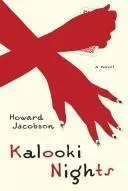
- Название:Kalooki Nights
- Автор:
- Издательство:Simon & Schuster
- Жанр:
- Год:2007
- ISBN:нет данных
- Рейтинг книги:5 / 5. Голосов: 1
-
Избранное:Добавить в избранное
- Отзывы:
-
Ваша оценка:
Kalooki Nights: краткое содержание, описание и аннотация
Предлагаем к чтению аннотацию, описание, краткое содержание или предисловие (зависит от того, что написал сам автор книги «Kalooki Nights»). Если вы не нашли необходимую информацию о книге — напишите в комментариях, мы постараемся отыскать её.
Spanning the decades between World War II and the present day, acclaimed author Howard Jacobson seamlessly weaves together a breath-takingly complex narrative of love, tragedy, redemption, and above all, remarkable humor. Deeply empathetic and audaciously funny, "Kalooki Nights" is a luminous story torn violently between the hope of restoring and rebuilding Jewish life, and the painful burden of memory and loss.
Kalooki Nights — читать онлайн бесплатно полную книгу (весь текст) целиком
Ниже представлен текст книги, разбитый по страницам. Система сохранения места последней прочитанной страницы, позволяет с удобством читать онлайн бесплатно книгу «Kalooki Nights», без необходимости каждый раз заново искать на чём Вы остановились. Поставьте закладку, и сможете в любой момент перейти на страницу, на которой закончили чтение.
Интервал:
Закладка:
When I sold the Völökswägen I remembered to retrieve the toy, faithfully repositioning it where it would be visible in the mirror of the new car. And I did it again with the car after that. A sentimental ritual, though whether it was Chloë and her mother I was sentimentalising, or Manny Washinsky, I couldn’t have told you. But after the phone call from my mother apprising me of Manny’s crime, it seemed proper to remove what all at once appeared to be a cruelly satiric effigy of him. I didn’t throw it away. But I didn’t want to see it, didn’t want a comical reminder, bobbing about in the back of my car, of someone who had passed out of comical remembrance into something more terrible.
Later, when they locked him up, I would picture him despite myself — for I tried not to picture him at all — as Goya’s blackchalked Lunatic Behind Bars , his head dehumanised, as pitiful as a caged dog’s, staring out at something he could not see, one naked arm out of the bars, the bars criss-crossed like a wooden crate, a creature as much boxed as barred, nailed away for ever, the more heartbreaking for his compliance.
My removal of him from my sight was more friendly. Not me scalding all trace of him from under my fingernails. More an act of piety.
* * *
I still have the rabbi among my possessions, wrapped in a silk handkerchief and folded into a black cardboard box which had originally housed an expensive set of pencils — a gift from Zoë, ‘To my juicy Jew Jew boy’ inscribed in the lid.
She should have seen Manny’s brother.
That Manny Washinsky was not going to have a conventionally happy life was obvious to everyone who knew him. You couldn’t picture him settled comfortably in a nice house with a loving family and in a fulfilling job — those being what a happy life comprised in those days. You couldn’t even picture him breathing normally. But had someone suggested he would wind up in prison on a murder rap, I’d have laughed and told them they had the wrong person. Right street, wrong person. You mean Errol Tobias, further up and on the other side. You mean Errol Tobias, whose depravity is such that it would be a kindness to the community if you incarcerated him now, the damage he was going to do being only a matter of time. Yet today Manny is the old lag, his imprisoned mind a charnel house, while Errol Tobias performs the functions of an exemplary husband and father, importing wines from Israel and living quietly in Borehamwood.
Whether there are any lessons to be drawn from that, whether Errol Tobias’s depravity was only skin-deep, a passing sinfulness which he would grow out of eventually, or whether it’s still in there, biding its time, I can no more than guess. But he was the most depraved person I had ever met and it’s hard to imagine where in the universe such depravity could have got to had it left him.
His version of the terrible fight he had with Manny — for me a high watermark (or do I mean a low watermark?) in the history of his depravity, though for him I suspect it was just another day — began with Manny biting him. When I disagreed, insisting that from where I stood Manny only started biting him when he started pulling off Manny’s trousers, he changed the story without a qualm to its all beginning when Manny laughed at him. I wasn’t there for that part, which occurred, if it occurred as Errol described it all, at the bottom of the street where Errol was ripping out the Golonskys’ garden. Manny had apparently swum past, on his way home from school, flailing his arms, his mouth opening and closing like a carp’s, at the sight of which Errol had plainly said something along the lines of — though I’m only guessing — Fucking freak! Fucking frummer freak! Not enough to make Manny stop. He was used to being abused. Not by other Jewish boys, it’s true, but then Errol Tobias wasn’t like other Jewish boys. To have got Manny so much as to look up — and I’m still guessing — Errol must have tried needling him about Asher, maybe at that very moment inventing the calumny (because he surely was its source) that Asher was sleeping with the fire-yekelte in Manny’s mother and father’s bed. Very likely, in that event, that Manny would have halted, wondered what to do or say, then grinned that ghastly ice-mask grin of his, the one that got him into so much trouble with Shitworth Whitworth, the one that served the single purpose of stopping his face collapsing altogether. Only someone even less self-possessed than Manny could have taken that laugh of evisceration as directed derisively at him. But that was exactly how Errol, by his own account, took it.
I knew him for a belcher, Errol Tobias. He was one of those boys who could roll belches out of his stomach for as long as he believed it amused people to hear them. An unusual gift in a Jew, who is usually at pains to keep his stomach to himself. And for the same reason especially abominated by Jews, who do not want that knowledge of another person’s. So I reckon he would have shouted Your brother’s fucking the fire-yekelte a few more times, then belched in Manny’s face, before returning to his massacre of the Golonskys’ foliage.
But he must have gone on brooding over what had happened, and nothing good ever came of Errol’s brooding. When he followed himself into his head it was always darker there than it was outside. Manny and I were in the air-raid shelter, refining another year of Jewish bitterness among the five thousand that there were to cover — though we never, I have to say, went at it chronologically — when he turned up. It was a shock to both of us. We weren’t aware that Errol even knew of the shelter’s existence, let alone that it was a hideout of ours.
‘This is between me and him,’ he said, holding the flat of his hand out to me, like a policeman stopping traffic. ‘Me and the frummer.’
I’d been warned about just such a day, when the yoks would come with their white-boned fists and start knocking us about. Tsedraiter Ike had often told me what to do. ‘Give them everything. Your watch, any money you’re carrying, your yarmulke, everything. And if they call you a dirty Jew, agree with them. Don’t even attempt to defend yourself. You’re bound to lose. They don’t feel pain, remember that. Even if you were to beat their brains out they wouldn’t have the brains to understand that that was what you’d done. Unconscious, they’d still be able to beat you up. Cultivate the Jewish virtue of patience. You’ll get your own back another time, when you’re the judge and they’re up before you for housebreaking. Or when you’re the surgeon. .’ Even my father, who of course set a very different example of standing up to Nazis, counselled caution when the terrible day, the little local pogrom we all knew was just around the corner, finally rolled round. But what nobody had anticipated was that the yok with the white-boned fist would be Jewish.
And, more ironically still, the very Jew who had made a corkscrew of the neck of Broderick ‘The Bull’ Chisnall, who until then had been a one-man pogrom of his own.
He pushed Manny to the ground — on to the broken bricks and dirt which we’d barely trodden in, so lightly did we occupy the place — and began trying to get his trousers off.
‘Errol. .’ I said.
He put his hand up to me again. ‘Just me and the frummer.’
‘What’s he done?’
‘He’s done what he’s always done — he’s sat on the khazi.’
‘Errol, everyone sits on the khazi.’
‘Not for twenty-four hours at a stretch, they don’t. Not eating khazi paper, they don’t.’
‘But what’s it to you?’
‘The same as it is to you — life and fucking death. It’s because of him that they march us off to the camps.’
‘That’s shit. It’s because of them that they march us off to the camps.’
Читать дальшеИнтервал:
Закладка:
Похожие книги на «Kalooki Nights»
Представляем Вашему вниманию похожие книги на «Kalooki Nights» списком для выбора. Мы отобрали схожую по названию и смыслу литературу в надежде предоставить читателям больше вариантов отыскать новые, интересные, ещё непрочитанные произведения.







Обсуждение, отзывы о книге «Kalooki Nights» и просто собственные мнения читателей. Оставьте ваши комментарии, напишите, что Вы думаете о произведении, его смысле или главных героях. Укажите что конкретно понравилось, а что нет, и почему Вы так считаете.