Howard Jacobson - Kalooki Nights
Здесь есть возможность читать онлайн «Howard Jacobson - Kalooki Nights» весь текст электронной книги совершенно бесплатно (целиком полную версию без сокращений). В некоторых случаях можно слушать аудио, скачать через торрент в формате fb2 и присутствует краткое содержание. Год выпуска: 2007, Издательство: Simon & Schuster, Жанр: Современная проза, на английском языке. Описание произведения, (предисловие) а так же отзывы посетителей доступны на портале библиотеки ЛибКат.
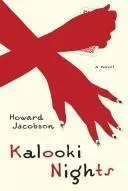
- Название:Kalooki Nights
- Автор:
- Издательство:Simon & Schuster
- Жанр:
- Год:2007
- ISBN:нет данных
- Рейтинг книги:5 / 5. Голосов: 1
-
Избранное:Добавить в избранное
- Отзывы:
-
Ваша оценка:
Kalooki Nights: краткое содержание, описание и аннотация
Предлагаем к чтению аннотацию, описание, краткое содержание или предисловие (зависит от того, что написал сам автор книги «Kalooki Nights»). Если вы не нашли необходимую информацию о книге — напишите в комментариях, мы постараемся отыскать её.
Spanning the decades between World War II and the present day, acclaimed author Howard Jacobson seamlessly weaves together a breath-takingly complex narrative of love, tragedy, redemption, and above all, remarkable humor. Deeply empathetic and audaciously funny, "Kalooki Nights" is a luminous story torn violently between the hope of restoring and rebuilding Jewish life, and the painful burden of memory and loss.
Kalooki Nights — читать онлайн бесплатно полную книгу (весь текст) целиком
Ниже представлен текст книги, разбитый по страницам. Система сохранения места последней прочитанной страницы, позволяет с удобством читать онлайн бесплатно книгу «Kalooki Nights», без необходимости каждый раз заново искать на чём Вы остановились. Поставьте закладку, и сможете в любой момент перейти на страницу, на которой закончили чтение.
Интервал:
Закладка:
Guilty, frightened, at the edge of his nerves, but sweetened by the sweetness he inspired, which is another way of saying in love with himself because he was beloved of so many, Asher must never have felt more feverishly alive. As a giver of pleasure and as a keeper of secrets, he was at the centre of more people’s universes than he could count. Whatever his Jewish loyalties, however powerfully his Jewish education worked in him, insisting on renunciation, urging the debt he owed to family, to his people, to the very principle of survival, nothing could have been louder in his ear than the sound of his own blood roaring through his veins.
‘I will not,’ he said to Dorothy, ‘say anything to my parents. Not yet.’ Or words to similar effect.
She thought he meant he would not say anything to them about her German father. But what he also meant, he explained, was that he would not say anything to them about her.
She was distressed by that. ‘Are you ashamed of me?’ she asked.
‘No, I am ashamed of myself,’ he said.
‘For what? For falling in love with me? For allowing yourself to fall in love with me?’
‘No, for not having the courage to tell them.’
But it’s possible he was ashamed of himself for falling in love with her. There is a potency in the idea of the shikseh that is hard to throw off, no matter however many of them you fall in love with. A shikseh answers to some capacity for lowness in yourself. Not the woman, the word. But once the word has done its work, the woman herself is for ever marked by it. In this regard it is no different to the word Jew, used disparagingly. When Tsedraiter Ike cautioned me against marrying a shikseh, any shikseh, because she was certain one day to call me dirty Jew, he was acknowledging the authority vested in both words. So Jews and Gentiles are alike in this: we appoint each other to stand for a terrible tendency to moral baseness in ourselves. As a Jew, of course, I don’t hear in the word Jew what the Gentile hears. And when I do hear it for myself I become what is known as a self-hating Jew. For some reason we know less about that condition as it affects Gentiles. But that doesn’t mean it isn’t there. Take Zoë. She was a perfect example of the self-hating shikseh.
Ashamed of his feelings for Dorothy or not, Asher cleaved to her. A man can hold more than one position when it comes to the woman he loves. And she — though she was always watching, always aware that she was watching, as if the minute she took her eyes off him he would be gone — she cleaved to him.
They went on meeting in secret. Parks, cinemas, graveyards. Boating lakes where they could row shoulder to shoulder, taking an oar each. Fairgrounds, he winning goldfish for her on the rifle range, she (the bolder of the two by miles) dragging him on to wheels and caterpillars and dodgem cars, and then the Tunnel of Love in which neither did anything to either because they were not separate but a thing indivisible. They walked a lot, where no one could see them. Saw sunsets, watched the moon come up. The streaked sky their passion, the moony chastity their devotion. They took buses to the country. Looked at horses, ran from cattle, bought postcards which they didn’t send. Visited stately homes in Derbyshire, ruined abbeys in Yorkshire. They hung over stone bridges and stared into water running over pebbles. They kissed in tea shops and on benches in little railway stations. It was like being on the run. And when that got too much for them there was the kitchen of her house. Her bedroom was of course out of the question. The regulation decency of the times determined this. There were some things an eighteen-year-old girl was not encouraged to do at home. But the moral inequality of the arrangement as it stood must also have played a part in the Beckmans’ thinking. If their daughter wasn’t good enough to be taken to meet the Washinskys, there had to be limits to how welcoming they could be of him.
When they weren’t able to be together they wrote. He could post his letters directly to the Beckman house, whereas for him to receive hers he had to have a poste restante address in the city centre. Few things in life are more exciting than waiting in a queue at the post office to collect illicit mail. Asher loved it. Sometimes he wondered if it wasn’t more fun getting Dorothy’s mail than seeing Dorothy. She was a clever girl and missed nothing. She kept her letters hot. One day she wrote to him in German. Basic German of the sort she had been teaching him in return for Hebrew, but still German. She knew the effect that would have and enjoyed imagining him opening the envelope, seeing ‘ Liebling ’ and going up in flames.
He read the letter in a coffee bar, then threw it in a waste-paper bin, then retrieved it, then folded it into his wallet, then took it out of his wallet and threw it into a bin again, then realised someone might find it and see to whom it was addressed, then retrieved it, then stuffed it into his shirt, then tore it up and threw the several pieces into several bins. After which he felt so guilty about Dorothy that he begged her to write to him in German again, whereupon he felt so guilty about everybody else that he thought his heart would stop.
‘God will strike me down,’ he said to his own reflection in the mirror of the public toilets to which he ’d gone to flush away the second letter. ‘God help me,’ he muttered to himself when he queued at the post office, waiting for the third.
Was he the luckiest boy in the whole wide world, he wondered, or was he the most accurst?
Lucky at least, as Manny reflected long afterwards, to be offered the choice.
‘Now it’s your turn to write to me in Hebrew,’ Dorothy suggested.
But he couldn’t. He could talk Hebrew to her but he couldn’t write it. ‘It’s a sacred script,’ he explained.
‘And cannot be employed upon a profane object?’
‘I don’t mean that,’ he told her.
But what if he did?
‘You know what the problem is,’ she told him. ‘Reciprocity. Gegenseitigkeit . You can’t even play at being together.’
Once he took her on a train to Birmingham where he was in part-time religious employ — so it was true, he did teach at a Midlands Talmud Torah! — and hid her in a commercial travellers’ hotel on the edge of the city. She had hoped that she would be able to watch him at the blackboard, but he explained to her that that was out of the question.
‘Because I’m not Jewish?’
‘Because it’s not allowed.’
‘Well, at least let me walk with you to the school. I can’t picture it. I can’t imagine what your pupils look like.’
He shrugged. ‘They look like me. When I was younger.’
‘All the more reason I’d like to see them.’
He shook his head. ‘It’s not allowed.’
‘It’s not allowed for me to walk you to your school? That’s rubbish. You just don’t want them to see me. You’re ashamed of me — the fire-yekelte ’s daughter.’
‘It’s got nothing to do with your being the fire-yekelte ’s daughter.’
‘Just with my being not Jewish.’
Jew, Jew, Jew. Not Jew, not Jew, not Jew.
‘We get caught up in your interminable fucking drama, whether we are or we aren’t,’ as Zoë once said to me.
I didn’t reply that there were some women who got themselves caught up in our interminable fucking drama, probably for fear of inciting her to get herself fucking out of it again.
You might not always want to be with them, but they beat being on your own.
3
‘It’s making me ill,’ she told him.
He melted before her. ‘But I love you.’
‘And I love you. But it’s making me ill. So long as you’re in front of my eyes I feel I’m with you. But the minute you’re not there I feel I don’t exist for you.’
Читать дальшеИнтервал:
Закладка:
Похожие книги на «Kalooki Nights»
Представляем Вашему вниманию похожие книги на «Kalooki Nights» списком для выбора. Мы отобрали схожую по названию и смыслу литературу в надежде предоставить читателям больше вариантов отыскать новые, интересные, ещё непрочитанные произведения.










Обсуждение, отзывы о книге «Kalooki Nights» и просто собственные мнения читателей. Оставьте ваши комментарии, напишите, что Вы думаете о произведении, его смысле или главных героях. Укажите что конкретно понравилось, а что нет, и почему Вы так считаете.